Geoffrey Macnab

IDFA Envision: Holy Destructors by Aiste Žegulytė
Aiste Žegulytė has a fascination for change and decay…and mould. In her new documentary, world-premiering in Amsterdam, the director immerses herself in the world of these microscopic spore-producing structures. The film is particularly cinematic, both in terms of style and content. “It was important for me to create a metaphor of how mould eats our memories, our visual memory,” she tells Business Doc Europe. “So I was looking for mouldy tapes, and unexpectedly found some super beautifully mouldy archives from a documentary chronicle of my dad's hometown in Lithuania.”
IDFA International Competition: Synthetic Sincerity by Marc Isaacs
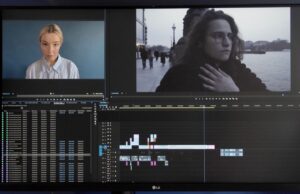
In the Synthetic Sincerity lab, researchers are looking to inject authenticity into AI characters, using folk from Isaacs’ own documentaries to do so. In return, they allow Isaacs to film the process. The film may be hi-tech in concept, but decidedly low in budget. “I made this film for £8,000. There is something about the independence that gives you,” Isaacs tells BDE.
Awards FYC: Come See Me In The Good Light by Ryan...

When folk at Sundance 2025 went to see Ryan White’s new doc, grief and death were presented in a way they simply weren’t expecting…with bucket-loads of humour. Which is why the film won the Festival Favourite Award. Come See Me In The Good Light, which tells the story of how poets Andrea Gibson and Megan Falley confront Gibson’s terminal cancer diagnosis, was originally suggested to White by producer and comedian, Tig Notaro. “Tig said ‘Andrea is one of the funniest people I’ve ever known in my entire life,’” the director tells BDE, “and I think there’s this opportunity to subvert the typical terminal illness genre.’”
Nordische Filmtage Lübeck: A World Gone Mad by Wilfried Hauke
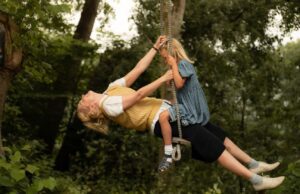
Pippi Longstocking would not have existed without the Second World War. This is one of the assertions made in Wilfried Hauke’s remarkable new feature documentary, A World Gone Mad, that received its world premiere in Lübeck this week. “[She] becomes a star after the Second World War in Sweden and Germany because the readers could feel there is a humanistic, moral power integrated in this figure of Pippi which is, of course, against the ugly power of dictators and their authoritarianism.” Hauke tells BDE.
European Film Award Documentary shortlist: Fiume o morte! by Igor Bezinović
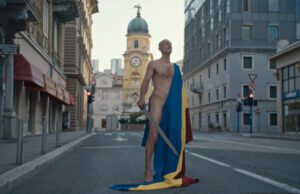
In 1919, the flamboyant, some say narcissistic, politician Gabriele D’Annunzio staged a coup in the Croatian port town of Rijeka, and thereafter ruled for 16 months. In his new film, Igor Bezinović tells the story of this tumultuous period via archive and recreations staged with local people, with a variety of amateur actors playing D’Annunzio. “To tackle D’Annunzio’s madness, you have to be as passionate about it [the story] as him,” Bezinović tells BDE.
DOK Leipzig German Comp: Active Vocabulary by Yulia Lokshina
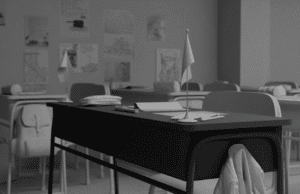
In Active Vocabulary, Russian teacher Maria is denounced after she criticizes, in class, the Russian War in Ukraine. After fleeing the country for Germany, she ingeniously sets out to re-enact the incident with pupils in her new Berlin class. “This village where Maria comes from is so remote from the front lines, so far away, and yet there is apparently this very strong ideological presence of the state that made them [her former pupils] behave this way, or is setting the rules.”
DOK Leipzig 2025: DOK Archive Market interview, Elizabeth Klinck
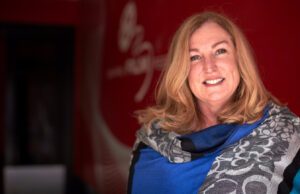
Top archive producer and footage researcher Elizabeth Klinck fills in Business Doc Europe on this year’s DOK Archive Market, to be held October 30. “It’s wonderful to have both private and public/commercial archives altogether under one roof,” she underlines how the market has become a must-attend event for the sector. “I think DOK Leipzig is right up there and I am always so impressed by the quality of the programming that GRAP (German Researchers and Archive Producers Association) puts together from within their membership base.”
DOK Leipzig German Competition: Intersection – It’s Political by Karoline Rößler
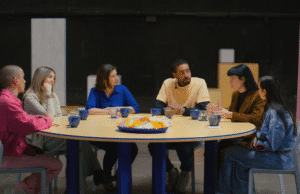
For Intersection, Karoline Rößler designed a computer game that reveals the levels of discrimination that certain players face. It’s a game designed to be unfair. In the documentary, six protagonists who’ve faced discrimination because of their sexuality, ethnicity or disability, are interviewed individually and take part in a round-table discussion. “I just researched a lot of people who felt were like-minded about the topics I want to stand for, and that I wanted this film to speak about,” the director tells BDE.
DOK Leipzig German Comp: A Jewish Problem by Ron Rothschild
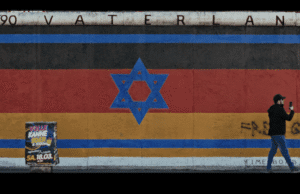
Ron Rothschild’s A Jewish Problem probes into very uncomfortable areas both in his family’s history, and that of the state of Israel. Its central figure is his grandmother, Ruth, whom he interviewed at length before she died. “She was a complex figure. She was involved in actions that are morally dubious and she is testifying about this,” Rothschild tells BDE. “I myself had the same kind of history. I am not in the position to judge her.”
Ji.hlava Opus Bonum Comp: Silver by Natalia Koniarz
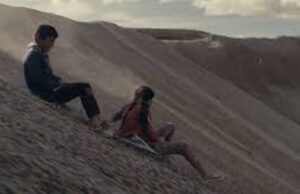
Without silver, the 21st Century would be unrecognisable, such is its ubiquitous use across tech - from phones to electronics to AI. But it’s also the cause both of widespread exploitation and many deaths within the mines where it is sourced. In her feature doc, Natalia Koniarz follows the Indigenous folk of Potosi, Bolivia, who have worked these mines for 500 years. “Over 8 million people are believed to have died here since silver was discovered in 1545,” she tells BDE. “They were enslaved. They were forced.”