Geoffrey Macnab

Cannes Classics: Dernsie: The Amazing Life Of Bruce Dern by Mike...
Cherished Hollywood star, dedicated runner and raconteur extraordinaire, Bruce Dern is, as director Mike Mendez notes, also a law unto himself. What’s more he is, in an American sense, somewhat posh. “It’s not in the movie but Eleanor Roosevelt babysat him!” Mendez tells BDE. “It continues throughout his life. He is always next to greatness. Whether it is Elia Kazan, Alfred Hitchcock or Quentin Tarantino, his entire life, he always rides along greatness…I kind of look at him like a real-life Forrest Gump.”
Cannes Directors’ Fortnight: Once Upon A Time In Harlem by William...
David and Liani Greaves, son and grand-daughter of pioneering filmmaker William Greaves, were in Cannes this week with their towering film in which, back in 1972, some of the most important still-surviving figures of the ‘Harlem Renaissance,’ the flowering of African-American authors, artists, musicians and intellectuals during the 1920s and 1930s, attended a dinner party at Duke Ellington’s beautiful New York townhouse…and talked. David and Liana sat down with BDE for a little more talking, about the film (which world-premiered at Sundance) and the 50-year journey to complete it.
Cannes Special Screening: Rehearsals For A Revolution by Pegah Ahangarani
In her feature documentary, prominent filmmaker, actress and activist Pegah Ahangarani reflects on her turbulent experiences and those of her family in post-revolution Iran over the last 40 years. “International recognition is always enjoyable - but I am really, really aiming this film at my own people, the Iranian people,” she tells BDE. “Especially now because now they are in such darkness, such despair, I think they might need a small reminder of their own courage, their own persistence in this fight…I do hope they have the chance to see it.”
Cannes Premiere: The Match by Juan Cabral and Santiago Franco
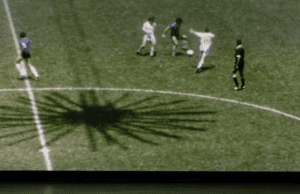
In The Match, Juan Cabral and Santiago Franco revisit one of the greatest, and most controversial, games of football ever played, the 1986 World Cup quarter-final between Argentina and England. The match took place just a few years after the two countries went to war over the Malvinas (the Falklands) “We wanted to tell a balanced story about these two nations. It’s beyond football,” co-director Cabral tells BDE.
Cannes Special: Che Guevara – The Last Companions by Christophe Dimitri...
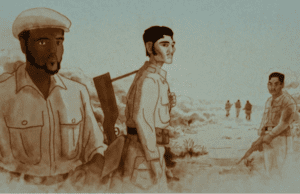
Christophe Dimitri Réveille’s partly-animated new feature doc tells the remarkable story of three of Che Guevara’s trusted followers who made a remarkable 2600-mile trek to safety after Che’s execution in Bolivia. Réveille, 48, has an intriguing background for a documentary maker. He’s an actor and acting coach. “What’s the connection between an acting coach in New York and the survivors of Che Guevara?” he muses to BDE. “It’s that they were hiding in the shadows of well-known people.”
Cannes Directors’ Fortnight interview: Gabin by Maxence Voiseux
In Gabin, director Maxence Voiseux follows his eponymous character, a precocious and sensitive boy from a rural background in northern France, over an entire decade of his life, from 8 to 18. On the one hand, the boy is fiercely proud of his roots and very loyal to his family’s way of life. On the other, he wants to “do something different” and this quickly puts him in conflict with his father. “For me, he [Gabin] is a strong cinema character because has to deal with these two sides of his life,” Voiseux tells BDE.
MDAG Polish Comp: My Themersons by Marcin Borchardt

Marcin Borchardt explains to BDE what led him to make his new feature documentary My Themersons, about the life and work of artists and filmmakers Franciszka and Stefan Themerson. “What moves me most…generally is their refusal to separate intellectual life from emotional life,” Borchardt says. “Stefan could write highly sophisticated philosophical texts and at the same time produce works full of absurd humour, tenderness and vulnerability. They were both profoundly serious and profoundly playful at once. That combination is extremely rare.”
MDAG Polish Comp: Bodies (of War) by Małgorzata Szumowska, Michał Englert
Polish filmmakers Małgorzata Szumowska and Michał Englert talk to BDE about their new doc which, in turn, focuses on the work of a rehabilitation centre for victims of war, a Ukrainian transgender artist and dancer now living in Poland, and the Open Group artistic collective that explores the impact of the war on Ukrainian civilians. “I think we were quite sensitive observers,” says co-director Englert who, with Szumowska, learned the power of quiet observation when studying film in Łódź. “That’s the way of storytelling we always favour. Without words, you can say a lot.”
MDAG Polish Comp: Bigger Picture by Mikołaj Janik
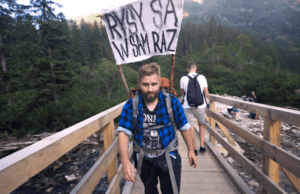
One of eccentric artist Arek Pasożyt’s pet obsessions is to find traces of the Tatra Mountains Panorama, a long-lost massive painting from the 1890s that was 115 metres long and 16 metres high - but that was broken up. In Bigger Picture, world-premiering at MDAG, Polish director Mikołaj Janik follows Arek on this journey. The artist is strongly left-wing, Janik tells BDE. He doesn’t believe in consumer culture, and he is relentlessly cheerful, refusing to become downcast about setbacks. He further likens him to an ancient knight on a heroic quest, or to “some kind of Indiana Jones…”
DocsBarcelona Docs&Cat Comp: Herencia by Ricardo Iscar
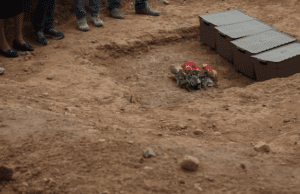
The Spanish Civil War has a strong personal resonance for director Ricardo Iscar. Back then, four bodies of workers murdered by the Falangists were buried in a field owned by his family in Salamanca. In the documentary, these bodies are finally being exhumed, and Iscar is there to film the process. Seeing how viciously the war divided Spain in the 1930s, Iscar has a warning for viewers: “Nothing is guaranteed. The democracy and civil rights we have, we have to fight to keep them…”