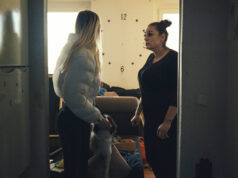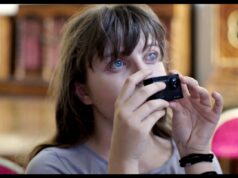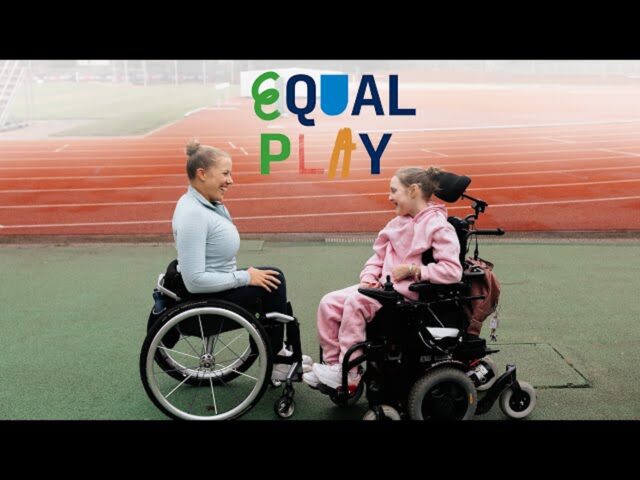
In Lily Ahree Siegel’s short doc Equal Play, Marley (14) and disabled Tammy (11) discover the transformative power of sport, and in the process face down the discrimination they have had to suffer during their short lives.
Marley struggled at school, feeling secluded, lunching alone in the school toilet, feeling suicidal. But when he joins a North London boxing club he discovers hitherto untapped levels of confidence and social skills (not to mention a talent for leadership).
Meanwhile, shy Tammy is transformed when she meets UK Paralympian Hannah Cockcroft who inspires her to take up wheelchair racing and explore her competitive side on the racetrack. Hannah herself remembers all too well that sense of exclusion when left behind in the school changing room during PE as all the able-bodied kids were out playing sport.
Likewise, for Tammy, when her classmates were doing PE, she would have to undergo tiresome physio, prompting Michelle Daley, Director of the Alliance for Inclusive Education, to observe in the film: “When you move a child out of PE, you are removing their right to the full range of the educational curriculum. [Physio] is a medical need, not a learning need.”
For director Siegel, this is a subject matter particularly close to her heart. As an adolescent back in the US she wasn’t able to perform PE as effortlessly as others, and found the process mentally daunting.
“Maybe I wasn’t meant to be an athlete, or even a bit sporty, as I am a filmmaker after all! But I now recognise the pivotal role that disabled role models could have played in shaping my childhood,” she explains in her film notes. “This film project is a tribute to the 11-year-old version of myself, and to all the kids who face similar barriers to access PE and sport.”
The film recently launched on Channel Four’s global YouTube channel, available for all to watch for free.
“ParalympicsGB are running an impact campaign to try to get more access to sport and PE for disabled children in schools. And that requires not just more funding from government, but more training as well for the teachers,” points out producer Ford. “We screened the film in Paris at the Paralympics and Lisa Nandy, the UK Secretary for Culture and Sport, came. She watched it, gave a speech afterwards committing the government [to] do more to deal with this issue. They haven’t published specifically what they’re going to do yet, but we’re hoping to get the specifics quite soon.”
The production team further underline how ParalympicsGB itself has identified four areas where root and branch change must be effected: to empower teachers with the right tools, understanding and resources to deliver truly inclusive PE; adapt teacher training to ensure the next generation of teachers have the skills and confidence to deliver truly inclusive PE; redefine how PE is seen within the school curriculum, ensuring it becomes a priority across the education system; increase the number of disabled people entering the teaching profession.
In Siegel’s film we also meet the parents of Tammy and Marley, who are more like full-time activists in their dedication to their kids’ ongoing development.
“I guess you can say the kids are lucky in that respect, that their parents are also supportive,” says Siegel. “I’m not a parent myself, but I can imagine that it’s parental instinct kicking in, and you want to support your child no matter with what they want to do in life. At least that’s how I would feel as a parent. But yeah, it was important to find parents that were supportive.”
“The parents in this film are forced to play more active role because the system is not doing it,” Ford asserts. “So they have to step in to fill a hole in the system. These parents in the film, they’re great characters [and] you can see their commitment to their child’s wellbeing because they are going the extra mile to get that kid into sports after school or whatever, because the school isn’t providing it.”
A major hurdle that the production had to overcome was finding accessible locations to film in. Even a supposedly clued-in city like London had significant shortcomings. “We filmed most of it in London, some was in Cambridge with Tammy, but it was very, very difficult to find fully accessible locations for our contributors that have various access needs,” says Siegel. “We would think that a city like London, because it’s so large, would have a variety of places to film in that were accessible. But that is really not the case. That just highlights the systemic nature of where disabled people can and can’t go.”
Likewise, finding places to screen the film has been highly frustrating at times. “We’ve been doing lots of screenings and struggled to find accessible cinemas. It’s been really hard in London and Copenhagen where we’ve been doing screenings, and I think it’s a real issue,” says producer Ford. “I’ve suggested to Lily that her next film should be about that issue, on the distribution side. We’ve had cinemas that have said, ‘yes, you can come with 10 wheelchair users’ and then the next day they phone back and say no, ‘we’ve changed our mind, two wheelchair users maximum because it’ll get too busy in the lobby.’”
Equal Play has been selected for a handful of core UK and international festivals, winning awards at the North East International Film Festival, the Little Venice Film Festival and the UNINTERRUPTED Film Festival, California. Now Siegel and Ford are using the upcoming awards season to train the spotlight on the subject of school play.
“It’s an issue around the world – in most places it’s probably even worse than the UK,” says Ford. “But we couldn’t find hard data and research. We tried to find similar statistics in other countries…but we couldn’t find those statistics. And that perhaps is part of the problem. So we just hope that the film will resonate with people not just in the UK but around the world.”