Oscar-nominated Sam Green (The Weather Underground, 2002) began The Oldest Person in the World with a seemingly straightforward idea, to follow successive holders of the title and listen to what they had to say. Over ten years, the project became intertwined with his own life, encompassing fatherhood, illness and questions about his own mortality.
The documentary, which world-premiered this year in Sundance, brings these experiences together through encounters with people whose lives have stretched well beyond a century.
“I didn’t set out to make a personal movie,” Green tells Business Doc Europe. Initially, he imagined that each subject would offer something wonderful and profound, providing everything the film needed. The reality demanded a more complex structure.
His curiosity had developed while making an earlier documentary about the Guinness Book of Records. The identity of the oldest living person kept changing as successive record holders died, prompting revisions to that film. Green was struck by the international attention each death attracted.
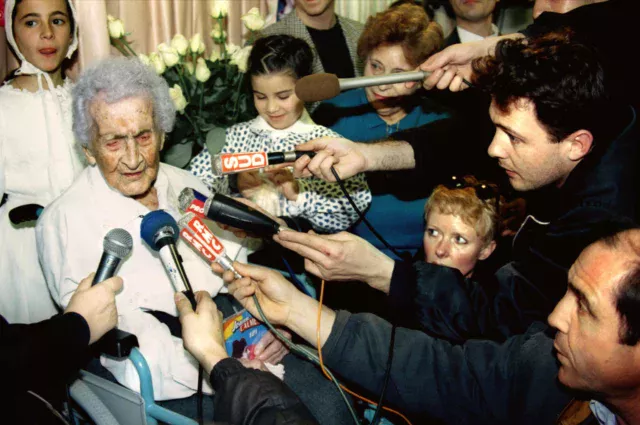
When the oldest person in the world turned out to live near his home, he took a camera to her public birthday party. After her death, a visit to the next record holder in Italy deepened his fascination. “It was a movie, in some ways, that chose me,” he says.
The process required him to relinquish his usual control. Ordinarily, Green visits contributors without a camera and prepares carefully before shooting. Here, everything depended on how someone felt when the crew arrived, with little time available. “If they’re feeling good, great. If they are tired and need a nap, you’re screwed,” he says.
Looking beyond the record meant recognising the unique experiences of otherwise ordinary people. “They’re interesting if you look closely,” he says. One encounter in Jamaica offered a particularly striking example. Violet Brown asked whether the crew would like to hear a poem she had learnt as a child, then recited around four minutes of Lord Byron from memory. She had memorised it some 110 years earlier. “I can barely remember a phone number,” he says.
The birth of his son Atlas, a year after filming began, gave the documentary filmmaker another way to register time. The boy’s growth introduced a visible progression that encounters with successive 115-year-olds could not provide. Green was also interested in watching his son learn the months, days of the week, and the concepts of past and future: the building blocks through which people understand their lives.
The pandemic disrupted the production and became part of the film. Gradually, Green recognised how personally invested he was in its questions, as his own experience of illness accompanied his encounters with extreme longevity.
“Why does one person live to be 120 and another person take his own life at 40?” he asks. “How do we live in a world where we don’t know what’s going to happen tomorrow?” Acknowledging that personal investment, he felt, could make the film more accessible to audiences than an abstract exploration of ideas.
Finding a coherent relationship between these elements proved difficult. Early viewers of rough cuts struggled to understand what Green’s brother and son had to do with the oldest people in the world. Working with editor Aaron Wickenden, he had to make those connections intelligible while avoiding the self-importance that can undermine personal filmmaking. “A lot of it is him,” Green says of his editor.
Emotional balance required equally careful adjustments. Green wanted the film to express the gratitude he felt after everything he had experienced. “Being alive is a great gift and a privilege,” he says. A film about elderly people dying could easily become overwhelmingly sad, but that would have misrepresented his own outlook.
One solution was a wordless montage devoted to beauty and pleasure, combining images with music. It was removed during editing, then restored as Green assessed the film’s emotional trajectory. “It’s almost like writing a symphony,” he says. The intention was for audiences to leave with a sense of appreciation and pleasure.
An endpoint emerged through producer Josh Penn, who suggested ending the first instalment on 7 July 2025, exactly ten years after it began. Green embraced the proposal as an arbitrary but useful frame for a decade that was marked by profound upheaval.
That said, the project isn’t limited by the 10-year boundary, and is therefore ongoing. At Sundance, Penn asked whether Green was serious about continuing. His response was immediate: “Hell yes.” He is still filming, and envisages another instalment covering 2025–2035. The appeal lies partly in watching lives and the world change over longer periods, something he admires in Michael Apted’s Seven Up series. The next chapter, he adds, “doesn’t have to be about me so much.”
Looking back, Green finds it difficult to separate the influence of the film on him from simply being ten years older, or from the events that shaped that decade. What he can identify is “a much more profound appreciation of time,” and a daily gratitude for being alive and healthy.
The unpredictability of time is something that continues to fascinate him. Events from six months ago can seem years distant, while something earlier in the week can feel as though it happened months ago. The pandemic further unsettled that perception. As Green puts it: “Time never went back to normal.”