“I struggled with addiction and depression for most of my young adult life,” filmmaker Ben Rekhi clarifies to BDE of one of his main motivations for making his Oscar-qualifying short, The Breakthrough Group. The 40-minute film looks in depth at the remarkable work of The Other Side Academy in Salt Lake City, a programme providing care and “tough love” for those at the lowest ebb of drug or alcohol dependency.
Rekhi himself was a functioning addict, able to “get high and go to school or go to work.” It took him many years to get clean, “a lot of therapy different programmes, meditation.” He has had a colourful and successful film career working in different capacities: as an executive at sales outfit IM Global, overseeing Hindi-language horror movies for Jason Blum, directing narrative features, and also turning his hand to documentary, for example with The Reunited States (2020). He is also currently close to completing the new Hindi drama Last Man in Tower, starring Manoj Bajpayee.
“So many of us walk around with this awful voice in our head telling us we are not good enough. When I heard about The Other Side Academy from a journalist friend, she offered to put me in touch, and I was just completely blown away from the process they had and the results they were achieving,” Rekhi remembers his first encounter with the organisation.
The Other Side Academy starts from the premise that “behaviour change comes through a rigorous and extended experience of social learning in a community that models and expects honesty, humility, and personal responsibility.” There are no psychiatrists or psychologists. Nor is medication provided. This has led to some criticism but the people who come here tend already to have been through other programmes overseen by mental health professionals – and nothing has worked.
The Academy doesn’t charge. Instead, its “members” work in businesses affiliated to the Academy, including at a removal company, a thrift store and a construction company.
“I was just dumbstruck that this existed,” the director remembers his first reaction on visiting the Academy. It’s estimated that 50 million people in the US, roughly one in 6 of the population, have addiction issues.
“If it’s not you yourself going through it, you know someone or have someone in the family who is,” Rekhi notes. “Addiction touches everyone.” He felt that even in telling the story of the organisation, he could potentially help some addicts to confront their situation.
“This is a film about people caring about each other to help them through the hardest times, probably in their lives” he explains why he brought a movie crew to Salt Lake City.
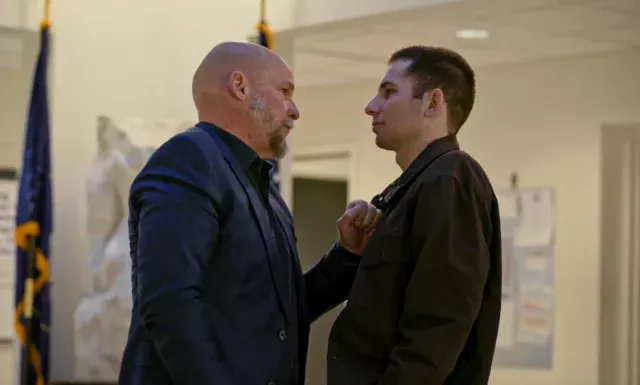
The Academy is overseen by executive director Dave Durocher, a tough, no-nonsense figure with an “alpha male personality” but one who goes to extreme lengths to help and protect those under his charge. He has been through the same experiences as many of them, dealing with addiction and imprisonment, but has successfully rebuilt his life. “He has walked in their shoes – and you can’t bullshit a bullshitter.”
On his first visit, Rekhi stayed for three days in the dorms without a camera. He wanted to build up trust and to immerse himself in the lives of the members. “It was so I could see how it works but also so they could interview me, feel me out and see what my intentions were.”
People came up to him asking if he was a new student. “I could feel the community right away. People were interested to know who I was.”
By the time Rekhi came back with a crew, everyone at the Academy was comfortable with him being there. Even so, he remained very sensitive about how he depicted his subjects.
“There were times when people were very vulnerable, very private moments that people are going through. You are filming during some of the most emotional low points of their lives.”
Rekhi would often offer to stop shooting but his subjects would invariably respond: “If this can help one other person, it’s worth it.”
Most of the film was shot over the course of six days. “There was so much going on every day…in the edit, it was also important for us to stay honest about how difficult this process is. We knew that if we shied away or sugar-coated some of the difficult moments, it would feel incomplete or worse – like a puff piece. So there are parts in there where it’s not pretty, where people fall back in their recovery or don’t make it completely. It was really important to show that recovery is not a straight line and that not everyone makes it.”
Some high-profile figures joined the project, among them executive Clarence Maclin from award-winning movie Sing Sing and producer Doug Blush, whose credits include The Elephant Whisperers, Icarus and 20 Feet From Stardom.
Rekhi had asked Blush to look at a rough cut of the documentary. At that stage, the film was close to 90 minutes long. “We thought we had a feature…he saw it and turned to us and said ‘how did you get this access? This is remarkable. You don’t usually get this level of trust…you’re watching people right now push through their demons. That’s extraordinary and really hard to get.’”
Blush helped the team “narrow down” and “weave together” the five main storylines that feature most prominently in the documentary.
Maclin came on at a late stage. “In prison for 17 years and then going all the way to the Oscars…he’s one of the very few people who has a foot in both those worlds, criminal justice and entertainment,” says Rekhi.
Despite the strong responses wherever it has been shown, the film initially struggled for selection at festivals. Its near 40-minute length seemed to count against it. Programmers weren’t sure whether it was a short or a feature.
In the end, The Breakthrough Group was selected for Indy Shorts. It then qualified for the Oscars after being “four-walled” in cinemas for a week. The doc is yet to be shown at The Other Side Academy itself. “There has been a sensitivity around showing it to people still in the programme because the ego sometimes gets in the way of recovery,” Rekhi explains. However, it has been screened at many other rehab institutions. There will be a special presentation at San Quentin Prison in March 2026.
“It does spark conversation about how different people are approaching recovery,” the director reflects on how the film has been embraced by families of addicts. “It’s hard to explain to a loved one what addiction is like, and I think part of the reason the stigma is there is that [relatives feel] ‘I can control it, why can’t you.’ This at least humanises how difficult it is and [shows] that it’s not about the drug use. It’s about the trauma underneath…”