The Field of Vision homepage reads like a manifesto, listing a series of commitments both to filmmakers and their output, all encompassed within a mission “to support work that uses innovative and artistic ways to explore contemporary global issues through a cinematic lens and to push the boundaries of nonfiction storytelling.”
So what does this mean in actual terms? Co-creator and Exec Producer Charlotte Cook explains. “We started Field of Vision with this idea, what if we brought artists’ and filmmakers’ perspectives into the news cycle and into a journalistic context. Because I think within 24-hour news we often see the same story being told in the same way, by the same people over and over. So what if we tried to challenge that and have different perspectives, different types of creatives coming in and talking about the stories.”
That’s number one – but the FoV mission is two-fold, Cook adds. “It’s as important that we really see ourselves as kind of a filmmaker advocate in the field…I want every single part of what we do to be very pro-filmmaker. We call ourselves filmmaker-driven, so we talk to filmmakers all the time. There is a constant feedback loop with filmmakers in the field about what they want organizations like us to be doing.”
Cook illustrates this via FoV commitment to shorts. “We fully fund them. We don’t pay huge money [but] we try and pay the production costs, so essentially the filmmaker isn’t out of pocket,” she explains. “We take a seven year exclusive license, but we don’t take copyright… the filmmakers retain all their footage and can make a feature if they want to. That isn’t something that we would then restrict.”
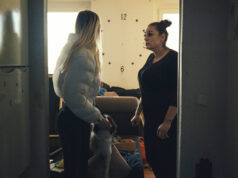
Cook further underlines FoV commitment to features, as evidenced by the Sundance 2022 selection of Sierra Pettengill’s Riotsville, USA, Joe Hunting’s We Met In Virtual Reality and Kathryn Ferguson’s Nothing Compares.
“A lot of filmmakers came to us and said, ‘it’s amazing that you are doing shorts that are really supporting creative filmmakers. Can you do that with features too because there isn’t enough support in the field?’” Cook says. “It isn’t just a case of us going out and looking for filmmakers – which we absolutely do – and we’re very excited about the development side [which] is actually a very key part of what we do. But also filmmakers said to us, ‘we hate funding rounds, we hate deadlines, it doesn’t always match to our cycle of work.’ So [at Field of Vision] we don’t have deadlines around submissions which actually makes our lives a little bit harder, but it’s worth it. We look at every stage at filmmakers’ needs, so that they always feel that we are a place that listens to them and responds to them.””
Cook describes the strong Field of Vision feature doc presence at Sundance 2022, which comprised three films that screened back to back. “Had we been at the actual festival we would’ve had essentially a Field of Vision day at the Egyptian theatre,” she observes.
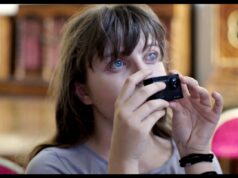
“You get a really good sense of the expanse of what Field of Vision does. You have Sierra Pettengill’s Riotsville, USA, which is this beautiful archive-based film that looks not only at and at the terrible police response in the sixties – it’s also one of those films that transcends its immediate subject and talks about today without it being about today,” Cook explains. “The second one was We Met in Virtual Reality which is a film entirely made in VR throughout the pandemic and looks at the online communities and what they have meant to so many people. It’s very creative…people don’t know what they’re going into and then are completely won over by it because it’s just such a lovely, uplifting film.”
The third FoV feature doc was Nothing Compares, about Sinéad O’Connor, which “re-examines a public figure who was so ahead of her time in what she talked about and fought for, and how badly she was treated for it. It’s a music documentary, but with so many extra layers that talk about how society treats women, and what it means to be outspoken politically – it shows what the Field of Vision version of that looks like,” comments Cook.
“Sinéad was absolutely chastised for talking about things that now we’re talking about. The idea for us to really celebrate a woman who was a huge force and a huge voice both politically and creatively, and finding a way to reposition her in that context, fits so much with our values.”
Between 2019 and 2021 Cook saw Field of Visions shorts nominated for the Short Doc Oscar (A Night at the Garden, 2019; In the Absence, 2020 and Do Not Split in 2021). This year, the FoV boss is hopeful that The Facility, made by [print] journalist and film debutant Seth Freed Wessler, will get a nomination nod.
The film, shot inside a US immigration detention center as the pandemic spreads, chronicles the men and women’s protest and struggle for both freedom and accountability in the face of intransigent officialdom.
“We have always encouraged journalists to actually make the film about their own reporting, often for the first time, rather than have someone else adapt it. And so that was the process with Seth,” says Cook. “Working with him to make his first film, helping to navigate how he transitions this story from print into film, that is a huge part of what we often do. And we do that both with artists who’ve traditionally worked in an art space but also journalists who have primarily focused on written reporting…One thing we also did was make sure that he [Seth] had a great team around him.”
“It feels like such a privilege and an honour to be in a conversation with somebody who is figuring out how to make their film for the first time,” Cook adds. “That’s one of the things I love about my job. Watching that creative process unfold in front of your eyes is amazing.”
Last year’s highly controversial short Do No Split (a film about the Hong Kong riots whose Oscar nomination led to Chinese broadcasters pulling the plug on transmission) may not have won the main prize, but for Cook this wasn’t a tragedy. Far from it. The short film community is a very collegial one, she observes.
“We are not that competitive with each other, because I think we all know the challenge of working in the ‘short’ space,” she says. “So anytime a short does really well, I think we’re all really proud. It’s actually very nice when you get into the award space with other short filmmakers, because we’re all rooting each other on. Last year when Colette won, I was so over the moon as they are such a lovely team. And it’s a great film. So we all win whenever shorts do really well.”