

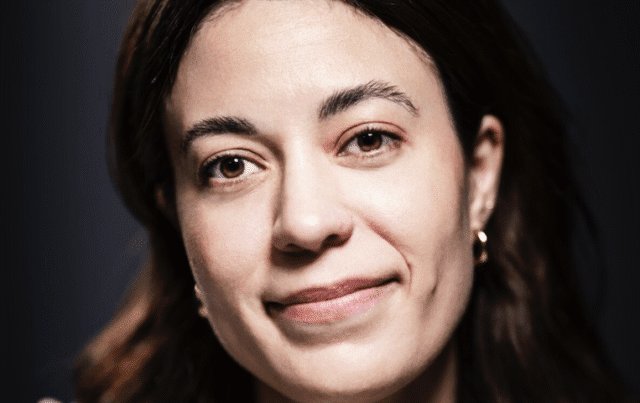
When Sabine Fayoux Cantillo took over as Head of Visions du Réel Industry last autumn, the former Associate Director of Program at Chicken & Egg Films in New York was, in a sense, simply coming home. “There has been a lot of kismet in making this happen,” Fayoux Cantillo tells Business doc Europe of her re-arrival in Nyon. “I grew up across the lake and my family kept a family home there.”
Fayoux Cantillo lived nearby in France from “when I was five until I was 10 years old – and I had a really beautiful childhood,” she adds. Her family subsequently moved to Colombia. They tried to sell the house but that didn’t work. “It stayed shut for many, many years.” Now, Fayoux Cantillo has taken up local residence again.
“When this opportunity came up, it was a no-brainer to return to a festival which has meant a lot to me in my career as a documentary worker…and to raise my child in my childhood home. There is a lot of serendipity to this also.”
Fayoux Cantillo’s predecessor as Head of Industry, Alice Burgin, left VdR to take up the new position of Investment and Development Manager for Documentary at Screen Australia – a role she began last September.
For Fayoux Cantillo, it seems to have been a smooth transition. “She [Burgin] was able to do a very thorough and thoughtful ‘off-boarding’ of her role. I was able to pick up on some of the conversations she had already begun,” the new Industry boss says, citing examples like this year’s ‘Switzerland Meets’ focus on Central Europe which will see delegations from Austria, Croatia, Czech Republic and Slovakia in Nyon. “This was something she [Burgin] had already put in motion.”
As an attendee for Chicken and Egg, Fayoux Cantillo already knew how the festival’s industry programme worked. “I felt a sense of belonging…one thing we do very well at Visions du Réel is to create intenional spaces for conversations that can go deep,” she suggests.
She remembers the pleasure of sitting in a room where 15 projects were being pitched “and the only thing you are asked for is to take in what they have to say – practise deep listening, be there to witness what they have to share, watch their footage and start to think where there might be opportunities for collaboration.”
Nyon itself provides an excellent networking hub. “You’re in this small town nestled between the lake and the mountains. You’re walking with directors, producers, other industry peers from one venue to another and there are just organic conversations and relationships that get formed.”
US Oscar and Golden Lion-winner Laura Poitras is the Special Industry Guest and will take part in a public conversation with IFFR programmer and Fondazione Prada Film Fund Manager, Rebecca De Pas.
“Regardless of who is in the room, be it press, directors, producers, industry representatives, I think we will all have things to learn from what she [Poitras] has to share,” Fayoux Cantillo suggests of the fiery filmmaker and journalist behind such modern-day classics as Citizenfour and All the Beauty and the Bloodshed. “She’s a filmmaker who has been unapologetic, fearless and committed – and I think that is something we all can use a little bit more of, and be inspired by.”
Ask the new Industry Head about what trends she has noticed in this year’s projects and she pinpoints a few recurrent themes.
“Across continents, one thing we could see was that many of the projects do examine the idea of ‘home,’” she suggests. “They examine it in its most fragile state, be it politically, historically, ecologically and personally…”
Projects touching on different notions of ‘home’ include Daniel Mann’s Uganda, about the British Empire’s secret plans in 1904 to use Uganda as a home for the Jewish people, and Myriam El Hajj and Omid Hashem’s Letters from a Ceasefire, in which the Lebanese and Iranian directors share their thoughts the social and political convulsions their countries are facing.
“We also have films that explore displacement and political uprising. There are shared sensibilities around how we are approaching certain issues,” Fayoux Cantillo continues.
Thirty-one projects in all have made the cut [including 15 projects in late-development] from over 600 submitted. And, no, it’s never easy to turn films down.
“As someone who has reviewed thousands of applications across my former role at Chicken & Egg for the programmes that I ran, I think selection processes can be equally inspiring and excruciating because you are, in the end, working with a very limited number of slots. Often, there will be a lot of projects that you wish you could highlight and include,” Fayoux Cantillo admits, but she adds that the films chosen this year all rose “to the top.” That’s because they’re “offering something new” and “looking at their topics from a very unique and specific angle…they are here for a reason and I am excited for them to be able to have the space and time to connect with folks.”
Some familiar names are in the mix, for example Macedonian filmmaker Ljubomir Stefanov, who co-directed Oscar nominee Honeyland and who’ll be presenting The Vortex of Extinction, and Belgian filmmaker Sofie Benoot who is pitching her new project, Hello?!.
There will be a strong US and UK presence among the industry delegates, participating either physically or (in a few cases) online. Jon-Sesrie Goff from the Ford Foundation – JustFilms will be in attendance, and there will be representation from organisations like Impact Partners, Field of Vision, Catapult Film Fund and the New York Times. Nevine Mabro, the new head of BBC Storyville, will also be in town.
When it comes to cash prizes, VdR has plenty on offer, everything from the Eurimages Co-production Development Award worth €20,000 to a new $2000 IDA award.
As for the key discussions and debates, Fayoux Cantillo says that co-production will be high on the agenda. “This is something we want to go deeper in addressing and demystifying…what a co-production between the US and Europe can look like, that’s something from a US perspective that often feels and seems quite impossible,” she says. “We are looking into that more closely.”
Furthermore, there will be a focus on co-production from “a more institutional perspective,” and also “co-producing films from the majority world – how do we build constellations of support that preserve authors’ voices,” Fayoux Cantillo signs off.
VdR Industry runs from 19–22 April 2026.





