Hollywood star Henry Fonda had Dutch roots and you see his relatives in old 17th Century Dutch master paintings. That’s one of the many surprising insights included in Alexander Horwath’s new documentary feature, Henry Fonda For President, a world premiere this week in the Berlinale Forum.
It is the director’s debut feature – and his first film of any kind. Now in his late 50s, he is a critic and curator, a former director of the Viennale and of the Austrian Film Museum.
“When I stopped running the Film Museum after 16 years, I wanted to be a free man again. Many people have asked me: ‘did you choose to become a filmmaker when you stopped?’ Actually, I didn’t.”
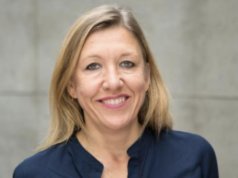
Horwath credits producer and former journalist Irene Höfer with persuading him to undertake his monumental movie. He knew her from his Viennale days when she used to interview big-name guests at the festival, among them Bonnie and Clyde director Arthur Penn. She said to him: “you know so much about film history. Isn’t there anything I can seduce you to think about?”
At first he responded that he simply wasn’t a filmmaker. She persisted. Eventually, he told her that the only subject he might consider as a subject for a movie was Fonda.
Horwath’s fascination with Fonda stretches back a very long way. In 1980, when he was a teenager, he made his first trip to a foreign country with his parents to Paris. “They had had their honeymoon trip in 1962 there and they wanted to revisit Paris 18 years later so they took me along. We spent three weeks [there] and we went a lot to the movies.”
During this trip, the Austrian adolescent saw three very different Fonda films: John Ford’s The Grapes Of Wrath, Alfred Hitchcock’s The Wrong Man and Sergio Leone’s Once Upon A Time In America – and immediately became obsessed with the lean, craggy, blue-eyed star.
“He just struck me as a hugely fascinating figure.”
Horwath already had a crush on Fonda’s daughter Jane Fonda whom he had seen in Barbarella but he realised that the father was “even more interesting.”
“The type of man he represented, the scepticism, the self-critical nature of some of his characters and of himself…”Horwath pauses. “He was a counter-image to what I was usually presented with which was the strong American virile guy who wins all his battles.”
Fonda was still a quintessential American. He was a rugged mid-westerner. But he had qualities of doubt and reflectiveness not found in other archetypal movie icons of the period. Aged 17, Horwath wrote a paper at school on Fonda.
Years passed. The young cinephile became a professional in the film world. He established himself as one of Austria’s leading critics, film historians and curators. In 2017, he ended his time at the Film Museum with a programme dedicated to Fonda. He had long believed that not enough attention was paid to actors as “co-authors” of the movies in which they appear.
“It’s a bit of a risk for me in the film to ascribe co-authorship to Fonda which I do in a way, elements of authorship. I do believe there are certain characters who over their careers tell us a story.”
Look at Fonda’s movies together, Horwath believes, and you find the equivalent of a novel about America. “I do subscribe to the view that generally the most important signature of a film is that of the director…I subscribe to the French auteur politics. But I do believe we have to think beyond it and that there are other types of authorship as well, not only the screenwriter, which is obvious, but performers.”
Horwath researched his subject very thoroughly, looking into Fonda’s life, the roles he played, the lives of his forefathers and the lives of his kids. In the process, he noticed the continual echoes between “the private person and the fictional person.”
In the documentary, Horwath weaves together the story of the country with that of his protagonist. He examined not only at Fonda’s biography but the biography of his “persona,” created through the characters he played.
“It’s too easy to view him as many Americans viewed him. He is often described in a nutshell as the liberal American with integrity and who you can trust – [but] he is much more complex. Darkness is in his life and in his roles.”
The documentary includes images of an old 1650 Dutch Master painting by Gerrit Dou of a housewife from the period. This, the director conjectures, is one of Fonda’s ancestors from Leiden. It’s not fully proven that the woman really is a Fonda but until “proven otherwise” Horwath is sticking to his theory.
At times, the director was as much of a sleuth as he was a filmmaker. For instance, at one stage, we see him beside an old bridge across the Colorado River. He has worked out that this is the bridge that Tom Joad (Fonda’s everyman hero) crossed heading westward in the John Ford classic The Grapes Of Wrath – and it’s the same bridge that his son Peter Fonda crossed on his motorbike heading in the opposite direction in counter-culture classic Easy Rider.
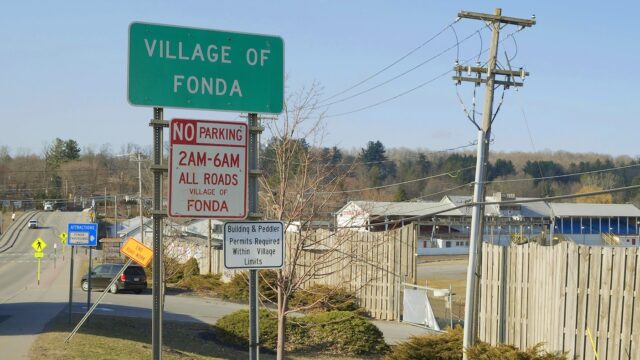
“It was a low budget film but we managed to visit eight or nine locations all over the US,” the director remembers how he and fellow crew members Regina Schlagnitweit and Michael Palm visited key places in the Fonda story – everywhere from the village where the star’s ancestors settled, to New Salem, the setting for one of Fonda’s best loved films, Young Mr Lincoln.
Horwath was able to draw on a 12-hour interview with Fonda done by writer Lawrence Grobel in 1981. Fortunately Grobel had hung on to the tapes and was happy to share them. “It is really an essay film,” Horwath says. “I very much like this kind of cinema. It was clear that if I was to make a film, it could only be that kind of film because I come from writing.”
Henry Fonda For President was produced by Mischief Films in Vienna and Medea Film Factory in Berlin. Even before the film reached Berlin for its world premiere, it was already being acclaimed by influential US critic Jonathan Rosenbaum, who was shown an early rough-cut last December and who hailed it as one of the best films of the year. The documentary has already been selected for various festivals. There is also a shorter TV version of the film made for co-financiers ZDF/ARTE.