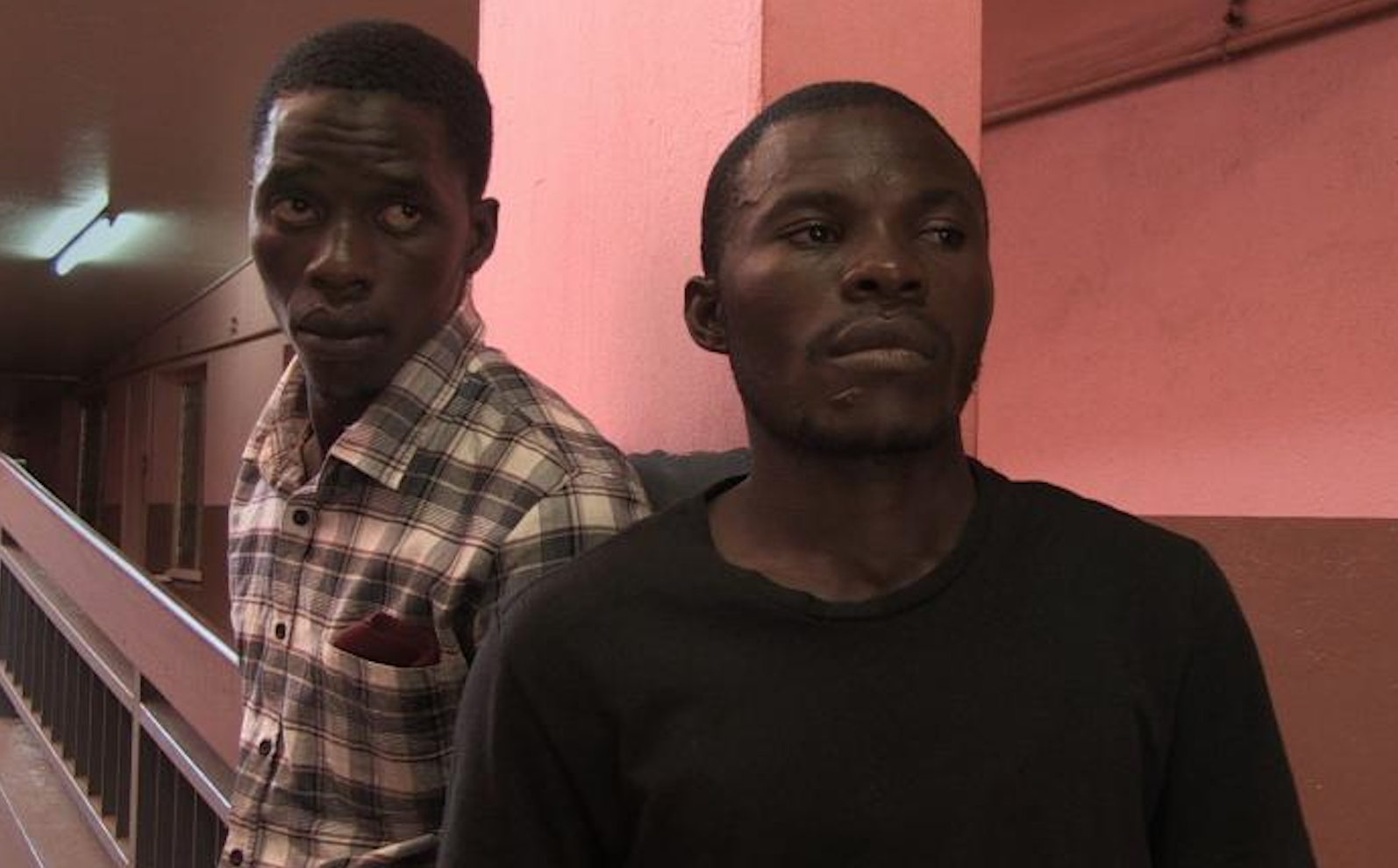
We, Students! revolves around four young lads, Nestor, Aaron, Benjamin and director Rafiki himself, all economic students at the University of Bangui and as tight a group of friends as you can imagine. But they are also poor, and resent both a ruling system of “old people” and an educational set-up that smacks of corruption (if the numerous anecdotal tales in the documentary are to be believed, and there seems no reason as to why not).
“There are only poor people at our university. The children of rich families have all gone to study abroad,” says Rafiki in his notes for the film.
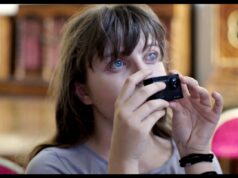
The key focus is on Nestor, who is clever and questioning (and in possession of permanently reddened eyes, which director Rafiki found fascinating) but who mysteriously fails his second year examinations, even as his friends pass theirs. And on Aaron who, after impregnating his girlfriend, is unjustly accused of rape by her aunt before the family settles on a dowry payment consisting of a goat, six chickens and a selection of vegetables. Benjamin, meanwhile, gets by as somewhat of a silver-tongued Romeo, whose favourite wooing spot is at the foot of a large tree.
Nestor’s emotional decline after his exam failure is marked, as he descends into a depression, and Aaron must assess a future within a family set-up newly augmented by twin girls.
In the film, we see all four with their girlfriends, in the college lecture rooms, partying post-result, hanging out in their squalid dorm rooms or venturing out into the world of work and trade, whether tending crop fields, in security or, in Nestor’s case, trying to sell goods from a stall. One fantastic shot towards the end of the film shows Aaron on a motorbike that also carries his new wife, their twins and the whole farmyard dowry.
Rafiki, a non-English speaker, spoke to BDE via the film’s producer Boris Lojkine, who met the director after setting up documentary workshops in the Central African Republic together with Atelier Varrans in the capital Bangui in 2017.
“In the beginning he had the idea that the film would be a critique of all the problems in the university but then, proceeding with the film, it turned out that it was more the story of his friends,” Lojkine translates.
That said, the spectre of corporate corruption is never far away, as many of the young women attest to unwanted advances by lecturers, the refusal of which can result in examination failure. The film hints that the reason for Nestor’s exam failure was his popularity and willingness to help the girls with their work.
“The situation of the girls really touched me and I wanted to talk about it in the film, even though it [the film] is shot from the point of view of boys,” Rafiki in his notes. “Sexual harassment is a real scourge at university. Girls don’t easily speak out, they remain discreet. They don’t dare to dress up for fear of attracting a lecturer’s attention. If they do, they risk a lot. If they refuse the teacher’s advances, they will be blocked in their studies, their good grades will disappear, replaced by zeros. And, for us boys, it’s dangerous too: if we date a girl a lecturer wants, we risk being blocked too.”
The requirement to hand over financial payments seem to be endemic while dealing with officialdom in the country. Rafiki points out how the crucial interrogation scene of Aaron in the police station would not have been possible without submitting to the monetary demands of the officers, who then happily perform in the sequence.
On the other hand, Rafiki is able to elicit great performances from his characters after explaining in advance what the function of the scene is. This is most evident during a very funny lecture as the economics professor extols the virtues of socialism and underlines the iniquities of rampant capitalism to his amused students.
The film is further punctuated (and enhanced) by songs that we hear on the soundtrack. They are songs of lament and protest, some written in advance of the film, some during the production.
“The songs are not in the film to explain anything. It’s more something emotional…Usually people don’t express their anger or their feelings, it’s easier for them to sing their anger than to say it. It’s also a way to, get into the mind of his characters and to express what they feel,” explains Lojkine. “For Rafiki, singing is natural because he was a singer before being a director. That’s his natural way of expression.”