Subject: Film-making is, by all measures, a small film. It was made on the fly, with little budget or preparation time. There was simply an opportunity to shoot it, so they did. Because the moment was there and shouldn’t be missed.
Seen another way, Subject: Film-making has been 55 years in the making – and even more. In its own lovely little way, it captures the essence of its co-maker, renowned German filmmaker Edgar Reitz of the Heimat trilogy (1984-2004), and his love of cinema and, especially, the teaching of cinema.
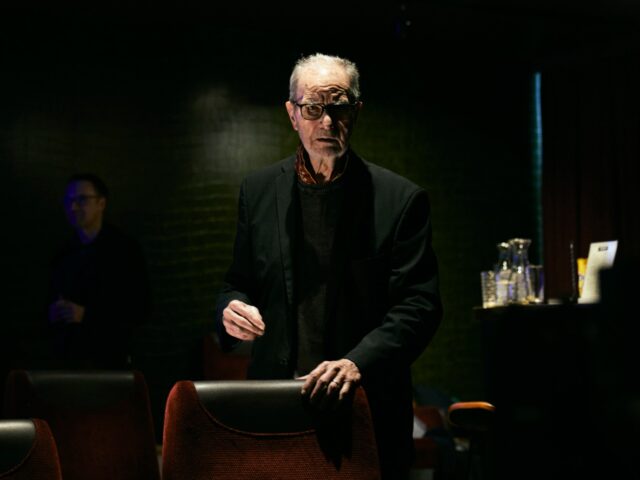
Let’s rewind a few years. It’s 2020, a few months before the Covid pandemic grinds life to a halt. During a concert break in Munich’s Prinzregententheater, an elderly lady approaches an even older gentleman and asks: “Aren’t you…?” Yes, he is indeed Edgar Reitz. Born in 1932, almost 90 years old. In that case, she had been his pupil half a century before, back in 1968, in what, according to the filmmakers, was the first known attempt in film history to teach cinema in schools.
They quickly conceive of a reunion of the former students with Edgar Reitz, to watch ‘Filmstunde,’ the 1969 television documentary that was made about the project. The pandemic interrupts the plan, but while Reitz takes the opportunity to write his memoirs, ‘Filmzeit, Lebenszeit. Erinnerungen’ (‘Film time, Lifetime, Memories,’ published in 2022), he keeps returning to the ‘Filmstunde’ documentary as a pivotal project in his career. He collects material from the archives, and by the time the pandemic ends in 2023 he is ready for that reunion – for Filmstunde_23, the original German title of this documentary.
But first, let’s rewind even further. By 1968, Reitz had already established himself as one of the leading German filmmakers of the post-war era. He was one of the original signatories of the ‘Oberhausen Manifesto’, which, in 1962, heralded the New German Cinema with its focus on auteur theory. One year later, together with Alexander Kluge, he founded Germany’s first film school in Ulm. And in 1967, Reitz’s feature film debut Mahlzeiten won the award for Best First Film at the Venice Film Festival.
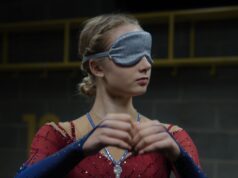
So it was an accomplished film director and teacher who introduced himself to a group of teenagers at a Munich all-girls school in 1968, carrying a bag with Super 8 cameras with which the pupils could make their first short films. And so they did, spending the next few months running around Munich as small film crews, eagerly filming their families, street life and local peculiarities in what have become nostalgic time capsules. Meanwhile, Reitz guided them through concepts such as shots, editing, filmic time and auteur theory, asking open-ended questions and letting them discuss the answers.
Reitz had a mission: this class was to be the pilot for the inclusion of film education in the national curriculum. Fifty years on, as Reitz sadly notes, this still hasn’t happened. Looking back at the many fragments of ‘Filmstunde’ included in Filmstunde_23, Reitz’s ideas seem prescient. Media literacy has indeed proved crucial for young people in the 21st Century – and its absence is one of society’s biggest problems, from the perpetuation of fake news to the spread of conspiracy theories threatening the very foundations of democracy.
Could Filmstunde_23 succeed where ‘Filmstunde’ failed? Co-director Jörg Adolph (who, together with Anja Pohl, made the 2013 documentary Making of Heimat, about Reitz’s Die andere Heimat) believes so, he writes in the press notes: ‘I’m excited to see what power the film develops and hope that many education politicians will also see it.’
Reitz is more reticent, after having seen his second attempt to introduce a national film curriculum, ‘Lernspiel Film’ (‘educational film game’), ignored by the German government earlier this century. But he does note: ‘What we could only dream of with the help of cumbersome Super 8 technology, namely that everyone could express themselves in the language of moving images, had become a worldwide reality with smartphones. What a great opportunity this technology would be today to make practical film lessons the norm in schools!’
There could be no better ambassadors for this project than these former pupils, now approaching 70. Their immediate enthusiasm for the project, witnessed by their parents in the 1968 recordings, has carried through to the present day. Indeed, it is one of the reasons these former class members still meet regularly. And it has undoubtedly informed their critical appreciation of the moving image, as well as cementing their love of cinema. Cleverly cutting back and forth between the young girls’ faces and their aged counterparts, who look just as contented and giggle almost as much, Subject: Film-making shows that once our interest is piqued and our love for a subject is ignited, we remain students for life.
Which is also demonstrated by Edgar Reitz himself. Listening to him speak, it is remarkable how consistent he is, seemingly picking up where he left off in 1968. The same calm authority, the same presence with his listeners, the same belief in the beauty and power of cinema. An ideal teacher, who not only fully deserves the Berlinale Camera 2024, awarded to him by the festival, but who also deserves to see the Edgar Reitz Film Class Curriculum finally introduced nationwide. To carry on his name, even when one day he is no longer with us.
Germany 2024, 89 minutes
Director Edgar Reitz, Jörg Adolph
Production if… Productions
Producers Ingo Fliess
Script Edgar Reitz, Jörg Adolph
Cinematography Matthias Reitz-Zausinger, Markus Schindler, Daniel Schönauer, Thomas Mauch (1968), Dedo Weigert (1968)
Editing Jörg Adolph, Anja Pohl
Sound design Jörg Elsner
Sound Jonas Egert, Michael Hinreiner
Music Nikos Mamangakis
With Edgar Reitz