On 20 May, in front of a live audience gathered on the Main Stage of Cannes, filmmaker Viv Li described her experiences as a first-time documentary director. “I’m honoured to represent the voices of first-time filmmakers at Cannes,” she said, before launching into a keynote that felt less like a formal talk and more like an audacious one-woman performance — in equal parts confession, stand-up and manifesto.
Her session, titled ‘Confessions of a First-Time Filmmaker – Things I Should Never Admit in Public,’ lived up to its name in the best of ways and the most uncomfortable of ways. “When Cannes Docs asked me for a short bio and photo,” she began, “I sent them this.” She then clicked through two images on the screen behind her. On the left: a sleek, professional portrait snapped by a diamond jewellery brand. On the right: a wildly unflattering selfie, Viv peering down into the lens with glasses askew. “I use the left photo everywhere,” she confessed, grinning. “It helps me hide the fact that I’m a struggling filmmaker.”
From the start, Viv made clear this wouldn’t be the usual polished pitch. “I used to say the best things about myself so people would believe in me,” she explained. “But today, I want to say different things. A different kind of me.” She gestured back to the “unflattering” photo. “This is the real me — clumsy, full of mistakes. I always sit on my glasses. I keep them together with tape. It’s an iconic photo.”
What followed was a candid, self-deprecating, and deeply personal walk through her long journey toward her debut feature documentary, The Two Mountains Weighing Down My Chest. “I’ve made 13 shorts,” she said. “Only two of them went anywhere, and I’ve put in my bio only the two which went somewhere.”
Her debut doc, a deeply personal exploration of her identity as a Chinese woman navigating sexuality, family expectations, and selfhood, was recently pitched at the Cannes Docs Works-in-Progress strand. “There, I said all the good things about the film,” she said. “Now, I’m going to tell you about the failures, the struggles, and the nightmares.” She also joked that the jury for the award had already made its decision, so she might as well tell the truth.
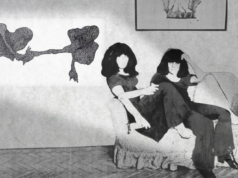
She screened a teaser — an irreverent, playful clip that touched on topics like gender identity, freedom, and the absurdities of growing up in conservative Chinese society. But then came another twist: “That’s not the film,” she admitted. “That was my first mistake. I made a teaser that doesn’t really reflect the film.”
The teaser had emerged in 2021, from a chaotic creative period after her queer friends in Berlin had jokingly stolen her childhood photos and planted the idea that maybe she was non-binary. “I didn’t know where the film was going,” she said. “I didn’t even know if I was non-binary. I just… started making it.”
That disorientation wasn’t a bug — it became the core of her process. “There are filmmakers who know exactly what they want,” she mused. “I’m not one of them. That’s why documentary is such a beautiful form — it gives me surprises along the way.”
But the path wasn’t just artistic confusion. It was financial desperation, too. In 2021, Viv launched a Kickstarter campaign — what she called her “first bucket of money.” Would she recommend it? “Absolutely not,” she said, deadpan. “For 20 days, I felt like the biggest beggar in the world.” She messaged everyone she knew — on WhatsApp, Facebook Messenger, Instagram — “Please donate to my film.” The campaign worked, sort of. But it came with a price: “Now I have 200 backers constantly asking, ‘When is it done? Can I get a link?’” she said. “They’re worse than my producers.”
Which is why she went looking for a ‘real’ producer. At the 2021 IDFA Forum, she stood alone — the only person without a producer — and pitched her film. “I told everyone I was looking for a German producer with a sense of humour,” she said. People laughed. “But I was serious! I really wanted a funny German producer.” She did find one who showed interest. She sent him 40 pages of her dossier with the subject line, ‘Happy Workers’ Day — here’s some work for you!’ He never replied.
Viv offered a sharp reflection on the cultural divides embedded in international co-productions. “It’s not just humour,” she said. “It’s about how differently we work,” hinting at how it’s hard to sync both between Chinese and Europeans.
She returned to China, camera in hand, still unsure what to film. Her mentor there gave her a bold challenge: “Go home. Sit down with your mother. Ask her why she raised you like a boy.” So she did. “I sat down, asked her, and she immediately stood up and walked away,” Viv recounted. “Chinese don’t talk.”
It was a defining moment. “I realised I had to find my way,” she said. “Through trial and error — many of them. Most of them felt cringey. But eventually, I decided to film myself… in the most awkward way possible.”
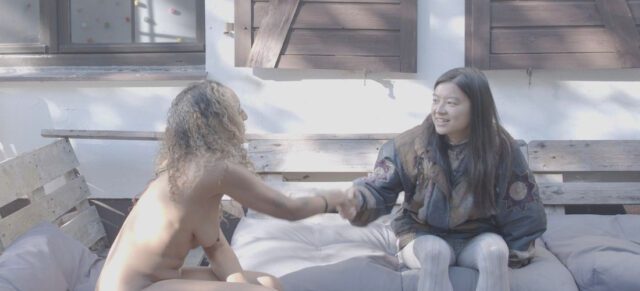
She told one story from New York, filming with a childhood friend. “I was crying — broke, lonely, miserable. I told her, ‘I have two digits in my bank account. No boyfriend. Nothing.’” She paused, laughing. “I suddenly thought, this is a good thing! I pushed her away mid-tears, set up my tripod, and filmed myself.”
These moments, unfiltered and raw, became the emotional texture of her film. “When I put myself in front of the camera, people were actually more comfortable,” she noted. “Because I was the most awkward person in the room.”
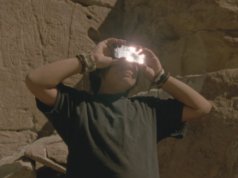
But it wasn’t just urban life and existential crises. Viv filmed in the desert, lugging gear across dunes to charge batteries. Yet the hardest shoot, she said, was with her family. Not because they resisted — quite the opposite. “They gave me everything. They never performed, never doubted me. And I felt so guilty looking at the footage,” she said. “They showed me love and support, and I used that for my work.”
Her final shoot was this past January, back in China, with her German DoP. “At our last dinner, I said, ‘No more filming. Tonight, we just have dinner.’” Her family went wild as they wanted to outdrink the DoP, convinced they could outperform a German.
Now, with a rough cut nearly complete, Viv is almost at the finish line. “These five years — all these mistakes and obstacles — they became blessings,” she said. “I realised that making a film is one of the hardest things in the world.”
She ended with a plea to the industry: “Please, be a little gentle with the films that didn’t succeed. And tell first-time filmmakers: this game sucks. But at the end of the dark tunnel, there’s at least a little bit of light.”