After a successful 3-year pilot, the ten members of the New Dawn Fund that aims to address inequities in representation across current international funding systems, are set to ink a new two-year agreement that will see Fund activities continue through to 2026.
Initially a brainchild of the Netherlands Film Fund, New Dawn was announced at Cannes 2021 and formally launched at Cannes 2022 to support films from previously unheard voices in order “to help create more diverse, and hence more representational, production output in the future.”
Members are the Netherlands Film Fund, Communauté française de Belgique – Centre du Cinéma et de l’Audiovisuel, Flanders Audiovisual Fund, Danish Film Institute, Finnish Film Foundation, Film Fund Luxembourg, Norwegian Film Institute, Instituto Português do Cinema e do Audiovisual, Screen Ireland and Telefilm Canada.
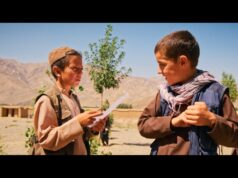
The fund oversees a budget of approximately one million euros per annum and has so far funded five feature documentaries, including Kinshuk Surjan’s Marching In The Dark which world-premiered at CPH:DOX in 2024.
Further grant recipients are the Irish docmakers Cara Holmes for Lesbian Lines and Myrid Carten for No Place Like Home; Maxime Jean-Baptiste for his Belgian doc Kouté Vwa, and Canadian doccer Nadia Louis-Desmarchais for Composées.
At Cannes 2024 the Belgian fiction feature Julie Keeps Quiet, recipient of New Dawn support, is selected for Semaine de la Critique.
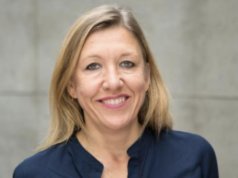
“I would say the New Dawn fund has been a success on different levels. First of all, because we had more funds join us, so we became a bigger fund, and secondly we became more visible,” Fund Chair Shamira Raphaël tells BDE. “So you can really see growth in the applications that we received, which for us stresses that there was a real need for a fund like this. And the numbers go up every funding. The more visibility we have the more that people reach out to us, and we have a lot of very good scripts coming in.”
Raphaël underlines that it is production grants that the Fund is dispensing. “You don’t have to pay it back and you can spend it on anything related to the production,” she confirms. “So it’s not like you have to spend it in a certain country or on a certain aspect of your film. It’s really free money, and in that way we hope to be able to give people more agency over their film.”
What’s more, anybody can apply as long as the production (whether majority or minority) has links with one of the member funds. From a doc perspective, grants come in blocks of 50- or 100,000 euros, depending on the needs of the production.
New Dawn has partnered with Cannes Docs in 2024 and will be looking to present documentaries that are at advanced production or post-production stage at future editions. For 2024 none were yet ready for unveiling to the international doc community in tow.
On May 21, during Doc Day, Raphaël will join a group of storytellers and industry leaders “to collectively imagine a better future for documentary film, for makers and audiences alike.”
So, how does the New Dawn Chair assess the next two years of Fund activity?
“I hope in the far future, it’ll develop in such way that we’re not necessary anymore,” she answers. “But for the near future, we are just going to continue in the same that we’re doing now. But we’re also focusing more on building a network. We have this treasure trove of support, as we call, partnerships with different organizations that can elevate these filmmakers besides funding.”
“And I think for us it’s important is that we want to stay organic. Our landscape changes, right. Society changes. What will we perceive as marginalized in the future? What is diversity? All of these are terms that are ever-evolving. So we also hope to evolve beside them as a fund. So we will be staying critical of ourselves and not etch anything in stone. I guess the future is fluid.”
On the filmmaking front, Raphaël is scripting her first feature, the hybrid fiction/doc feature Salvage together with Dutch outfit Lemming Film.
“If all goes well, it will be the first feature film made in Aruba in the local dialect,” she says. “Which is weird because Aruba is a colony of the Netherlands, but normally it’s only been used as a tropical backdrop, I would say, for TV shows and films. As I came to The Netherlands as part of the diaspora and I’m now established, I felt the need to go back and make a female revenge thriller on my island. It’s about representation on screen and I thought, how can I be working for New Dawn and not go back home to add to this story to my catalogue of work.”
“It’ll be a challenge as we don’t have any professional actors in Aruba, and I want it to be in the right dialect of Papiamento. So I think it’s going to be a really interesting project,” Raphaëla signs off.