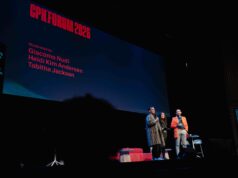
The Spanish Docs-in-Progress showcase featured four documentary projects at different stages of development, highlighting the diversity of contemporary Spanish non-fiction filmmaking through stories rooted in identity, environmental collapse, social control and collective healing. Organised with the support of ICEX, ICAA and Zinebi, the presentation took place on May 17 as part of the Marché du Film’s industry programme.
Opening the session, ICEX Creative Industries director Luis Mayoral described the selected works as “four remarkable projects that show the diversity and creativity of Spanish storytelling and filmmaking,” whilst Camilo Vázquez, Director of Promotion and Transformation at Spain’s ICAA, argued that documentary cinema in the country was currently experiencing “a very good moment” for international development and collaboration.
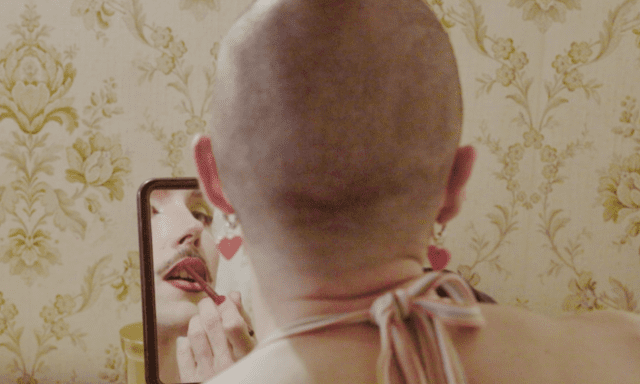
The showcase opened with Altxaliliak, the debut feature documentary by Basque filmmaker Maia Iribarne, produced by Doxa Producciones and co-produced between Spain and France. Set in a number of small Basque villages where conservative Catholic traditions remain deeply rooted, the doc follows a group of queer rural performers who created the first drag show in the Basque language.
Iribarne explained that the project emerged after witnessing the impact these performances had within their communities. “The first time I saw them perform, I was deeply moved,” she recalled, adding that the experience made her realise “we can create and reinvent ourselves here at home.”
The documentary follows four central protagonists as they navigate identity, trauma and belonging through their drag personas. The filmmaker said the project moves beyond observational documentary by incorporating fictional and fairy tale-inspired sequences in which the characters find “a space for healing and transformation.” Through this approach, the film explores broader questions surrounding self-representation and what it means to redefine Basque identity today.
The production team stressed the universal resonance of the story despite its highly local setting. “We believe there is still, right now, a person in a small village, somewhere in the world, waiting to see that they are not alone,” the producers said. The project has currently secured around 40% of its financing through regional public funds and Basque broadcasters EITB and Canal 2D, while seeking additional international partners.
The showcase’s second project, Artifacts of War, helmed by Colombian-Spanish filmmaker Jorge Caballero Ramos, was presented more discreetly, with the team emphasising the project’s ongoing investigative nature. Produced by Artefacto Films in Spain alongside Chile’s CangrejoFilms, the Spain-Chile-Colombia co-production examines the global circulation and deployment of so-called “less-lethal” weapons, moving between arms fairs, forensic research and testimonies linked to state violence. The production is currently seeking gap financing.
Environmental anxieties and rural survival came to the forefront in Homefire, the debut feature by Catalan filmmaker Neus Pagès. Produced by Nanouk Films and Glia Films in Spain alongside France’s Minimum Moderne, the picture follows a family of beekeepers attempting to sustain an alternative way of life in an abandoned Pyrenean village increasingly threatened by drought, industrial beekeeping and devastating wildfires.
Introducing the project, producer Laura Álvarez described the protagonists as people who had “left the city some years ago looking for a different way of life, a life more connected to nature and also more connected to each other.” Yet, she added, “even there, all the way up there, the forces they were trying to escape, the tentacles of capitalism, have reached them.”
Pagès, who has been filming the family for five years, framed the documentary as both intimate and political. She argued that contemporary society was living through “a time of collapse – political collapse, humanitarian, environmental,” while insisting that the film ultimately sought to imagine “another future.” According to the filmmaker, Homefire is fundamentally “a film about resistance, about the effort to sustain a way of life based on care, love and deeply connected to the land, in a world that is moving in the opposite direction.”
The Spain-France co-production has already secured nearly 80% of its budget, with backing from national film institutions and broadcasters in both countries. The team is now seeking sales representation, additional broadcasters, SVOD platforms and private investors, with a rough cut expected by November.
Closing the showcase was The Path That Walks, the latest documentary from Greek filmmaker Efthymia Zymvragaki, a co-production between Spain, the Netherlands and Greece, courtesy of Gris Medio, Witfilm and Ethereal. Blending autobiography, mythology and observational filmmaking, the project unfolds within a remote boarding cooking school in the Pyrenees, where vulnerable teenagers learn to cook while carrying histories marked by violence, migration and emotional trauma.
Zymvragaki described the kitchen as a place where “something is being transmitted through food, through ritual, through language,” adding that the film gradually moves “between the personal and the mythological.”
The filmmaker explained that recipes, instructions and fragments of memory become emotional tools within the film’s structure, while her approach aims “not to define or to explain, but just to listen [to] what cannot be fully said.”
Producer Babet Touw noted that the team is currently shooting and editing simultaneously, working towards a rough cut by the end of 2026 ahead of an anticipated 2028 release. The project has already received support from Creative Europe’s Co-Development scheme, Spain’s ICAA Production Fund and the Netherlands Film Fund, while the producers continue searching for broadcasters, sales agents and festival partners.