This time last year, the US desire to bring Greenland in from the cold seemed something of a joke. We all laughed (again) at the neo-colonial hubris of Trump, and his disregard both for diplomatic protocols and international law. This year, however, it all seems a little more serious, and a little more ominous.
One should (probably rightly) expect official comment on the situation to come ostensibly from political bodies, as opposed to cultural institutions such as CPH:DOX, especially at a time when Denmark is about to vote following the call of a snap election. Nevertheless, how does the festival respond to recent developments vis-à-vis Greenland?
Artistic director Niklas Engstrøm answers with measure. “We are not a foreign policy actor, of course. We’re a film festival and our response is, and should be, curatorial. We present works in this festival that examine power, colonial legacies, media narratives and geopolitical tensions, including those that implicate Denmark, Europe or the United States.”
The festival isn’t, therefore, going to “issue any political slogan” nor “wave the Greenland flag on social media.” Nevertheless, Engstrøm concedes, the situation “reflects a broader shift in the global order where respect for international law and territorial sovereignty appears increasingly fragile.”
The curatorial answer is thus to examine, through cinema, how such politically fraught situations can arise, not that the Greenland question is the most pressing right now. “Greenland is only one relatively small issue in a horrendously conflicted world at the moment,” Engstrøm agrees.
This year, the festival has devised a new Human Rights strand, one “that will continue to be dedicated to human rights and international law.”
“That’s where we can do something,” Engstrøm frames his response. “Like so many other [political] questions, the question regarding Greenland is complex, but we as a festival want to address that complexity in general in the world. That’s what we insist upon when public discourse becomes reductive.”
Engstrøm further emphasises how he and colleagues have remained true to the festival’s establishing ethos. “CPH:DOX has always been known for being brave when it comes to the curatorial approach, being curious and trying to explore the boundaries of documentary, and I think that is still a core value,” he says. Programming will, of course, include “very arty” films, but there is also what he terms an engaging “pop” dimension to his programming as well. There was a time when documentary festivals subscribed to the big screen aesthetic to the exclusion of all else, and would look down their noses at small-screen interlopers. No more. “I would say that we really try to walk every road with both feet,” says Engstrøm (employing a Danish term).
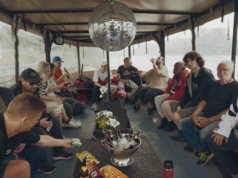
This is exemplified by the likes of special guests John Wilson, creator of the very funny HBO series How to with John Wilson, and the very British Louis Theroux, a doyen of the BBC, whose bumbling style both relaxes interviewees (famous or otherwise) and at the same time compels them into revelations they may not have considered pre-interview.
“John Wilson is dismantling the form from the inside while being completely in love with it, and I think that that is actually a deeply cinematic act whatever platform it lives on,” Engstrøm underlines. “it’s always been our job not to police borders but to cross them, and that’s what we are trying to do with these amazing guys.”
“We believe in these borders of documentary being porous,” he adds. “CPH:DOX was never in the business of protecting documentary cinema from the edges.”
Nor is CPH:DOX a festival confined to the Danish capital. Now it has what Engstrøm describes as “a huge nationwide dimension,” playing in 60 cities and towns across Denmark. Whether it is Copenhagen or Aarhus or a small town in the Danish countryside, “we also believe in the social room that the cinema is that dark room that is really special, and watching films together there is super important.”
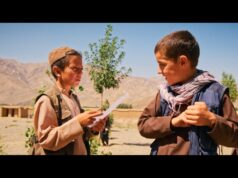
Ask the CPH:DOX Artistic Director what are his highlights of the programme in 2026 and he deflects the question, instead extolling the virtue of the opening film Mariinka by Flemish director Pieter-Jan De Pue.
“It’s a cinematic, masterful film that really has the texture that you get from filming on 16-millimetre, while going into one of the most important conflicts of today and doing it in a nuanced way where you explore families being shaken by war and ending up on both sides,” he says.
But such is Engstrøm’s enthusiasm for the programme he has devised, he can’t stop himself from flagging up other docs. “Amazomania in our main competition rewinds 30 years of archive to expose the colonial blind spots baked into the original footage of a Swedish documentary filmmaker in the 90s, and Nathan Grossman, the director, makes this film with the patience and courage to actually sit with the discomfort that this film [original] produces,” he says.
He also cites “the intensely ethical question of representation” as exemplified in the Next Wave competition title This is Not a French Film by Tom Adjibi. “It is exploring some of the same territory, this time the white gaze and who owns the story, but with wild self-lacerating comedy.”
Engstrøm further acknowledges the symbiotic relationship between the festival and CPH:Industry, which runs in tandem, and articulates his desire to deliver the best product for both public and professionals alike. “The future of cinema only works if both ends are being served properly, and I think the most beautiful part of any film festival is when industry and audiences meet in the darkness of the cinema theatres, and I’m looking so much forward to again doing that here in Copenhagen,” he signs off.