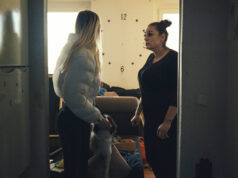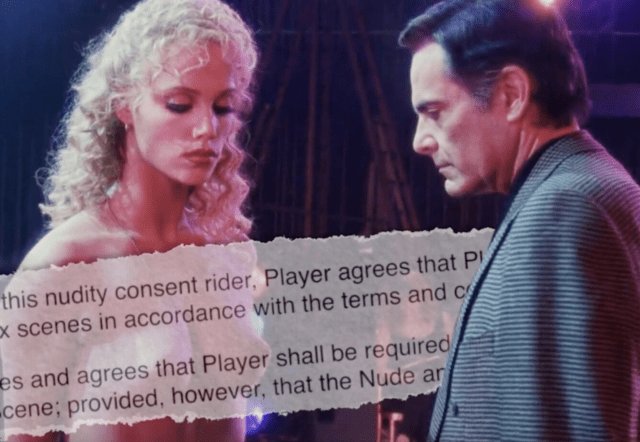
At CPH:DOX Forum director Kristy Guevara-Flanagan and producer Helen Hood Scheer pitched their feature doc project Body Parts, now fully financed and recently selected for an as-yet unnamed US ‘A’ fest. The film explores the making of American ‘sex’ scenes, and assesses the toll on those involved. What if women speak up, shed light, and demand an entertainment industry that takes its responsibility to heart, the filmmakers ask.
After the director yells “Cut!”, scenes with sex or nudity linger and the misogyny of the set fails to wash off, and no number of showers can clean a systemic problem, continue the notes for the CPH:DOX Forum project.
Produced by Chuparosa Films, confirmed financiers of the 90-minute film, currently in post-production are: California Humanities, California State University Long Beach, Fork Films, Harnisch Foundation, International Documentary Association Enterprise Fund, The Film Collaborative, Sundance Institute, University of California Los Angeles, in-Kind UCLA and CSULB. Before the summer world premiere, “we anticipate a very robust impact campaign,” says producer Hood Scheer, who is looking for sales representation and distribution deals during CPH:DOX.
“I’ve been making work that looks at gender and representation for nearly two decades,” explained director Kristy Guevara-Flanagan of the film. “I’m interested in working in the archival space, looking at the impact of media on our culture, particularly on the lives of women and girls.”
Body Parts builds on the director’s previous short What Happened To Her that looks at the representation of dead women in film and television. “In our new film…we use a similar approach, to focus on the making of sex scenes and the toll on those involved.”
Guevara-Flanagan interviews actresses, body doubles, cinematographers, editors, SAG officials, lawyers, writers, and directors, all of whom share first-hand experiences of creating scenes with simulated sex, desire, and sexualised abuse. Jane Fonda describes being conned into disrobing by Barbarella director (and then husband) Roger Vadim, while Rose McGowan describes the feeling of humiliation after she was pressured into nude scenes.
“Body Parts investigates the toxicity of the filmmaking space,” says the director. “It also provides deeper analysis of why this matters. It’s not just a problem of few actresses. It’s a problem with our culture. How all of us from a young age learn important cues about sex and desire, how to love and behave from what we see. It’s not just the stakes of celebrities. It’s the stakes of all of us.”
The film will also chronicle the history of sex and nudity on screen, starting with Eadweard Muybridge’s early motion studies, from the creation of the Hays Code to the Blaxploitation era to early queer cinema, looking at who traditionally gets to be the object of desire, the filmmakers note. “How does this impact the plurality of gender and sexual expression? How this relates to real world discussions around consent and rape culture?” asks Guevara-Flanagan.
The final act will flip the subject, focussing on ways in which sex, “arguably one of the most interesting, complicated and important parts of our lives,” can be rendered more authentic and devoid of any tendency towards exploitation. And expressed from a woman’s point of view, say the filmmakers.
“Film both mirrors creates culture. We not only hope to change onset practices within the film industry, but to help usher in a new and more just cinematic language. We think everyone should want to be a part of that mission,” she ends.