Inspired by Ursula K. Le Guin and other feminist thinkers, Irene Margrethe Kaltenborn’s The Mother Age is a sumptuously filmed ode to the beauty and power of nature.
Kaltenborn was particularly moved by the wisdom of Le Guin: ‘If it is human nature to collect things that are useful, edible or beautiful and put them in bags or baskets, then I am human after all.’ This is why baskets made of biodegradable material play such a prominent role in this ethereal, contemplative search for alternative ways of viewing the world, and our human relationship with it.
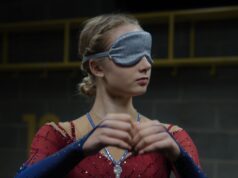
The daring opening scene lasts almost four minutes, during which the filmmaker is both part, and chronicler, of the extraordinary natural world around her. Accompanying this scene is a song from the Kalevala, the Finnish and Karelian national epic, in which the world emerges not through conquest, but through song and organic growth. The hypnotic music and singing set a calm, poetic, meditative tone that permeates the entire film.
Like the characters in her documentary, Irene Kaltenborn is more than an observer. All of these individuals have a relationship with nature that transcends mere enjoyment, consumption and (mis)use. They share a love and a sense of wonder for nature, and all that can be found within it. They also have a curiosity that goes beyond the ordinary: what can humanity learn about life, both now and in the past?
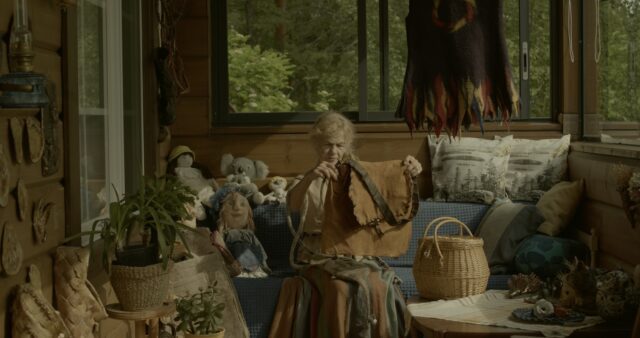
A basket weaver states how, just because something in nature has perished, that does not mean it never existed. The remnants of ancient cultures that we find are made of stone or ceramics, but the baskets that carried the axes, knives and jugs have long since disintegrated. Along similar lines, the other characters speak of the role of ancient trees, human evolution and what nature provides us with: food, clothing and materials, as well as scents, rhetoric, oils and sounds.
Kaltenborn gives her protagonists and viewers ample time not just to explain, but also to ponder and ask questions. The camera follows her as she accompanies her subjects through the forests and observes them in their natural environment. There are no bright colours, only natural ones. The music is integrated in a completely organic way — you only realise it was there when it’s gone.
The Mother Age shows and acknowledges the beauty and power of nature, giving it agency, as one of the characters says it should have. But it also acknowledges our human limitations when it comes to understanding the world — how we must be willing to learn in order to find what we are looking for.
We need to feel, hear and imagine beyond what is visible and tangible. This opens up the possibility of an entirely different past, present and future.
Finland, Norway and Sweden, 75 minutes, 2026
Director Irene Margrethe Kaltenborn
Producer Irene Margrethe Kaltenborn
Co-producer and right hand Margo Peegel
Cinematography Margo Peegel, Irene Kaltenborn
Editor Irene Kaltenborn
Sound Margo Peegel
Music Lauri Palomäki & Sipo Herva
Production company Vidåpne Øyne
Sales Irene Kaltenborn