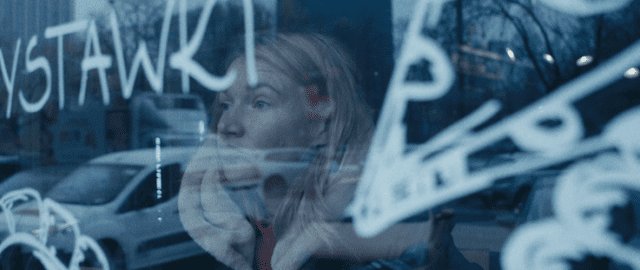
Estonian filmmaker Maris Salumets presented her investigative documentary War on Women at this year’s CPH:DOX Rough Cut presentation, held on 16 March at the Danish Film Institute’s Cinematheque, offering industry professionals an early look at a project that seeks to map the global networks driving anti-gender politics across Europe.
Blending investigative journalism with a deeply personal narrative, the film follows Salumets as she traces a transnational conservative movement that, she argues, is reshaping democratic systems under the banner of so-called “traditional family values.”
The project, currently in advanced post-production, is being pitched to potential finishing financiers, festival programmers and impact partners ahead of a planned release later this year or in early 2027.
Introducing the project, moderator Dani Carlaw of Screen Scotland highlighted Salumets’ background at the intersection of investigative reporting and creative documentary filmmaking. “This film begins with something profoundly personal – your relationship with your mother – and branches out into a global network reshaping democratic systems,” Carlaw noted.
For Salumets, the starting point of War on Women is precisely that personal connection. “This is a film about my own journey investigating the anti-gender movement in Europe and its close ties to US and Russian money and influence,” she told the audience.
“When connecting the dots, the story takes me across Eastern Europe, where these groups are tightening already restrictive abortion laws, blocking initiatives to teach equal rights in public schools and organising referendums to effectively ban progress on LGBTQI+ rights,” she explained.
According to Salumets, the investigation also points to broader geopolitical alliances. “Since 2010, US Christian-right organisations, Russian oligarchs and European conservative think tanks have invested hundreds of millions of euros into this movement,” she said. “What started as a crusade to protect ‘traditional family values’ increasingly appears to be about protecting patriarchy and white supremacy.”
The doc’s narrative interweaves this large-scale investigation with the helmer’s own story, including conversations with her mother, who often disagrees with Salumets liberal views. Salumets believes that placing herself inside the narrative is essential to making a complex political issue accessible to audiences.
“There have been academics and journalists covering this topic for years, yet somehow the message still doesn’t land,” she said. “Adding myself to the film is a way of taking the audience by the hand and navigating them through it. I show vulnerability and explain why I care.”
The project has been filmed across more than ten countries and draws on several years of research into the networks connecting conservative organisations in Europe and beyond. As the investigation unfolds, Salumets follows their activities from grassroots activism to high-level political influence, including events held within EU institutions and at the United Nations.
Producer Monica Lazurean-Gorgan, an experienced Romanian producer known for the Sundance Award-winning documentary Acasă, My Home, said the team is now in the final stages of post-production.
“We have finished filming and are in an advanced stage, planning to release the film late this year or early next year,” she said. “Right now we are looking for finishing funds, sales partners and festivals.”
War on Women is produced by Three Brothers in Estonia, with co-production partners including Manifest Film, Inselfilm Produktion, Gambit Film and Allfilm, spanning Estonia, Romania and Germany. The project has received support from the Estonian Film Institute, the Estonian Cultural Endowment, Creative Europe MEDIA MiniSlate, Fritt Ord, Chicken & Egg Pictures, ARTE, Eurimages, the Romanian Film Fund, Gambit and the International Media Support Documentary Film Grant, among others.
The documentary is expected to run approximately 90 minutes, with an additional extended version planned, and is currently targeting a September 2026 delivery.
Beyond traditional distribution, the filmmakers are also developing a large-scale impact campaign designed to work with organisations already engaged in gender-rights advocacy. Salumets presented her Impact campaign at FIFDH in Geneva earlier in March. Over the course of production, the team has built a network of more than thirty NGOs and civil-society groups across Europe and the United States.
“We’ve been filming for years and organically built connections with organisations working on these issues on the front lines,” Salumets revealed. “Now we’re looking at how the finished film can serve them.”
Impact strategist Marianne Olinger is attached as consulting producer, helping the team design outreach strategies aimed at policymakers, educators and grassroots activists.
For Salumets, the urgency of the story lies in its scale and political implications. “This is not only about reproductive rights,” she concluded. “It’s about understanding how closely gender equality is tied to democracy itself. If we don’t talk about it now, then when?”
With its mix of personal testimony, investigative reporting and geopolitical analysis, War on Women aims to illuminate what its creators describe as a coordinated global movement – and the democratic stakes they believe are attached to it.