Irish filmmaker Gar O’Rourke (Sanatorium) returned to CPH:DOX this year with The Siege of Paradise, a character-driven documentary exploring the human consequences of over-tourism in Italy’s Cinque Terre. The project was presented on 16 March as part of the festival’s Rough Cut programme, which showcases films nearing completion to industry professionals including festival programmers, distributors and sales agents.
The film, currently in the final stages of editing, is produced by Jessie Hayden, Andrew Freedman and Ken Wardrop for Dublin-based Venom Films, with Switzerland’s Dynamic Frame serving as co-production partner. International sales are being handled by MetFilm Sales.
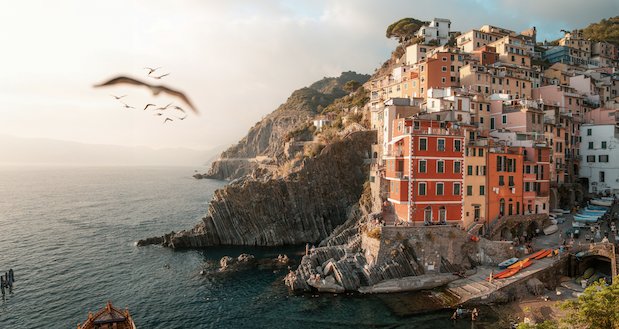
Set over a single summer season on the northern Italian Riviera, The Siege of Paradise examines what happens when one of the world’s most photographed landscapes becomes overwhelmed by visitors. Fewer than 4,000 residents live across the five villages of Cinque Terre, yet the region now receives more than four million tourists annually — a dramatic imbalance that forms the core tension of the documentary.
“Our documentary is a character-driven observational film set in Italy,” explained O’Rourke during the pitch. “It looks at what happens when one of the most beautiful places in the world becomes an epicentre for over-tourism, where fewer than 4,000 residents are effectively invaded by four million tourists.”
Rather than approaching the topic through policy debates or statistics alone, the film unfolds through a series of interconnected personal stories. The protagonists include Fabrizia, the mayor of Riomaggiore, who struggles to balance the needs of residents with the expectations of millions of visitors; Bartolo, an elderly winemaker seeking to foster a deeper cultural connection between travellers and the land while caring for his seriously ill wife; and Guido, one of the last remaining fishermen in a community where the profession has all but vanished.
Other figures highlight different facets of the local economy and tourism ecosystem. Carmelo, a restaurateur eager to capitalise on the tourist boom, finds himself at odds with his daughter Georgia, who questions whether she wants to inherit the relentless lifestyle of the family business. Meanwhile, Grace, a young American influencer visiting Cinque Terre in search of online content, gradually reveals the emotional complexity behind a seemingly carefree digital persona.
“A few years ago an Italian friend told me about this small place,” O’Rourke recalled. “I wanted to understand what that actually felt like. Most people recognise Cinque Terre in a photograph — it was literally a Microsoft screensaver — but our film is about the people who live inside that photograph.”
During the presentation, the team screened three excerpts from the near-final cut, including the film’s opening sequence, which introduces the characters and landscape before the arrival of the summer crowds; a sequence depicting the surge of tourists that locals describe as a “siege”; and a later scene in which Bartolo voices his frustration about the pressures facing the region. The light-hearted mood of those excerpts was warmly received by the industry audience in attendance.
Producer Jessie Hayden emphasised the film’s balance between social observation and emotional storytelling. “This is a cinematic documentary that carries Gar’s distinctive style — quirky, visually striking and deeply character-driven,” she said. “Humour plays an important role because it helps the audience connect with the people on screen and empathise with everyone in this world.”
Indeed, the filmmakers describe humour as a key narrative device rather than a distancing one. “We’re not taking the piss out of anyone,” Hayden added. “Everybody in the film has a heart and a sense of humour, and that helps audiences understand the complexity of the situation.”
The topic of over-tourism has become increasingly urgent across Europe and beyond, with destinations such as Venice, Barcelona and Amsterdam grappling with similar pressures. O’Rourke framed the doc within this broader global context. “Tourism is an enormous industry,” he noted. “One in ten people in the world works in tourism, and last year there were around 1.5 billion international tourists. What’s interesting is that roughly 80% of travellers go to just 10% of destinations, which means those places become more and more crowded.”
For the director, The Siege of Paradise attempts to approach this issue indirectly. “It’s a Trojan horse film,” he said. “First and foremost it’s about characters — people you quickly grow to love — but through their lives you start to understand the pressures shaping their community.”
Hayden stressed that the project has already attracted strong institutional backing. Financing partners include Screen Ireland, BBC Storyville, Arte, Eurimages, SVT, VPRO, the Swiss Federal Office of Culture, Walter Haefner Stiftung, and SRG SRF. The production also worked closely with Italian company Jump Cut during filming in Cinque Terre.
According to the catalogue information, the film has a running time of approximately 90 minutes and is expected to be completed in time for a June 2026 release window. With the budget of roughly €850,000 now fully secured, the filmmakers are focusing on finalising the edit and securing premiere opportunities.
“We’re in the final stage of editing and are keen to speak with festival programmers and distributors,” Hayden told the audience. “We already have several international partners on board and we’re excited to bring the film to audiences around the world.”
Moderating the session, Dani Carlaw praised the material shown during the pitch. “I could literally pour myself a glass of wine and watch the rest of the film,” she quipped, highlighting the project’s strong visual appeal and engaging characters.
Ultimately, O’Rourke believes the documentary’s audience may be as broad as the tourism phenomenon itself. “Anyone who likes to travel will recognise something in this film,” he said. “You might arrive expecting paradise, but what we’re really exploring is the human reality behind that postcard image.”
If the team succeeds in securing a high-profile festival launch, The Siege of Paradise could join the growing number of documentaries tackling tourism’s hidden costs — though, as its creators emphasise, with empathy and humour rather than accusation. As Hayden concluded, the film aims to leave viewers “with compassion both for the people who live in the places we visit and for the travellers who arrive there, selfie sticks and all.”