

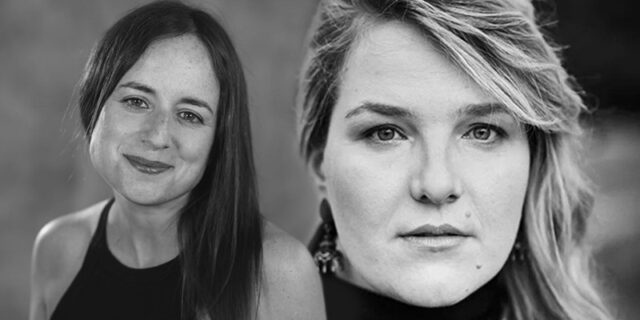
CPH:DOX last week hosted a conversation on the craft of doc with two highly talented women filmmakers – Estonia’s Anna Hints, director of Smoke Sauna Sisterhood (awarded with the prize for Best Directing in the World Cinema Documentary Competition at Sundance), and Chile’s Maite Alberdi, director of The Eternal Memory (Grand Jury Prize winner in the same section of the US-based gathering).
The talk, moderated by film journalist Wendy Mitchell, focused on these two films and in particular on their protagonists’ vulnerability, the makers’ sense of moral compass and some of their artistic and technical choices.
Speaking about how she approached the subjects of her latest documentary (Augusto Góngora and Paulina Urrutia), Alberdi pointed out that they were both “famous, important people in Chile,” since Góngora was a prominent TV host and cultural journalist, whilst Paulina Urrutia was an actress who also served as the country’s Minister of Culture between 2006 and 2010.
Some years ago, Alberdi was invited to host a university lecture. There, she met the couple and, despite already knowing Góngora was diagnosed with Alzheimer’s disease, was surprised to see how happy and close they were.
The making of the doc required an unusual approach: “When I started I told my producer that I will shoot until the end, and I didn’t know when was the end, but I was hoping to shoot for 10 years. We shot for four years. I shot for two years myself, and then the pandemic began. I sent the camera to her [Paulina] which she used to shoot the film for a year, and then I shot it myself for one more year.”
Alberdi underscored how her protagonists both developed a special relationship with the camera – as a former actress, Paulina learnt how to use it very quickly but also to forget about it, whilst Augusto was obviously much more aware of its presence and was curious about it, owing to his past work as an anchorman. The director also pointed out that the scenes filmed by Paulina possess a very deep level of intimacy which would have been very hard to achieve in her presence.
The film combines archive footage previously shot by Augusto, Paulina’s scenes and Alberdi’s own work. “So in the end, the three of us shot it.”
On the use of archive footage, Alberdi said that in the beginning she was planning to make a film about their love story, without dealing so much with their careers and their public life. “But then I came to realise that all this stuff really existed. So I needed to construct their figures and archive footage started to appear.”
Alberdi stressed how, for Augusto, the importance of collective memory has been a core concern throughout his life (throughout his career he was determined to ensure that the atrocities of the Pinochet dictatorship were never forgotten). These themes emerge throughout the film, even though the main focus remains on Paulina and Augusto’s love story. “I’ve learnt there’s not only one way to be a couple and to experience love,” she said.
The mic was then handed to Hints, who disclosed how Smoke Sauna Sisterhood all started when she was 11 after her grandfather had just died. While the body was still in his house, she went to the smoke sauna with her grandmother, her aunt and her niece. “My granny confessed there in the darkness that grandpa had lived with another woman and told things she’s never told before and after, and she let all her emotions out.”
This experience gave Hints the “deep sensation” that there’s “a safe space, where all emotions and experiences are allowed” with a community who listens to them and validates them. “I am from that [type of] culture, hold that heritage,” she added.
The movie was shot over the course of seven years – she knew several of her protagonists beforehand, but some others joined along the way.
Talking about the production process, Hints said that “in order to create intimacy you need to let yourself vulnerable, be open.”
“My background is in photography. One of the first things my photography professor told me was that whenever you take your camera out it’s subjective. […] Fly on the wall is a very humancentric idea. You’ve always a position, a glance, a gaze. The question is how conscious you are [about it] and with what you look at the subject.”
Careful work with the DoP was required to ensure the depicted bodies were not sexualised, a goal that was ultimately achieved, at least according to the positive feedback she has received from audiences. Hints’ bold choice of not showing faces – with one exception – has been rewarding too: “Because there are no faces, you feel more connected and you can relate to those bodies.”
A lot of preparation was required to shoot inside the smoke sauna without ruining the equipment. For example, the DoP had to use a cooling system with ice bags wrapped around the camera.
Some accidents did happen though. “In one scene there was a lot of smoke and we stayed too long, we went out and we vomited. […] We didn’t lose any cameras, [but] we lost two cheap lenses and an expensive monitor.” She further joked of her crew: “They weren’t ready for smoke sauna.”
Mitchell then moved on the conversation to the topic of the two filmmakers’ moral compass. Alberdi observed that there’s no one correct way of doing things or one truth to follow, but for her work it was essential to engage in an honest, constant dialogue with Augusto’s wife and his family, who take care of him the most and knew what’s best for him.“It’s very important for me, as a filmmaker and as an artist, to understand with what energy, direction, glance I’m doing something. I cannot be responsible for how this is ‘taken’ later by the audience, I can’t control that, but I can be in charge of how I’m dealing with it, shooting it… […] Trust is the big asset you have,” said Hints.





