

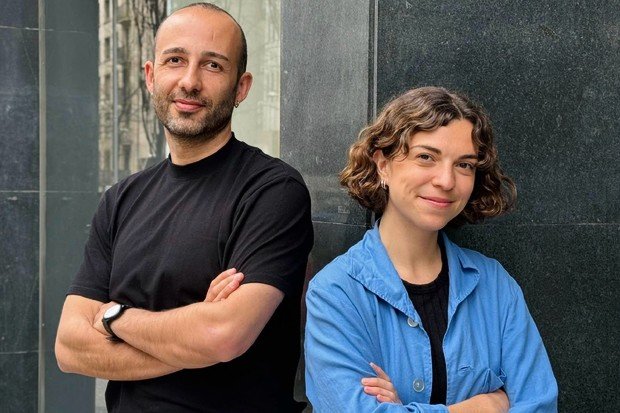
The 28th edition of the Catalan launches May 8, heralding 11 days of frenetic professional and public-facing doc activity.
Some 48 films are selected across eight sections, six of which are competitive: Official Competition; Official Competition – Visions; Docs & Archive; Docs&CAT for Catalan documentaries; DOC-U for student docs, and Docs&Teens for youth documentaries. There are two non-competitive sections – the Honorary Award programme dedicated to German producer Heino Deckert, and a Special Sessions section featuring unique screenings, special premieres, and cinematic events.
All activities will take place within Barcelona’s Contemporary Culture Center (CCCB), Casa Montjuïc and across some of Barcelona’s key cinemas and cultural houses.
The festival opens May 8 with Andres Veiel’s Riefenstahl, about the highly controversial and divisive filmmaker who acted as a propagandist for the Third Reich with films such as Triumph of the Will and Olympia.
“This year marks 80 years since the end of WWII in Europe, and it felt important to revisit Riefenstahl’s legacy — not to glorify it, but to interrogate it,” new co-director Maria Colomer tells BDE. “Her images shaped a totalitarian vision, and the film asks us to confront how beauty can be weaponized. Andres Veiel’s film is a sharp and timely reflection on power, propaganda, and the dangers of aesthetics.”
“It also fits perfectly with our archive focus. Riefenstahl uses archival material to question how history is told and who tells it. That’s a conversation that feels very current in a time of rising authoritarianism, violence and war,” she continues. “On another level, we’re all living with ‘archives’ now in the form of digital traces and curated identities. The film invites us to think critically about how images are constructed and consumed.”
The main international Competition programme touches upon crises, both at global and personal levels, from Tommy Gulliksen’s Facing War and two films on schooling either side of the Ukraine/Russia divide (Kateryna Gornostai’s Timestamp & David Borenstein and Pasha Talankin’s Mr Nobody Against Putin), to Yalla Parkour, about a parkour athlete in Gaza, to Two Strangers Trying Not To Kill Each Other by Jacob Perlmutter and Manon Ouimet, about a loving couple facing down the difficulties of advanced age.
“Films are a reflection of life, and life is complex and multifaceted,” says Colomer. “For DocsBarcelona 2025, we’ve selected 48 films that engage with the world through different lenses: political, poetic, personal, and philosophical. The strength of the programme lies in this balance. We’re drawn to films that respond to the present with honesty and artistic courage — whether that’s a large-scale political conflict or an intimate human experience.”
“So yes, the variety is essential. It’s not just about contrast, but about conversation — between themes, styles, and voices,” she continues. “That said, there’s a strong editorial line. One recurring thread is Europe’s current fragility: films about war, history, borders, and political instability. Another thread explores creative processes — from music and photography to architecture.”
Likewise, Catalan documentaries are squarely in the frame this year. “Catalonia has long been a key hub for documentary filmmaking in Spain, and this year’s selection, with thirteen Catalan productions, confirms that vitality,” says Colomer. “What stands out is the diversity of voices and styles. From the lyrical Dabruneba (Júlia Farràs Riu, Julieta Balasch Carulla, Mar Garro Lleonart, Paloma Bercovich Melamed) to the political O Silencio Heredado (Lucía Dapena González) to the personal Mares (Ariadna Seuba), these films respond to local realities while engaging in broader conversations.”
“As a festival, we see ourselves as part of this ecosystem. We aim to support local films — not just with a platform, but with real visibility and connections beyond borders. For this creative ecosystem to thrive, it needs long-term support, access to international networks, and platforms like DocsBarcelona to amplify its reach.”
Colomer furthermore underlines her satisfaction with this year’s roster of special guests. “Heino Deckert, who receives our Docs of Honour Award, is a major figure in European documentary, a producer who’s helped bring countless important films to life and connect voices across borders,” she says. “We’re also putting a spotlight on editing, with the teams behind Trains (directed by Maciej J. Drygas) and Riefenstahl joining us, and a new award for Best Editing. And we’ve introduced a new prize for Journalistic Relevance, to recognise the social impact of documentary work.”
“I’m especially looking forward to the Yalla Parkour Q&A. Ahmed Matar will be on stage with the President of the Catalan Palestinian Community. It promises to be a very powerful conversation,” Colomer continues. “And we’re proud of our local collaborations too, with local artists like Claraguilar, journalists like Mònica Terribas and Ana Polo, and collectives such as Jokko and Cantdefineme. For us, the festival is not just a showcase, but a space for exchange.”
Industry
Fellow co-director Èric Motjer will again be heading up the Industry programme, at the core of which are pitch events of new works (Public Pitch, 12 projects), of advanced projects (Rough Cut, 6 projects), of new media (New Tech Pitch, 6 projects) and the Speed Meetings sessions during which 8 “outstanding” projects, selected by an international committee, will take part in a curated series of 15-minute one-to-one meetings with leading financiers and industry experts.
“The selection process [from 650 submissions] was both competitive and curatorial. It wasn’t just about quality, but also about urgency and diversity,” Motjer tells BDE of the 4-way pitch event. “We prioritized projects with strong authorial voices and real artistic ambition, as well as stories that can be appealing to potential broadcasters that attend the market every year. That balance has guided DocsBarcelona since its beginnings.”
“Our reputation for care and attention to detail and real visibility makes DocsBarcelona a preferred stop for many filmmakers with projects in development. We’re proud to be seen as a ‘human-sized’ market,” he adds. “We aim to be meaningful, and that in itself tends to attract a certain calibre of directors and producers, but also broadcasters and multiple industry professionals.”
Furthermore, Motjer underlines the USPs of his event and its intrinsic value within the doc marketplace. “We understand the festival as a space that goes beyond films. Festivals and markets are places to discover new stories and artistic approaches to our world, but also privileged spaces from which we can reflect on today’s world and tomorrow’s challenges.”
He cites the DTalks, masterclasses, and film case studies which “bring intergenerational, cross-disciplinary voices into a range of debates.”
“Generating these discussions also promotes a culture of generosity, openness and critical thinking in the non-fiction field, key to contribute to an industry as we envision it. And of course, these conferences offer unique opportunities for networking and inspiration among creators, producers, institutions, and thinkers, far beyond transactional meetings,” he adds.
He further highlights the ‘Nobody Cares About the Truth’ conference, launched last year, which introduces a philosophical dimension to proceedings, opening up conversations around the role of truth in documentary filmmaking.
“In parallel, we remain strongly committed to geographic diversity, with robust representation of voices from Latin America, Europe, as well as Catalan and Spanish productions. Finally, for the very first time, we will celebrate the participation of a guest country, with Germany selected for the 28th edition of the festival,” he adds.
Every day, the news seems to report either on the escalation of an existing crisis or the emergence of a new one. With the world in such a state of flux/chaos, what role does documentary play, and as significantly, should doc fests redefine their own role in chronicling, reporting and informing on matters of such grave importance?
“The dominant systems shaping our world today are marked by deep contradictions and socioeconomic crises, from widespread disinformation to entrenched inequality,” Motjer responds. “In this context, documentary filmmaking remains one of the last strongholds of narrative integrity, offering a vital platform to explore and communicate complex realities to diverse audiences. The most powerful documentaries don’t claim to provide definitive answers; instead, they challenge viewers by posing the right questions.”
“Festivals like DocsBarcelona play a crucial role in this ecosystem, acting as collective, polyhedral mirrors and forums for interpretation, essential in times of crisis and transformation,” he continues. “In an era when attention is commodified, documentaries invite us to slow down and engage more deeply with realities. Documentary itself evolves with the world around it: it is fluid, porous, and responsive, and precisely for that reason, more essential than ever.”
“We also hold a responsibility for the narratives that reach our screens and cinemas. This involves a deliberate commitment to amplifying underrepresented voices and bringing to light stories that have long been marginalized or suppressed — whether due to political, gender-based, ethnic, or socioeconomic bias,” Motjer ends.





