

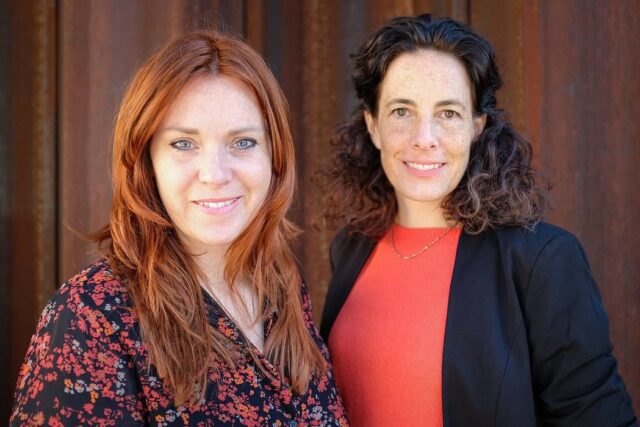
The 40th anniversary edition of DOK.fest Munich (May 7 to 18, and online May 12 to 25) sees a shift in the festival structure, with a series of thematic film sections replacing the previous generically-named sections (such as Panorama and Best of Fests).
The new programmes (which embrace themes such as African Encounters, Stranger Than Fiction, Empowered, Filmmaking in Exile and The Sound of Music) will offer greater clarity to audiences as they determine which films to attend or watch online. “Right now we have an easily accessible programme through sections that we created out of the submissions,” says new director Adele Kohout who, for the 40th edition of the festival, is sharing executive duties with outgoing director Daniel Sponsel. “It also makes our curatorial work visible to the audiences and they will find very easily what they are interested in, and then they can take a deep dive into the films.”
Despite the change of structure, the competitive edge remains, with the VIKTORIA Main Competition DOK.international, with a prize to the winning film of 10,000 euros; the DOK.deutsch Competition (7,500 euros); and the DOK.horizonte Competition – Cinema of Urgency ( with a prize of 5,000 euros). A boost this year is that producers whose works are shown in the DOK.international Main Competition – and whose country of (co-)production is Germany – will now receive a reference grant of 50,000 reference points from the German Federal Film Board (FFA).
“In the last few editions, we have repeatedly lost one or two important films because the producers awarded them to festivals where they received reference points,” Kohout and Sponsel said at the programme launch on April 30. “That was understandable: 50,000 points are usually worth around 50,000 euros, which is valuable as seed money for the next production. This makes DOK.fest München even more important for the industry and we can look forward to even more top-class productions in the future.”
Opening film
This year’s opening film is Friendly Fire by Klaus Fried, which concerns the director’s father Erich Fried, one of post-war Germany’s most significant poets, who condemned injustices in verse and was a dedicated writer of love poems. In the film we see what it is like to grow up the son of such an iconic figure of German letters.
“There are all different facets that you have to keep in mind and be attentive to when picking an opening film. There has to be strong storytelling in it and it must be on a topic that is urgent or important enough for that [status],” Kohout says of the choice.
“Friendly Fire has all the facets of dialogue, openness, democratic thought and thinking all together in one person,” she continues. “And it’s also a family affair. It’s very emotional and touching, about a son who becomes a little traumatized when following along the path of finding his father, one of the most influential German poets and writers. He can’t understand his writing because he never learned the language, as Erich always kept his children away from learning German…It has this strong message that we think is urgent right now – to show solidarity upfront, to create dialogue, to be open for others and to apply democratic thought within everything we do. This is the core of the film.”
The film also chimes with the festival’s establishing ethos. “What is our mission? It is basically to create dialogue, to be open and propose ideas, propose perspectives, and to stay in touch with all different fragments of society, especially when it comes to the democracy issues that we are all being challenged right now,” Kohout stresses.
“That was the idea of creating a festival in the 1980s,” she adds of DOK.fest’s creation as a result of Munich Film Festival’s then-reluctance to screen documentaries. “That was why AG DOK, the advocacy association for documentary film within Germany, stated that there needs to be a documentary film festival. So from that impulse DOK.fest Munich was born. And that same impulse became part of the core DNA.”
DOK.forum
DOK.forum is the professional platform of DOK.fest Munich, and will be presented May 7 to 11. The programme comprises two main components. DOK.forum Marketplace is a co-production and distribution hub where filmmakers present their in-development documentary projects to industry professionals. This year saw a record number of submissions, with 44 projects ultimately selected and invited to Munich. DOK.forum Perspectives, meanwhile, is a special program for filmmakers focusing on media policy, technological innovation, and narrative trends.
“Basically we’re trying to be awake to, and aware of, new ways of storytelling, distribution and audience outreach. What are the new technical requirements to really stay alert and follow the latest trends? What is being requested by the documentary professionals?” Kohout notes the questions she and her Industry colleagues are looking to answer.
“So we are a listener on the needs of the industry…to see what is important. What is new on the market? How can we help those projects that are becoming films? How can we support them at their different stages of development, production, etc.? Also, we want to give an overview what is new, what is coming, what might be challenges in future work if you’re talking about AI or if you’re talking about new ways of storytelling, through digital or VR.”
Highlights of the Perspective talks programme include an Adobe Masterclass with Michael Münch on Adobe Premiere Pro: Integrated AI tools; an African Encounters Panel Discussion titles ‘Let’s talk climate!’ and a session on Co-producing with the Baltics.
Daniel Sponsel
Kohout reserves praise for outgoing Festival Director Daniel Sponsel who will take over as President of the University of Television and Film Munich October 1 2025. He joined the festival in 2009.
“Daniel introduced the whole industry part and he brought in the whole educational part. These were completely new to the festival. He changed the festival duration from seven to 10 days,” she says. “Now we are in the biggest theatre here in Munich for the opening, when there are 1,500 people in the auditorium, which is great, and we are there over four other evenings. It was a very unique, very cinephile festival when he took it over, and now it’s become huge. We are the biggest documentary film festival in Germany when it comes to audience size. A lot of people from all over Germany, as well as from Munich, come to see the films, to meet the guests and to be part of the industry or the educational section. Those are big milestones that he brought to the festival.”
In 2016, Kohout took over co-management of DOK.fest München, during which time she shaped its organisational and conceptual development. “We were walking next to each other in tandem,” Kohout says of her relationship with Sponsel. “And of course this I will keep as a treasure and take it forward and bring the festival to the next level.”
That future will require careful navigation, she adds of regional funding cuts that are affecting the cultural and festival sectors in Germany. Public funding makes up 40% of the festival’s budget, Kohout reminds BDE. “That might be a little bit challenging, but we will find creative solutions to see how to handle this as well. We want to stay alert and remain the platform that we are right now, to keep the core DNA of the festival alive and continue to be that place of dialogue, of negotiation and of creative impulses and inputs.”





