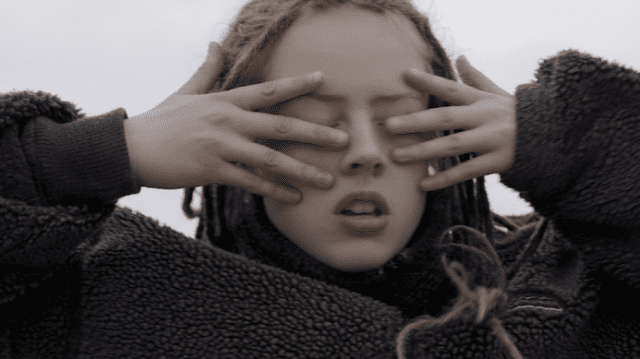
Becoming Roosi is very much a documentary of our times, concerning an teenager/young woman who is struggling to cope with the intensity of her upbringing. Estonian director Margit Lillak has followed Roosi for the last 10 years, since she was a child of eight. Now the teenager is torn between becoming an activist herself and enjoying her adolescent years as creatively and as joyously as possible.
“I met Roosi 10 years ago…when she was living with her parents in an eco-commune while I was shooting my last film [The Circle, 2020) and what was supposed to be a picture-perfect childhood turned into a nightmare and a family tragedy for her,” Lillak told the Leipzig professional audience.
“After a couple of years, I met Roosi again when she was a teenager at the age of 15, and that’s when I started Becoming Roosi as a film on its own. She had left the commune and was living with her mother in a small xenophobic town of Estonia. And the metamorphosis that I witnessed in front of my eyes was very surprising – and made me very curious.”
“That’s why I decided to make a film of a teenager that comes from this special heritage as she was living with her mother who was a doomsday activist and [Roosi] was heavily burdened by this climate anxiety and guilt.”
The film will be ready for delivery at the end 2024, beginning of 2025, producer Dirk Manthey of German Dirk Manthey Film confirmed. “For me, above all, this film is about the desire to change things for the better. It’s about idealism, it’s about youth…it’s about dreams and failure with great world-shaking debates between young and all. [And it’s] always surprising, like life itself,” he said. “We are looking for festival premieres, broadcasters, and a great sales agent to bring Becoming Roosi into the world.”
Lillak explained to Business Doc Europe her qualities as a director. “My main strength is probably resilience and patience. I often found myself waiting for things to unravel, yet have learned over the years to trust my instinct for storytelling, and my belief that the hunch of a story will finally pay off. Experience tells me it will, you just have to be very aware and present to what you want to tell,” she says. “Also, I think I am good in making authentic connections with my characters.”
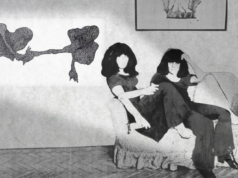
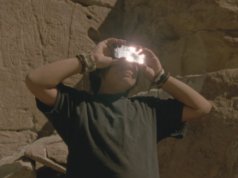
She further described the look of the film as being ‘eclectic’. “We have 2 different timelines, the present adolescence, and the past in the childhood which is rather a small proportion of the film. The material has a different style. Also, a third element we use is the protagonist’s video content she made for social media and friends. The style is a bit experimental and the randomness [relates] with the way young people publish their content. The ‘randomness’ becomes a style of storytelling.”
“Moving through the bottleneck of adolescence, we see a lot of humour and irony and comic situations between the teenager and the parents,” Lillak adds. “We see the archetypal conflict in the mother-daughter relationship.”
“I think Roosi, is in a way, a hero of our time. She uses creativity to tackle this crisis. I think the way to deal with this climate and environmental anxiety is to take action and help others, [but] her tool to ground herself is creativity. She’s active, funny, and forward-looking, and she represents a most conscious part of this generation, and feels a need to rebel against social, political, and environmental injustice. The film will deal with this with humour and creative energy. It’s an inside view of this generation – and also a mirror to process parenthood.”