

The second edition of Dokumentale, which this year moved to June from its original October slot, kicks off in earnest June 11 with the Marlene Dietrich-inspired Glanz & Widerstand, an immersive and experimental ballet which explores the myth of the legendary German star.
Thereafter, the second edition of the Berlin-based event, running to June 22, will serve up a feast of documentary storytelling across different media, comprising forty documentary films, ten live podcasts, readings from nine new non-fiction books, a curated kids’ programme and seven VX projects.
Core to proceedings for international professionals is the D’Hub platform for non-fiction storytelling, which includes The Good Media Pitch which seeks to “amplify the visibility and reach of documentary formats in Germany and to establish them as powerful tools for social change.”
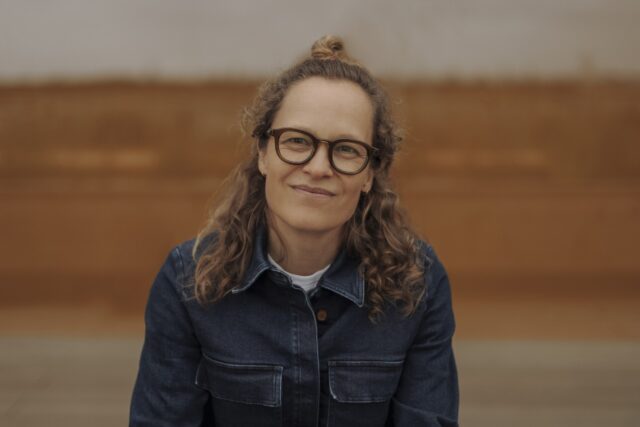
“I think what we at Dokumentale stand for – and the D’Hub industry program and Good Media Pitch are very much part of it – is that we are celebrating humanity,” says Impact Director Vivian Schröder, who launched Dokumentale in 2024 together with Artistic Director Anna Ramskogler-Witt. “We come together in a space as humans and we listen to each other, and sometimes we need to become uncomfortable in uncomfortable conversations. These are the times that demand it, and we want to have a space for multiple perspectives and dialogue.”
Not that the festival is primarily an industry-facing event. Far from it, says Schröder. “So many great documentaries, especially from around the world, can rarely be seen or found on a platform that everyone knows, or can only be seen on one you need to be a subscriber of.”
The festival therefore sets out to deliver great new non-fiction to a very savvy and cineaste public. “But we are not just another festival showing films. What we really want is to have Impact running through the entire festival,” Schröder adds. “We’ve got three people working on outreach and trying to find the right audiences, and we feel that we want to build something special around every single film that we show, whether it’s a Q&A with the film team or to open up and talk about the topic and see who we can invite, see how we can connect. So we are catering to both industry and public. We’re pushing necessary conversations with professionals – but also in society.”
Schröder further points out an aim of the festival to connect with other nonfiction storytellers from other disciplines – from the book world to live podcast to VR – and this year the festival will present a photography showcase.
“There is a certain sense of urgency, but also [the makers are] portraying real life and that can also be fun. We don’t want to only focus obviously on exposing injustices. We also want to celebrate the whole variety of life and that includes the positive news, the laughter, the silliness, everything. So we’re trying to connect all these storytellers with each other.”
From an Industry perspective, the core days are 12-15 June, with the Good Media Pitch opening proceedings on June 12. The event will entail the presentation of Impact strategies of six projects to potential partners from media, politics, business and civil society. “These presentations are not just about showcasing stories – they’re about building momentum,” the festival writes.
The projects are:
- 9-Month Contract by Ketevan Vashagashvili (Georgia, Bulgaria, Germany, 2025). Feature documentary
- Auto Queens by Haricharan Sraiyanti (India, 2025) Short documentary
- Build It and They Will Come by Julian Dykmans (Germany, Ghana, 2025) Short documentary
- Dude, Where is the Metaverse (WT) by Katharina Haverich (Germany, 2025) Short documentary series
- Intersection by Karoline Rößler (Germany, 2025) Short documentary series
- Sorry for the Genocide (WT) by Theodora Shandé, Matteo Sant’Unione (Germany, 2025) Feature documentary
But why the emphasis on short form in the Impact programme? Aren’t features anbetter vehicle to profile subjects and topics that demand wider discussion and outreach. Schröder answers from the perspective of the eventual audience.
“It’s as much about the discussion after the film,” she says. “Most people do not have time for more than two hours [cinema attendance]. And that actually leaves little time for a really in-depth talk about the topic. But if the film is only 15 to maximum 30 minutes long, then obviously that leaves much longer time to discuss in depth with all the people that you’ve invited. That’s where the impact can be created.”
Schröder points to a reverse effect of placing the spotlight on shorts. “Last year, we had a short film called Ice Builders (directed by Francesco Clerici, Tommaso Barbaro, produced by Fabio Saitto), and because they’ve built so much momentum around the film with their impact campaign, they’re now working on a feature-length, so it can also go the other way.” The synopsis for Ice Builders reads how, today, in an unequal battle against climate change, the people of Ladakh (in the Himalayas) are constructing artificial glaciers, mixing traditional techniques and modern practices to combat a lack of water in spring and to help replenish groundwater.
Schröder is happy to align herself closely with other international Impact events and festivals, such as Doc Society’s Good Pitch, FIFDH Impact Days, One World and Movies That Matter. Germany seems a natural home for such an event, even if there may be local hurdles to overcome.
“We are not in a city like Geneva where the UN and a lot of NGOs sit, and other foundations and so on,” she says. “Germany is very decentralized and so it’s much harder to get the people, and we don’t have the budget to just invite everyone in and pay for their travels and maybe even cover a salary if they are working on their own, for example.” Also, she feels that German stakeholders would prefer to test the Impact waters, to be assured that events like Good Media Pitch are truly up and running before they fully commit to supporting the projects.
Nevertheless, Schröder is confident that she and co-founder Ramskogler-Witt are on the right track with Dokumentale. “That was also the feedback we got after last year, that this festival is really needed, that people are looking for community, that they’re looking for places where they can have real exchange and honest conversations,” she emphasises.
“I really find that in times where media is under such pressure because of funding cuts, or when governments are leaning to a more extreme side of the political spectrum, that we need these spaces to have that independent storytelling and media,” she adds. “Spaces where we are exchanging a lot of thoughts and being really collegial and thinking about how can we help each other to bring out the stories that sometimes are being blocked.”
“To create community is something we really feel is at the bottom of our motivation, and also for making Dokumentale what it is,” Schröder signs off.





