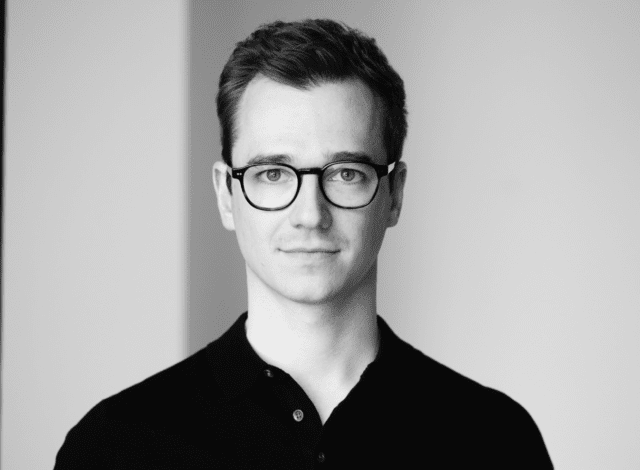
Producer Johannes Schubert has eclectic tastes and an expansive approach to the business of production. He produces fiction and animation as well as documentary, and is an avowed internationalist, having studied at NFTS (UK) and worked out of Berlin, as well as his home country of Austria. He describes himself as a “director-led producer.”
“I don’t believe in an old school producer’s approach [of] trying to call the shot. I work in a very collaborative, low hierarchical way,” he told BDE on arrival at Cannes before his immersion into this year’s Producer on the Move programme.
He further explains his approach to the business of docmaking. “Our films never try to reassure preconceptions of the audience or ourselves as the filmmakers. Never judging is genuinely a rule for us. However, the films I produce shall have a POV and carry strong filmmaker voices themselves.
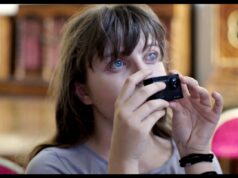
This is evidenced in the likes of his Hot Docs Audience Award-winning Dear Future Children (2021), directed by Franz Böhm, in which three young female activists in Hong Kong, Chile, and Uganda cope with the staggering personal impacts of their activism, and Una Primavera (2018) by Valentina Primavera, in which a daughter follows her mother with a camera on a personal journey, leading them both between the contradictions of family.
“I have experienced [how] especially documentary filmmakers are incredibly kind and open-minded people. They are ambassadors for a better world and are courageous. I am longing for collaboration with them, and together we always try to challenge the status quo. This is first and foremost when it comes to the stories we tell and the approach to filmmaking.”
Johannes started out as a reporter for the Austrian public television before attending NFTS in the UK, where he developed a genuine aptitude for the discipline of doc. “I’m fascinated by the form of documentary filmmaking just because it is happening whilst you are making the film,” he says.
He also looks beyond his country’s borders as a matter of course when looking to produce his films. “I think international co-production and international filmmaking is in the DNA of my producing world, and working in an international and European environment comes naturally to me,” Schubert says.
“Austria, from the size of its population alone [8.9 million people] is a fairly small country. We depend on international co-production. I want to make films that are a gateway into the world, and when it comes to the stories that we tell, we don’t want to make films solely for an Austrian audience. We want to make films that are interesting for people everywhere.”
Schubert outlines the types of discussions he will be having in Cannes. “For me, a burning question is how we can create a sustainable model for everyone involved in documentary films? The acceptance of documentary films in the industry and by the audience seems high on the one hand. However, I feel that this is not reflected in the production framework and realities available for these films, especially the distribution.“
“I want to learn from like-minded producers how they approach this challenge of producing films created within the moment of the stories unfolding,” he adds. “The word ‘sustainability’ is essential. Apart from how films are produced, sustainability also means how we find a route for each project that ideally puts them in the collective mindset and are not aired once and [then] forgotten.”
And in terms of what he considers an ideal takeaway from the event, Schubert has a successful future keenly in his sights.
“I am grateful to be part of this group of fascinating producers. The European Film Promotion has planned an exceptional program and created a framework for building solid relationships. My wish is to meet producers that you can walk part of the way with, and maybe in 10 years, we will say this is where it started, at Producers on the Move in Cannes 2022,” he ends.