The 24th FIFDH attracted more than 32,000 festival-goers who not only watched 50+ films (incl 35 docs) but attended discussions featuring more than 200 guests from the worlds of art, science, politics and activism. Thirteen films received awards at the prize ceremony, held on March 14. “These films shed light on realities too often overlooked, and open up powerful new perspectives. We are proud to celebrate works that inspire courage and give voice to those too often unheard,” said Laila Alonso Huarte and Laura Longobardi, Editorial Co-Directors, FIFDH.
INTERNATIONAL DOCUMENTARY COMPETITION
- FIFDH Geneva Grand Award, endowed with CHF 10,000. Winner: A Fox Under a Pink Moon – Soraya Akhlaghi & Mehrdad Oskouei. Citation: “A talented young Afghan artist driven by a powerful desire to transform her reality through art, Soraya Akhlaghi documents her courageous and deeply risky journey through a long-distance cinematic collaboration with Iranian filmmaker Mehrdad Oskouei. Their connection across technology and geography mirrors an experience shared by millions of migrants in a time of global upheaval. A Fox Under a Pink Moon is a deeply personal work: creative, harrowing and enlightening.”
- FIFDH Gilda Vieira de Mello Award, in honor of her son Sergio Vieira de Mello, endowed with CHF 5,000. Offered by the Barbara Hendricks Foundation for Peace and Reconciliation. Winner: Letters from Wolf Street – Arjun Talwar. Citation: “A unique work. Made on a small budget but with great care, Letters from Wolf Street is a nuanced, sophisticated and highly accessible film about grief and belonging. Far from his native India, Arjun Talwar confronts his own loneliness by building close relationships with neighbours in Warsaw. Through these encounters, he reveals everyday racism and the barriers to acceptance faced by migrants and long-standing Polish minorities alike. Both revealing and tender.”
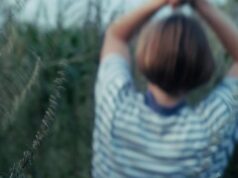
- Youth Jury Award – Documentary Endowed with CHF 3,000 Winner: A Fox Under a Pink Moon – Soraya Akhlaghi & Mehrdad Oskouei Citation: “The Youth Jury for Documentaries chose to award A Fox Under a Pink Moon, a particularly moving film. A strong sense of closeness emerged with Soraya, the protagonist, notably because of her age, but also through shared life experiences. This sense of closeness is reinforced by the film’s distinctive form, which alternates fragments of her daily life filmed on a phone with animated sequences inspired by her drawings and sculptures. Soraya does not film when she wants to, but when she can. This constraint gives the film its sincerity and lends particular weight to every image. Through these fragments emerges the turbulent journey of a resilient young woman who transforms her wounds into creation, and for whom art becomes a means of survival and renewal.”
FOCUS COMPETITION
- Vision for Human Rights Award, endowed with CHF 5,000. Winner: Yurlu | Country – Yaara Bou Melhem. Citation: “This film stands out for the quiet force of its perspective and its clear call for accountability. Yaara Bou Melhem’s hypnotic cinematography portrays Banjima Country with tenderness and dignity, while offering an uncompromising critique of colonial exploitation of land, labour, sovereignty and cultural heritage. Its consequences are still felt today in the deadly legacy of asbestos, which continues to claim lives. Yurlu | Country shows how environmental destruction and human rights abuses intersect through corporate impunity and government complicity. At a time of renewed global expansion in mining and resource extraction, its urgency is unmistakable.”
CONVERGENCES AWARD
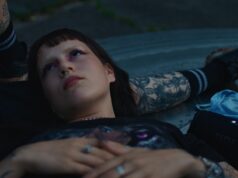
- Winner: NIÑXS by Kani Lapuerta. Synopsis: At the foot of Tepozteco, a sacred hill that governs the winds and fertility, lies the small town of Tepoztlán. Against this backdrop, fifteen-year-old Karla’s body and mind are undergoing a revolution. While Karla navigates her transition, Kani shapes eight years of footage into a joyful film, as they handle the vagaries of a rural trans adolescence together.
Among the twenty Forums held during the Festival, several attracted large audiences. FIFDH highlights How Can Europe Resist Re-Fascisation? with historians and activists Stefanie Prezioso, Narjess Djaafar, Emmanuel Achiri and Meriam Mastour, which examined the normalisation of far-right ideas and the gradual erosion of the rule of law. The Failure of International Law in Gaza forum addressed the inability of international institutions to respond to violence against civilian populations, reflecting the work of Francesca Albanese, UN Special Rapporteur on the situation of human rights in the Occupied Palestinian Territories. Finally, Solidarity Is Not a Slogan, with Sarah Schulman and Adèle Haenel, explored solidarity as a demanding political practice – shaped by tensions, yet essential to contemporary struggles. Together, these discussions created space for collective reflection on the issues confronting the world today.
“The films shown at FIFDH come from across the world and remind us that human rights are not just legal concepts : they are lived realities, wherever we come from and whoever we are (…). The artists behind these films give voice to the silent majority and, in doing so, stand up for human rights” commented Volker Türk, UN High Commissioner for Human Rights, 6 March 2026.
Click here to read about the project winners of Impact Days 2026.
Speaking to Business Doc Europe before the March 14 closing ceremony, FIFDH Editorial Co-Director Laura Longobardi commented on the qualities of the festival audience, who are asked to view and assess the selected works in times of global crisis.
“I think that people need to make sense of what’s going on, they need to understand – at least those who are not just diving into avoidance…and denial,” she said. “People who really want to make sense of what’s going on and understand, they naturally come to a place like FIFDH, because the festival is a place in which, throughout our programme, we try, with films and discussions, to make a landscape of the different challenges of our time…We work on a [timescale] which is longer than the news.”
She stressed the strong synergy between the festival and Impact Days. “Impact Days is the mirror, because the professionals are also trying to make sense of what’s going on, by telling stories, by going towards situations and communities and events…so that the complexity of the world is better understood.”
“When people are scared they have two options,” she added. “Either they freeze and they don’t do anything because they feel isolated, they feel that they are powerless. Or they mobilise. And I think that a great strength that our festival has – but other festivals as well – is to bring people together and to make them feel that individually or collectively they can react. The films that we have chosen try to give a sense of hope and to give a sense that we can do something if we don’t give up. We cannot give up in a way.”
2026 marked the eighth edition of Impact Days. How does Longobardi assess the development of the impact sector over this period?
“To be honest I find it quite slow,” she responded, noting that Impact Days should be just one of many such events throughout the yearly calendar. “The pitching session is [the time] when everything comes together, because you have the film, you have the story and you have what you can do with the story and [assess] what you need, so in a nutshell you have everything you need to understand what it’s all about.”
“But still we have these conversations with a lot of the North American impact producers or practitioners, and they were telling me that they don’t have a space like Impact Days in North America,” she added. “I think that impact production is like doing a co-production. You don’t just go to a [single] market and then find all the money, all the partners…and then you produce your film. You need to go to different markets to meet different people to continue conversations, and I dream of a situation which is the same for impact production in which you have, in every continent, one or two events like that throughout the year.”
“Impact production is about local partnerships,” Longobardi continues. “So we have the capacity in Geneva of the Human Rights Council of the United Nations which [covers] international law, then maybe in the United States where it is more about the US administration or the Security Council or about peace…then maybe in Asia or in Africa, so producers could go with their project to different places to find different partners and to develop different parts of the campaign. I think that would be ideal. You cannot have just one conversation and then wait until the next year for your answer.”
“It’s not about competition it’s about collaboration,” she added of a potential network of Impact events. “It’s about ‘what I can do for you, and maybe I know somebody, and maybe you should go there.’ So the more we are to collectively support this approach, the easier and more effective it can become.”