Swiss Focus was a new Impact Days event launched for this year’s edition – a space for connection and dialogue between Swiss impact stakeholders of all language regions, international Impact Days guests and Swiss filmmakers. The Impact campaigns of four projects were pitched, with the inaugural Swiss Focus Award (CHF 2,500, approx. €2,600) going to the project Nathalie by Tamara Milosevic.
“What is the first thing that comes up into your mind when you think about Switzerland?” Milosevic asked the professional audience in Geneva. “Mountains? Chocolate? Rolex? Tax paradise? Yes, these clichés make sense but statistically it should be something else – debt. Hard to believe, but despite its low national debt, Switzerland has one of highest levels of private debt in the world.”
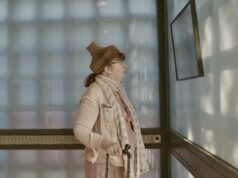
Nathalie reflects the fate of many people who, despite their best efforts, live on minimum subsistence in Switzerland. The eponymous protagonist struggles with the challenges of a precarious financial situation. Various circumstances have placed her in a difficult situation, making everyday life complicated for her and her children. These circumstances often lead to health and psychological problems, which create a vicious circle for her professional and family survival. Nevertheless, she is a fighter and a woman who knows best how to wield dark humour.
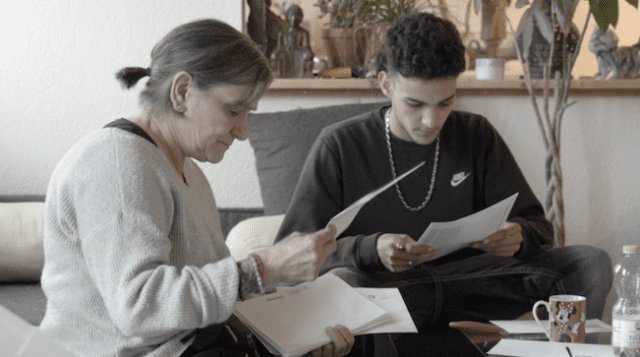
“We have followed [the titular] Nathalie for more than two years. Her story isn’t just hers, it’s part of a bigger problem and this becomes very personal to us,” said Milosevic. “So, our goal is to raise awareness that over indebted persons [should] get a second chance, to push for better debt laws through collaboration and to promote legal and psychological support, especially for single mothers. Right now, we are at the final stage of editing and we plan our cinema release for September. We are looking for impact partners, experts on poverty and mental health who can join us on this journey.”
The 92’ or 6 x 25’ Chess Behind Bars, directed by Ivo Zen, is a project about how chess can transform the lives of people in jails and prisons around the world.
“You might wonder why chess,” Zen pondered. “It’s a personal story. When I was in a difficult period of my life, I realized that actually chess can free your mind…Everyday worries disappear and that helped me to move on.”
“My other motivation for this film is a certain affinity I’ve had with marginalized people, and that draws me naturally to people in jails and prisons,” Zen added. “The game of chess has a long history and it has travelled through the cultures of the world for thousands of years. The pieces and the board have such a unique appeal and metaphorical value, and we realized that that helps inmates to look at their life differently, and that it gives them also a possibility to tell their stories in a new way.”
The project is in late development with a mooted delivery date of November 2026.
Producer Kaleo La Belle outlined his Impact campaign plans. “Our goals, most importantly, are to humanize incarcerated individuals, to advocate for second chances and to expand chess programs in prisons around the world,” he said. “We have time to develop this campaign, we have time to interact and exchange ideas with partners and we are looking to partner with people who are passionate about chess, with NGOs who have focus on social justice, but also we’re looking for an Impact producer and an Impact distributor.”
In Suium Sulaimanova and Antonin Lechat’s A Satellite for Burulaï, Zhibek, founder of the Kyrgyz Space Program (KSP), fights for women’s rights in Kyrgyzstan. The KSP women want to change mentalities and open up a meaningful discussion about violence against women in the country. They aim to launch the country’s first satellite, named after 20-year-old Burulai Turdaaly Kyzy who died a victim of Ala Kashuu, a forced marriage tradition involving abduction and rape. The whole of Kyrgyzstan will know that the Burulaï-1 satellite was made by women, and women only.
“In my country, Kyrgyzstan, being a young woman can be a very scary experience, as we can anytime get kidnapped and forced into marriage with a stranger,” said co-director Sulaimanova.
Added Lechat of his protagonit : “Zhibek, who I met a few years ago when I was living in Kyrgyzstan, decided to disagree. Her story tells how a group of women in a creative and innovative manner decided to answer to this discrimination and to this violence. Zhibek started the Kyrgyz Space Program six years ago after being victim of violence from her ex-boyfriend to change the way men think about women.”
“Last summer, the KSP organized an educational caravan across Kyrgyzstan and we followed them. You could see that – more than a scientific and socially aware film – this is a story of a friendship where a group of women joined forces to be stronger…We want to aspire, we want to show inspiring woman fighting to impact a world where women’s rights are still far from being comparable to those of men.”
“The impact of the film will be very powerful in my country as we can show it to a very large number of people,” Sulaimanova concluded the pitch.
Orane Burri’s Impact pitch for Priceless Forests (completed) emphasised the need to protect a very precious arboreal resource, whether it be the local forest in Neuchâtel where Burri lives, or the Amazon rainforest in Brazil.
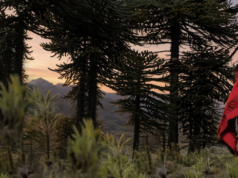
The 75-minute film immerses us into the heart of local Swiss forests and their sustainable management spanning over 150 years, focusing on the people who bring them to life daily. Gradually, the film reveals the limitations of this ideal example by confronting us with the needs of its citizens, which impact other forests like the Amazon. The film “offers a critical perspective that connects the local to the global, challenging Western values and certainties in the face of the urgent need to preserve this treasure of our planet.”