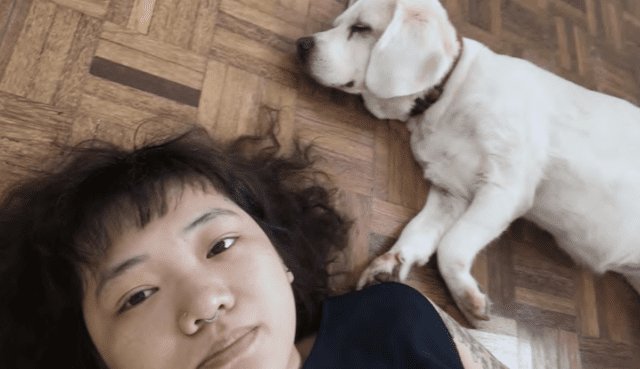
When it was first suggested that Malaysian Beatrice Leong should take an autism assessment at the late age of 34, she was left “to navigate the complexities alone,” she writes in the Impact Days notes for her feature project The Myth of Monsters, currently in production with a mooted delivery date of July 2026. Producer of the project is Panuksmi Hardjowirogo of M’GO FILMS.
“Disabled women are also the most vulnerable to sexual violence and abuse and we live 20 years less than those without a disability. As an Asian woman, my experiences are further coloured by cultural and societal expectations. This film is for another girl to know that she is not alone, that she is seen, and that she belongs just as she is,” Beatrice adds.
She is also a high-profile activist fighting for systemic change, but beneath her public persona she grapples with personal pain and isolation. When she turns the camera on herself she is therefore exploring “the duality between her public advocacy and private struggles, as she seeks answers and truth.”
During the Impact Days pitch, producer Ineza Roussille stressed how, “we all know a girl like Beatrice, a sister, a friend, a colleague who are silenced, misunderstood, and fighting to be seen. Beatrice found her voice in making this film, and that’s the heart of our Impact plans.”
Roussille’s core goals are (in global terms) to empower 100 autistic women and girls from underrepresented communities to tell their own stories and to increase visibility and representation of autistic women and girls in media through media training and partnerships. Locally, the team wants to develop a policy toolkit for Malaysian members of Parliament to support ongoing efforts for constitutional amendments protecting disabled women and girls, as well as expand the toolkit into a global resource to help autistic girls fight for their rights wherever they are.
“These stories will also go a long way in advocating for legislative change and train the media on more dignified representation,” Roussille added. “This film and these stories are important to humanize the pages and pages of documents and legislation so we can affect actual meaningful change.”
UK filmmaker Sean McAllister, an executive producer on the project and mentor to Beatrice, stressed during the pitch how it is very seldom that a filmmaker can deliver such immediate access to the core subject being addressed in the film. “I think that’s the strength of the project. Activism films can be just activism films, but they can also be so much more if they’re personal and human…Her journey has evolved beyond her own story. It’s become the story of every girl out there reclaiming her narrative.”
The last word goes to Beatrice herself whose address to the audience of filmmakers, funders and activists was highly emotional.
“I’m giving my life to the film because I’ve spent my whole life [up to] now trying to fit into a world not built with me in mind, and labelling women like me as difficult, angry, as a monster,” she said. “I choose cinema to find my justice because in my country, there isn’t a single law that explicitly protects women and girls like me from discrimination on grounds of disability. When my rights were violated, no-one recognized it because my disability is not visible to you. I have to prove that I am disabled and that it exists.”
“When I was six years old, I watched Ariel [The Little Mermaid] in the cinema as she sang how she wants to be a part of the world and about her happy ending – and I felt less alone,” Beatrice added. “Now I stand here with the privilege of my camera turned in on me to tell my side of the story and my reality, because many women and girls like me don’t make it to today. 66% of us are at risk of suicide, and it’s not from autism, but from social exclusion. Many more never found the power to tell their own story – and this narrative must change.”