In the feature-length True Scott, Ömer Sami’s examination of the myth surrounding a legendary teacher becomes “an exploration of identity, belonging, and the stories we choose to believe, even when the truth suggests otherwise.”
Scott Peake was known as ‘The Indiana Jones of Scotland,’ a man who had a profound impact on all who know him. Yet there was something elusive and mysterious about him.
But as we see in the new film, currently in post-production ahead of delivery in early 2027, the deeper Sami digs in his quest to understand his subject, the more puzzling Scott’s story becomes.
True Scott is produced Danish Monica Hellström of Ström Pictures, and co-produced by Maria Robstad Nielsen of Emjay Productions. The film is supported by New Danish Screen, DR and FilmFyn. In Malmö, Hellström, a three-time Oscar nominee for Flee (Best Doc Feature and Best Animated feature, 2022) and A House Made of Splinters (Best Doc Feature, 2023), is looking to entice a sales agent, as well as generate festival and distribution interest.
“If we are lucky, we meet a teacher who can change the course of our lives. Scott was that teacher for many of his students,” Hellström tells Business Doc Europe. “The film is a playful story about someone who never let the truth get in the way of a good story. It has the suspense of a mystery unfolding, but also a deeply human, universal story at its centre: how far will we go to become the person we want to be?”
“There is also an important layer about Scott’s experience as a gay man and his search for a place where he could feel accepted and belong,” she adds. “At a time when LGBTQ+ rights are under renewed pressure, that feels very relevant.”
In terms of its impact for audiences and film partners, the film offers “that combination of a gripping story, humour and emotional depth. It has a distinctive cinematic language and the potential to reach a broad international audience,” she says. “The film also reminds us of the value of teachers and their ability to profoundly affect generations. Whatever was invented in Scott’s stories, his impact on his students was real.”
“From a business perspective, we see strong international potential in this combination of cinematic ambition and an accessible story… Our ambition is to launch through international festivals and work closely with partners to reach audiences through cinema, television and platforms. The themes of education, identity and belonging also create opportunities to connect with specific communities around the film.”
Director Sami’s short documentary Eternal Father (2023) was short-listed for an Academy Award. True Scott is his first feature-length doc.
“He is an exceptionally talented filmmaker, drawn to deeply human stories about people on the margins of society or those who don’t quite fit in,” Hellström describes Sami. “His work combines a distinctive, ambitious cinematic language with emotional depth and a subtle sense of humour.”
She further points out Sami has been fascinated by teacher Scott since hearing stories about him at school, although he never met him. “That personal curiosity drives the film. He takes us with him as his understanding of Scott becomes more complex.”
“The strength of the story is the combination of a deeply human subject and a gripping mystery. Each discovery opens another layer. The journey of Scott’s brothers to Scotland to scatter his ashes brings together the different worlds he kept separate during his life, giving the film a strong emotional culmination.”
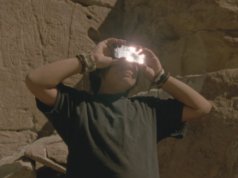
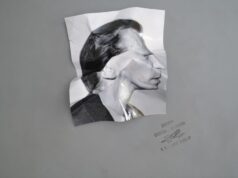
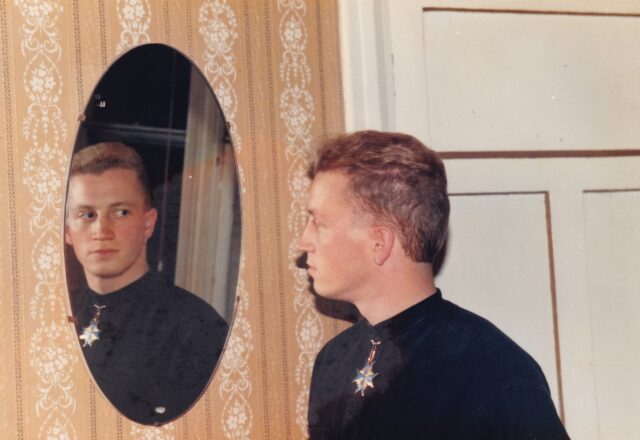
Hellström promises to deliver a “a playful, associative and evocative mix of media – a cine-quilt,” combining cinematic vérité with interviews, photographs, archive and imagined images. “There is a subtle eye for humour – in the framing, in what is left unsaid and in the juxtaposition of scenes,” she says. “Photographs, Super 8 and 16mm archive conjure a vivid sense of time and place: the Roald Dahl-esque world of an all-boys school, the wild landscapes of the Scottish Hebrides, and life as a gay man in South East London during the Thatcher years.”
“The images also play with the relationship between Scott’s imagined life and his real one. As we learn more about him, what we have seen takes on new meaning. The visual approach reflects the way the story unfolds, gradually bringing us closer to the person behind the legend,” she adds.
Debutant feature director Sami underlines how, “given Scott was a qualified, gifted teacher, this isn’t a typical ‘con man’ story, with no clear motive in form of money or status.”
“While it provides fewer narrative twists, I believe it makes for a far more complex, universal story. Rather than offering neat explanations, I hope the film encourages us to reflect on our own lives: how we frame our stories to shape our identities, our desire to be someone else, and our search for a place where we feel we belong.”