Nine new Finnish documentary projects were pitched during the 11th Finnish Film Affair which concluded 23 Sept in Helsinki. The top prize of €3000 was won by Mohamed El Aboudi (director and producer) and producer Kirsi Mattila for The Last Chapter. Read on for an overview of this and the other eight projects.
The Last Chapter by Mohamed El Aboudi. Producers Kirsi Mattila and Mohamed El Aboudi, Icebreaker Productions
The Finnish Film Affair winning project was pitched in Helsinki by producer Mattila and online by Moroccan producer director El Aboudi. In the film, three immigrants in Finland face fundamental and existential questions: Who am I after living decades outside of my country of birth? Where and how do I want to spend the last chapter of my life? The three men are Ghanaian Paul (87), a retired doctor, Justin (68) from Uganda, and the Sudanese refugee Sisto (69) who, after he discovers that his fiancée in Uganda is pregnant, must contemplate a new future, one which is at odds with his planned life of retirement.
“After turning 60, I wanted to find out how other immigrants deal with retirement,” El Aboudi says in his notes for the film. “Are they planning a return to their country of birth, or content to stay where they are? Are they afraid of moving into a nursing home, and where do they wish to be buried? More and more immigrants are approaching retirement, yet the debate in society focuses on newcomers and employment. Schools have a system of arranging interpreters for parents’ meetings, but what about nursing homes?”
Added producer Mattila, “What makes The Last Chapter so special is that it’s the first film to explore the difficulties and the complexities of ageing immigrants in Finland, and Mohamed, if anyone, knows the subject inside out.”
The film is currently in development, with six days of Finnish shooting under its belt. “We hope to film in Uganda and maybe in Sudan and Ghana by the end of the year,” outlines Mattila who is looking to deliver two versions of the film in 2024, (90 52 minutes). In Helsinki she was looking to drum up distribution, sales and co-production interest and to source an editor and a sound designer.
The jury’s winning citation read: “The project tackles complex and universal questions that will become more and more relevant, and haven’t been touched before. The jury felt the creative intention of the director very strongly and believes this award can help the project realise its potential.” The jury members were Pierre-Alexis Chevit, Head of Cannes Docs; Poppy McAlister, Sales Manager at TVF International, and Shane Smith, Artistic Director at Hot Docs.
Fukushima: The Home That Once Was by Timo Wright, co-directed by Kohei Okada-Skogorev. Producer: Ada Johannsson, Wright & Co
The feature doc, budgeted at €150,000 is described is an “open world” VR-documentary about the Fukushima Daiichi Nuclear Power Plant accident’s exclusion zone, and its former residents. In the VR, the viewer can move freely inside the 3D-captured houses and down the empty streets of the zone using their VR-headset, in the process meeting six former residents who share their memories about the loss of their home. Each viewer will be able to create their own unique route through the film.
“We’re really pushing the boundaries of documentary storytelling and using elements that usually are used in computer games,” explained director Wright. “We are looking for distributors and partners who are interested in new forms of documentary storytelling, and also in new forms of distribution…We are also looking to make a 360-degree version of the film as well as a traditional linear screen version.”
The Japanese language project (with Danish and English subtitles) is currently in post-production and set to premiere in Autumn 2022. The production team is looking for distribution and festivals plus international sales representation.
“What drew me to this film and to the exclusion zone of Fukushima Daiichi, was, paradoxically, the universality of the stories. Especially now that the meaning of home, and the loss of it, have become ever more universal. At the same time we also have to start looking at nature in a new way, to understand its strength but also fragility, and how, in the end, nature doesn’t really care for us, as it will go on even without us,” Wright added.
Impossible Mardi Gras by Aira Vehaskari. Producers Marianne Mäkelä & Liisa Karpo, napafilms
In Impossible Mardi Gras, insurance clerk Megan is sacked just as the whole of New Orleans is facing the probability of a cancelled Mardi Gras. So she decides to make her own carnival on her front porch and tweets about it. To her consternation and delight, very soon things get out of hand and Megan unintentionally becomes the captain of a huge movement, in the process changing lives and making dreams come true.
“New Orleans is a place with a unique ability to turn hardship into celebration,” director Vehaskari told the FFA professional audience. “That philosophy is the epicenter of Mardi Gras. It’s a cathartic annual ritual where people here process what they’re going through. After Katrina, for example, people created Mardi Gras out of literal garbage, and they dressed up like hurricanes and the worst of the trauma that they’ve been through. Also craftsmen artists, musicians, and carnival crews work all year long just for the Mardi Gras season.”
“So without Mardi Gras, there’s a whole industry that collapses in addition to the massive impact on mental health,” she underlined. “That’s the kind of despair that new Orleans was facing before one hapless insurance agent had this crazy idea that might save Mardi Gras accidentally sparked a massive artistic movement that brought together people from all parts of this city who were also struggling.”
In her notes for the film, Vehaskari describes Megan’s initiative as “a defiant middle finger to adversity.”
Added napafilm production co-ordinator Leena Nuorteva: “The entwining stories of Mackyrin (teenage tuba player) and Rene (Mardi Gras artist) and others show us how desperately we all need to have catharsis or sometimes just pure fun when everything seems to really suck. Even though all our main characters are struggling, they keep surprising us by finding new ways to survive and even spreading joy during the process, their secret is in the community. Nobody needs to be a hero by themselves.”
The €300,000 project is in development. Producer Marianne Mäkelä confirmed that she is looking for distribution, festivals and co-production interest, as well as sales representation.
In the Ballpark of Finland by Arto Halonen. Producer Arto Halonen, Art Films Production AFP Ltd
The logline for Arto Halonen’s €300,000 project reads how, in the 1970s, black American basketball players introduced multiculturalism to Finland, and later their sons launched a battle for equality.
The documentary follows two black American basketball players and their sons (Leon and Shawn Huff & Ervin Latimer Sr and Jr) who grew up in Finland. For the fathers, basketball was a way out of poverty. The racism that thrived both in the US and Finland when they were young awakened political thoughts in them, which each of their sons has in his own way translated into action in the fields of sports, culture and politics. While Shawn Huff is eyeing up a career in politics, Latimer Jr is making huge strides in the fashion industry.
“This is a film about dealing with your roots, with your colour, with your sexuality and how to become a role model based on this history,” commented director Halonen. “It’s also the emotional story of the fathers and sons and their relationship. They all are processing their challenging connections and their personal battles against racism.”
Halonen adds in his film notes how, “as a filmmaker, I find it important to awaken viewers by addressing problems in our society that stand in the way of more harmonious development. That’s why I see In the Ballpark of Finland as an important statement. Through the background stories and different approaches to culture and sports, we can bring the themes and message of the film closer to viewers. The story also deals with how we carry the history of our parents with us and how difficult it is to rid ourselves of its negative aspects.
The Finnish/English-language production is in production ahead of a Spring or Autumn 2023 delivery. At FFA, Halonen was seeking further finance as well as distribution and festival interest, and sales representation.
My Ukraine by Lukas Staseskij. Producers Ilona Tolmunen (Made) and Tero Tamminen (East Film).
Staseskij made an emotional pitch for My Ukraine, which tells his own story as a Finnish-Ukrainian cellist and filmmaker in search of his identity and roots amidst the war in Ukraine. In August 2021, he decided to move to Kiev to study film directing and explore the Ukrainian side of his identity. When, six months later, Russia invaded Ukraine, Staseskij decided to stay in Kyiv to play his own small part in securing the country’s future. He attracted worldwide attention when he was asked to play the cello among the ruins.
“My Ukraine is a rhapsody-like road documentary,” said Staseskij. “In the film, my mission is to find my Ukrainian identity at the same time when Ukrainians are asking themselves the same questions.”
In his travels through Ukraine he meets characters such as a doctor now fighting on the front line and a priest who said mass and offered the sacrament during the bombings. “Since 24 February (the date of the invasion), what I have noticed is big changes in the Ukrainian people. So many Ukrainians have changed. Russian-speaking Ukrainians have changed their mother language to Ukrainian, and many Ukrainians who used to dream of moving to West Europe for a better life now want to turn back and stand for Ukraine.”
“When Lukas first pitched his idea to me and showed some of the material he had already shot I was immediately impressed,” explained producer Tero Tamminen. “I am aware that there are a lot of projects and stories coming out of Ukraine at the moment, but this one felt really special, really personal, and it also had a very unique connection between Finland and Ukraine as a filmmaker. Lukas is at the very beginning of his journey, but I think that his long career in classical music has given him a unique way of approaching the world. We do not want to make another war report. I think that we have all seen, sadly and unfortunately, enough of those. Our film will be cinematic, a beautifully shot story of one man’s personal journey during challenging times.”
The €250,000 budgeted project is in development with a mooted release date of Winter 2023/24. The producers are looking for co-pro partners, distribution, festivals and sales representation. “I want to visit the destroyed places and through my playing express the feelings that might not otherwise be expressed and follow the power of reflection between people, music and the ravages of the war,” concludes Staseskij in his film notes.
Rap and Reindeer by Petteri Saario. Producers Petteri Saario, Tiina Saario, DocArt.
Petteri Saario’s fully financed film (€270,000), currently in post-production ahead of a Spring 2023 unveiling, is a coming-of-age story about Sámi rapper Mihkku Laiti (18), who lives in the northernmost corner of Sámiland. He has wowed and charmed in equal measure audiences and judges on the televised Talent Finland competition, and proudly wears the traditional Sámi clothing he has styled himself. But his father has other ideas for him, to work as a traditional reindeer herder.
“The film follows Mihkku on his journey towards a career as a musician and his rise to stardom in the midst of gathering expectations,” director Saario told the FFA professionals in attendance. He wraps and yoiks in harmony, designs his own brand on his computer, but also masters the demanding tasks of reindeer-herding. Above all he sees his own unique roles and the Sámi language as his great strengths. The future makes him wonder [whether] to follow in his father’s steps or to reach for his dreams.”
In Helsinki the production team was looking for an international sales agent, partners for international distribution and television, and festival interest. “There are several documentaries about the Sámi, but not many directed to younger viewers. Young Sámi aren’t interested in the previous forms of traditional customs. Instead, they want to make their own versions of them. In the process they also renew Sámi culture,” Saario concludes.
Respect by Milja-Liina Moilanen, Eveliina Pasanen. Producers Elli Toivoniemi, Juha Löppönen, Tuffi Films.
A high stakes cautionary tale, the €270,000 documentary currently in post-production is about women who decided to reclaim the respect they lost after partaking in reality TV. The protagonists are Mira Ahola (27) and Meiju Koskela (30) and their school friend Eeva-Leena “Eevis” Keskinen (31), all of whom participated in reality TV to achieve their dreams, but instead of having the time of their lives their aspirations were crushed following a tsunami of public humiliation across all media. Now they are given the opportunity to reclaim their self-image and speak their own truth.
“For me reality television has been an intriguing subject for over a decade as a professional,” said producer Elli Toivoniemi. “But in 2019, it really became personal when our old high school friend Eeva got selected into Big Brother. We watched the series and we noticed that the portrayal of her wasn’t something that we [recognized] in Eveliina, and wanted to dig deeper. And as we did dig deeper, we noticed that Eveliina’s vile portrayal wasn’t a single case, but something more structural in media.”
Director Moilanen explained the project from her perspective. “You might wonder why would anybody in their right mind go to these shows? But for these ladies, it has been a lifelong dream and a yearning to be seen,” she stressed. “Mira was a shy and lonely child who secretly watched reality TV. She admired the stars she saw and wanted one day to be as loved and admired as her idols. Eevis wanted to test her limits and have a once-in-a-lifetime experience you can only have through these formats. Meiju hoped that participating in these shows would boost her business and also give her a platform for her feminist agenda through the visibility that she would achieve.”
“So in this film, we follow these three women overcoming the obstacles and shadow cast by reality TV. We see the world through their eyes and for the first time we hear the stories from themselves and not from the tabloids.”
The producers are looking for festivals and distribution support, as well as sales representation.
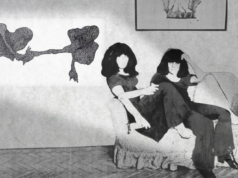
Start Me Up by Helena Hyvärinen. Producer Ari Matikainen, Kinocompany.
Director Helena Hyvärinen described her new doc Start Me Up as “about inventions, money and mentality; a deep, yet entertaining insight into the minds of inventors and investors.” Following the demise of Nokia and the rise of a new type of entrepreneurialism, the film offers a sardonic view of the weird and self-aggrandising world of new start-ups and new entrepreneurs, and their perceived place within the cosmos.
“Money loses its meaning, as everyone has more than enough, thus different values become prioritised. Mentality is the new black. Philosophers start to hang out with the geeks and self-help instructors are hired. They call it a renaissance,” she added. “The [highly] visual startup scene is full of lasers, PowerPoint presentations of existence, and innovative people who want to change the world no matter what…They already have new kind of ideas and all of them are out of the box.”
But production-wise the €373,000 doc is still in the box, producer Matikainen reminded the FFA audience, and so he is looking for financing, co-production partners, distribution and sales representation. Currently in development, Matikainen and Hyvärinen are looking to shoot the project in 2023 ahead of delivery in late 2024.
Adds Hyvärinen: “I have followed the emergence of the Finnish start-up phenomenon, both in terms of structures and publicity. As a director, I am inspired to study how the views of decision makers resonate with the world of entrepreneurs. I want to find a visual and rhythmic description of how the story of start-up entrepreneurs is linked to the visions of government and city organisations. The film reflects the state of mind which is felt here in Finland. It will be a bit crazy, full of puzzles and laughs, with a few tears too. This is the right time and the right place to tell this story. Not yesterday, not tomorrow, but now! (As the Finnish start-up mandate would say it.)”
Fluit by Hanna Hemilä (animation director Xavier Picard). Producers Hanna Hemilä, Annemiek van der Hell, Xavier Picard, Handle Productions, Windmill Film, Pictak.
In the new doc project Fluit, presented at FFA, a 400-year-old sunken fluit ship resting on the seabed in the Gulf of Finland is discovered by expert divers in 2020. In researching the ship’s origins and destiny, the world of a centuries-old Baltic Sea trade route is unveiled. “From grain to gossip, timber to tar, the easily manoeuvrable fluit vessel transported goods, people and news during a time of war, famine and plagues,” says Hemilä. The film intertwines real-life dives, interviews and historical moments with an artful animated story of young orphan Hendrik, who in 1636 embarks on his first journey across the Baltic Sea.
Hemilä confirmed that she has so far raised a third of the €1.45 million budget. “The fluit is our vessel to learn more about the past in order to understand better the present,” she said. “The lifeboat of our wreck has not been found. This inspires our animation to have a happy ending. Next, we are crowd-sourcing to find out why the fluit sank and who had been on board. What if we find a descendant?”
Animation director/producer Picard added: “The animation will be carefully integrated into the documentary footage. The animated sequences highlight the innovation design of the fluit and the key role they have played in economic, political and sociological development of the 17th century and beyond.”