What if the Iran-Contra affair had turned out differently forty years ago? Would there be peace in the Middle East now? Tal Barda’s Israeli/German three-part series Strings of Power (Ephrati Production/Beetz Brothers) poses this question. With “incredible” access to some of those involved, director Barda unearths archive footage and documents, alongside new material that has come to light.
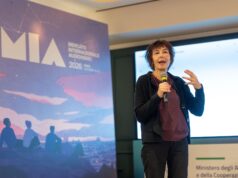
Can we learn from the mistakes that were made back then to help resolve the current situation in the Middle East? BDE talked to Tal Barda (Tal Barda Films, Israel) ahead of her pitch at FIPADOC to find out more.
Barda’s own interest in the affair stems from childhood. Her father worked in the Secret Diplomatic Affairs department of Mossad (the Israeli Intelligence Service) and he knew many of the people involved, so when she was approached with this idea, she felt she already had skin in the game.
“My father passed away with so many secrets, and I was kind of drawn to learn more of what goes on behind the scenes of covert affairs,” Barda tells BDE.
The Iran-Contra affair hit the headlines 40 years ago in 1986, and centred around a secretive initiative that involved the trafficking of weapons to Iran by the US, ostensibly in an attempt to free seven US hostages being held in Lebanon by Hezbollah.
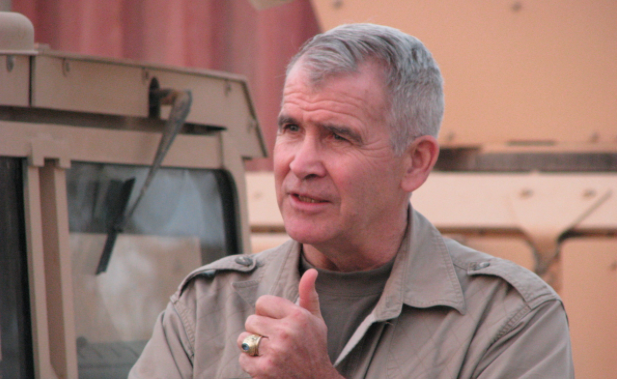
Barda picks up the story from here. “The idea at the beginning was to swap arms [for] hostages. But the American Congress voted against it – they didn’t want to arm Khomeini’s regime. Despite the vote against by Congress, Oliver North, along with different people from the Security Council, did these deals secretly.”
Barda continues, “So what happens is they sell weapons to Iran, and there’s profit from that, but it’s illegal, so they can’t really bring the money into the U.S. So they convert it to weapons for the Contras [an anti-Sandinista rebel group] in Nicaragua, which is a whole big other issue.”
The Iran-Contra affair is well documented, but what Strings of Power aims to focus on is the lessons we can learn from how the affair was handled, not only from a political and diplomatic point of view, but also by exploring how the individuals – the men behind the scenes charged with doing the deals – managed it, in the context of today’s political struggles in the Middle East.
“Some historical events are accelerated or even utterly dependent on a few unique people being in the right place at the right time,” the project notes explain. “Often, these are not the presidents, prime ministers, or supreme leaders, but the people working quietly beside them, far from the public eye.’”
This is how the likes of Oliver North [US], Amiram Nir [Israel], and Manucher Ghorbanifar [Iran] saw themselves, Strings of Power suggests. “Together, they initiated a transatlantic scheme that was supposed to allow the US to win on two fronts and bring the Cold War to an end, while solving a long-running hostage crisis, renewing the warm Israeli-Iranian ties from the Shah era, and helping Iran win its war against Saddam Hussein’s Iraq,” the project notes add.
“The trio was so eager to accomplish these impossible goals that they were ready to put their careers and lives on the line. They went all in, and lost.”
Truth is indeed stranger than fiction. Dig beneath the headlines, the official records, and we find a very human and shadowy world of hubris, political gambits, egos, misunderstandings and blunders. Barda hypothesises to BDE that the failure to keep the whole incident undercover, and the failure to bring about regime change in Iran by deposing the hardliners and replacing them with a more moderate government in Iran, has echoes down the decades, to the present day.
What’s more, Strings of Power follows the stories of the men charged with the mission.
The Israeli Amiram Nir died mysteriously in a plane crash in Mexico just before he was due to testify to Congress. When he died, secrets that could have deposed careers, incriminated many, or even prevented George Bush’s presidency, went with him. His Iranian counterpart Manucher Ghorbanifar died too, or it was widely believed that he did. The filmmakers now have access to his brother, who testifies that he is alive and well, and in regular contact with him. The hope is that the team will be able to speak to Ghorbanifar himself and get his version of events.
In addition to Ghorbanifar and his brother, other spokespeople give further insights into what really happened forty years ago. Howard Teicher, NSC Political Affairs Director for President Ronald Reagan; Boaz Applebaum, Chief of Bureau for Prime Minister Shimon Peres; Trisa Parsi, Founder of the Iranian-American Council; Simon Sheves, Advisor to Yitzhak Rabin, and Nimrod Nir, Amiran Nir’s son, all of whom agree that had things gone differently, Iran and Israel could have been allies.
It’s a huge subject to grapple with, involving thousands of pieces of information, but Barda hopes that the edit will be complete by March 2026 to ensure with film will air in the 40th anniversary year of Iran-Contra.
“It’s a big topic, but for me I feel that it’s really important to understand the behind-the-scenes of how these things work. And it’s also all human beings and relationships and the personal contacts and the personal motivations of people behind the scenes…there was always a question of ‘who played with who’?”
Barda adds: “We’re using also a lot of humour and a lot of irony in this because the stories are ridiculous in a way. But you understand that at the end, they paved a way to our situation today.”
So how does this change anything? Having studied Iran-Contra, Barda believes there was a lot of arrogance in the way the Americans and the Israelis thought about the Iranians. “The motivations of some of them were really maybe good motivations… but I think the differences in culture and the way they were looking at the Iranians really created the fact that everything failed,” comments Barda. “I don’t know what exactly can be done, and how, but I feel that just looking at this – and understanding – is eye-opening.”
The plan is for a 90-minute feature, and 3 x 52-minute episodes for the small screen. Pitching at FIPADOC, the team are open to collaboration. They’re looking for co-production and funding, as well as streamers (ideally US). They’re already in negotiations with Arte, ZDF, and others, with an Israeli public broadcaster secured.
In addition to all that, though, they’re looking for that certain ‘je ne sais quoi,’ which only the festival circuit can bring. “I think that I’m looking for things that I’m not sure yet what they are. I always feel that there are opportunities and professionals that I don’t really know even exist, but it’s great to meet and talk. I always like to be surprised in these festivals!” Barda signs off.