The inaugural Dokumentale International Documentary and Media Festival Berlin (10-20 Octiober) has announced the ten films selected for its Competition programme. The selection, which includes eight German premieres and one international premiere, will compete for the main prize of €20,000, of which €10,000 will go directly to the filmmakers, while the remainder will support marketing efforts around the film’s release.
“With this, Documentale aims to contribute to the sustainable distribution of documentary films,” write organisers. The prize will be awarded by an international jury consisting of Marie Erbs Ørbæk (CPH:DOX), Mara Prohaska Marković (Beldocs), and director Ibrahim Nash’at (Hollywoodgate).
Competition Films
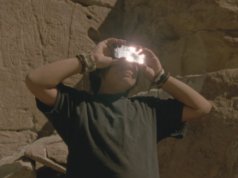
“The competition program tackles major themes like empowerment, climate change, and nature conservation. Jalena Keane-Lees’ Standing Above The Ground and Yintah by Brenda Michell, Michael Toledano, and Jennifer Wickham portray indigenous activists fighting against environmental destruction. Katarina Stankovic’s The Tempest of Neptun questions the limits of tourism. In Searching for Amani, Debra Aroko and Nicole Gormley investigate the mysterious death of a tour guide in Kenya, exploring the troubling connection between colonial legacy and climate change,” the festival writes.
“In My Sextortion Diaries, director Patricia Franquesa deals with the aftermath of a sexualized hacking attack, which led to the circulation of her nude photos. Santiago Maza’s State of Silence showcases impressive individuals advocating for press freedom amidst Mexican drug cartels and corruption. The Friendship Bench by Reabetswe Moeti-Vogt focuses on a different kind of activism: in Zimbabwe, where there is a shortage of psychologists, grandmothers are trained to sit on “Friendship Benches” to talk and listen to people in need.
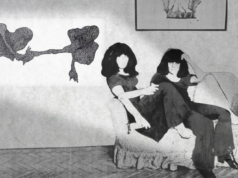
“Art also plays a prominent role in the festival. In New Wave, Elisabeth Ai examines the role New Wave music played for Vietnamese refugees in the U.S. in the 1980s. Lucija Stojevic’s Pepi Fandango tells the story of Holocaust survivor and musician Peter Pérez, who embarks on a search for the music that has given him life force since the Third Reich: the Fandango, a variation of Flamenco. D.W. Young’s Uncropped pays tribute to the legendary photographer James Hamilton and his work.”
Other Festival Highlights
With over 120 film screenings and events, Documentale offers a wide range of documentary works. As part of the D’Lounge series, which features six film screenings in unique locations across Berlin, filmmaker Elisabeth Ai will present her competition entry New Wave at the DASHI Canteen, where she will DJ afterwards. Another D’Lounge presentation will feature Barbara Visser’s Alreadymade, which delves into Marcel Duchamp’s ‘The Fountain’ and questions its authorship, at the Berlinische Galerie.
One of the eight D’Salon presentations – readings paired with discussions and film screenings – will focus on club culture. “With Aaron Trinder’s Free Party: A Folk History, the festival not only tells the story of the British underground movement and rave culture that emerged in the late 1980s but also invites Spiral Tribe artist Mark Angelo Harrison to read from his book ‘A Darker Electricity: The Origins of the Spiral Tribe Sound System’. Another D’Salon will focus on science and ethical questions, with Kerstin Hoppenhaus presenting her book ‘Die Salze der Erde,’ while Hans Dortmans explores the enigmatic eel in his documentary Hidden Dance of Eels.
Festivalgoers will also be able to experience the following film highlights in cinemas:
- SOUNDTRACK TO A COUP D’ETAT by Johan Grimonprez, which premiered at Sundance, which examines the role of jazz ‘ambassadors’ in the aftermath of Lumumba’s assassination in 1961 in the newly independent Congo.
- GRASSHOPPER REPUBLIC by Daniel McCabe, documenting the lesser-known Ugandan tradition of ceremonially “harvesting” grasshoppers during mating season as a delicacy.
- FAUNA by Pau Faus, a documentary essay about the parallels in modern society: during the COVID-19 pandemic, a shepherd lives near Barcelona, side-by-side with a high-tech laboratory conducting animal testing.
- WARM FILM by Dragan Jovićević, which uses a homophobic attack as a starting point to investigate the portrayal of LGBTQIA+ characters in Yugoslav and Serbian cinema.
- IRIS, a TV documentary by Anke Sterneborg and Irene Höfer, shines a spotlight on German star Iris Berben and her notable companions, including Jim Rakete, Ruben Östlund, and Barbara Sukowa.
- HOLLYWOODGATE by jury member Ibrahim Nash’at (closing film), documents the Taliban’s return to power in Afghanistan and the establishment of their propaganda structures.
- Find the entire public programme for Documentale 2024 here.
The Good Media Pitch and D’Hub – A Meeting Point for the Film Industry and Civil Society
From October 14 to 16, Documentale will host d’Hub, a hybrid platform offering panels and workshops exclusively for professionals. The flagship project of d’Hub is The Good Media Pitch, where six film teams will pitch impact strategies they have developed over recent months with international experts as part of The Good Media Lab. These strategies, in areas such as (digital) campaigns, partner acquisition, and distribution, aim to not only increase the films’ reach but also drive societal transformations more directly.
In addition to the pitch event on October 15, d’Hub will offer a diverse program of interactive discussions and workshops on October 14 and 16, covering the fundamentals and ethical considerations of documentary storytelling as well as future trends in the industry.
Click here for the full professional program and accreditation details.