The German documentary presence at IDFA is particularly impressive in 2019 with 41 projects, fairly equally split in terms of majority and minority stakeholder status, selected across all sections.
On the eve of the festival German Films manager Simone Baumann reminded Business Doc Europe of the numbers surrounding performance and investment in the sector, before assessing the IDFA crop.
In 2018, 151 feature length docs were released in German theatres, of which 87 were home-grown and 64 international. This resulted in revenues just shy of €14 million, with a split of €8.2 million for German docs and €5.67 million for films sourced beyond German borders.
The respective admissions were 1.123 million and 748,648.
The figures for public investment in the sector are a little more difficult to pin down as there less distinction drawn between fiction and non-fiction when it comes to funding. Total production spend (fiction and doc) across the national film fund (FFA), the regional funds, the DFFF (Deutscher Filmförderfunds), the GMPF (Motion Picture Fund) and the BKM (Ministry of Culture) amounts to a whopping €400 million. (Baumann was able to confirm that of BKM’s production spend of €15 million in 2018, €2.3 million was earmarked for doc.)
“You can see over the past years that the interest in documentaries is getting bigger and the films are getting stronger, and we also have many documentaries in big festival competitions, such as Berlin and Venice, together with arthouse features,” Baumann stressed. “And in Germany we have produced some strong films over the past years, for example Citizen Four which was made with a lot of German money.”
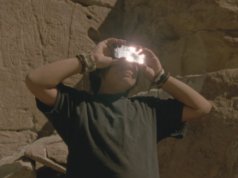
She also pointed out that Locarno selected four German documentaries in 2019, such as Space Dogs by Levin Peter & Elsa Kremser, and Noël Dernesch and Olli Waldhauer’s Another Reality.
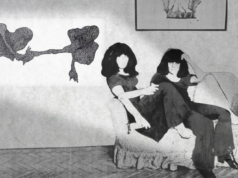
At IDFA 2019, Baumann points to the 218-minute Heimat is a Space in Time by Thomas Heise, which she describes as “a very conceptual film, not always easy to watch but a great success… really great” and Leipzig opener The Forum by Marcus Vetter, for which the director was granted behind the scenes access at the World Economic Forum. “Investigative films like this are something that German documentary filmmakers do very often and very well,” she stressed.
She is also particularly impressed by Isa Willinger’s Best of Fests doc Hi, AI. “She is a real discovery for me, a very interesting talent. It’s the choice of the subject but also her very interesting and original visual style.”
“What I see with the younger generation is a different visual language,” Baumann continues. “They might use animation or special effects for the film, different visual concepts. This is something that we haven’t seen from the older classic generation [of German docmakers]. It is a different style, a different way of storytelling. [It can be] in the editing, and sometimes it is maybe a very subjective perspective, taken from the point of view of the character or of the filmmakers themselves.”