Stylistically bold and as timeless as it is topical, All You See explores the alienation that migrants experience coming to the Netherlands. It was a strong opening film for IDFA, where it world-premiered in November 2022, as its main question concerned every documentary in the programme: we look at people, but do we see them?
One of the doc’s protagonist Khadija once fled from Somalia to the Netherlands, where she has worked as a nurse for many years. When she bought a house in a nice part of Rotterdam, her neighbour greeted her with: “’Oh, I didn’t know this was a rental.”
Director Niki Padidar, who came from Iran to the Netherlands as a child, was at an airport when she was asked where she was from. She answered: “Amsterdam.” The customs officer repeated the question more aggressively, so she said: “Iran.” Then he demanded: “Where’s your burqa?”
It might come as a surprise then that when Niki Padidar, from behind the camera, and Khadija talk to each other – because it’s not just an interview, but a conversation – they laugh a lot. They laugh at the absurdity of it all, I suppose, and out of recognition. They laugh not to cry, perhaps, but that doesn’t make it any less infectious.
They recognise the ridiculous questions you keep getting asked, over and over again, no matter how long you have been in the Netherlands. Every summer, her colleagues ask Khadija, who has dark skin, if she tans, if she gets sunburnt – apparently never having listened to her answers. Knowing she once arrived from Somalia, people ask her whether she lived in a hut, whether they had electricity. They even dare ask whether she was circumcised. And her three children, are they all from the same father?
These are often people she knows hardly, or not at all. Imagine, Khadija says, walking up to a random man in the street and asking: “’Hello sir, did you have electricity in your old house?” She laughs.
The number of questions is so staggering. It’s relentless. “How long have you lived here?” “Can you ride a bike?” “Do you speak Dutch?” Padidar figures she gets asked such questions two, three times a day. By strangers, by people she barely knows. People who, I’m sure, mostly believe they are just showing interest. Who don’t see themselves as racist, or discriminatory – possibly even the opposite. But who are at the same time unable or unwilling to understand how their words affect the other person.
Padidar calculated it adds up to roughly 40,000 questions since she came to the Netherlands. “As if I’m some kind of public property,” she sighs.
It all revolves around the most frequently asked question: “Where are you from?” Often not even asked in Dutch, but in English. More than a question, it’s a statement by those who ask it. It says: you are not from here. You do not belong. This is not your home. “Amsterdam” or “Rotterdam” are not acceptable answers. No, “smart-ass”, tell me where you’re really from.
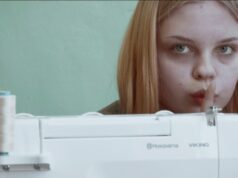
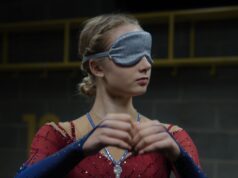
Interestingly, Padidar waits some time before she mentions their respective countries of origin. Just as she does with the two other migrants she portrays in her film. There is the young Sofia, who has just arrived from England, where she had “ten friends” (she counts them on her fingers) and now she has none; and the slightly older Hanna, from Ukraine, who tries to learn the local rules for making friends by watching movies and cartoons.
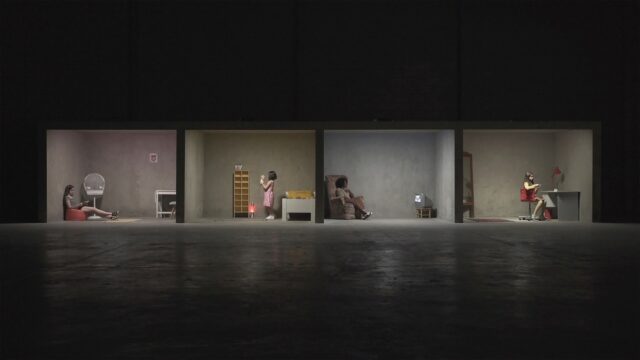
Because they are from different generations, and come from different countries which are not immediately named, their stories partly merge into a more universal migrant experience. This is emphasised by some bold stylistic choices. Padidar places her interviewees in identical, grey cubes, abstracted rooms which sometimes remain empty, the opposite of a welcoming home. And sometimes they are minimally furnished, like a theatre set. Projected home videos and even an animated recreation of her own grandfather’s house represent their memories of the past. Musically, a slow soundscape connects the scenes, like a river connecting waves. So that a beloved pet left behind, and the “ten friends,” and the family never again seen, blend together into an undercurrent of alienation that any migrant by necessity will recognise.
It’s impressive how Padidar evokes this universal sense of the migrant’s experience without in any way sacrificing the individuality of her protagonists. It gives her film a timeless aspect, without ignoring how the lack of genuine acceptance of immigrants is a very topical issue. As is understanding the loss they inevitably carry. And how difficult it is for them to talk about these things. Not only because it’s impractical (“Talking about these things would take the whole day”, Khadija says, “You have to learn to live with it. Swallow it and live with it.”), or because they don’t want to be “a victim” or make people “uncomfortable,” but because it’s too hard. When a colleague takes two days off because their pet died, you can’t say: “By the way, half my family was beheaded in front of me,” as Khadija remarks. “That’s not a level where you can meet each other in terms of empathy.”
That pressure to stay silent, which most if not all migrants will surely recognise, is what makes speaking out, as happens in this documentary, so crucial. Each of Padidar’s protagonists keeps things to themselves and tries to fit in. Even young Sofia, when she is given advice by her peers, on language, on clothing, is clearly determined to keep her mouth shut. If you don’t say anything, you won’t say anything wrong. Just as Hanna is practising what to say and when to say it, in the hope of making friends and not sticking out.
For all of them, and for every migrant (especially those to the Netherlands) who recognises themselves in their stories, All You See must be a breath of fresh air. A window opening, a breaking of the silence. The documentary was also a particularly inspired choice as IDFA’s opening film, because it asks the pertinent question which should accompany every film during the festival: this person on the screen – are we truly seeing them for who they are? Do the filmmaker, the documentary and we as an audience grant them their full humanity? Or are they being fitted into whatever preconceived categories suit our interests? Is all we see, all there is?
Let All You See remind you what it might feel like if, as Niki Padidar poignantly puts it in her film, “from one day to the next, you aren’t seen anymore… but looked at.”
The Netherlands, 2022, 72 minutes
Director Niki Padidar
Production mint film office
International sales mint film office
Script Niki Padidar
Cinematography Jean Counet, Jefrim Rothuizen
Animation Anton Mishenin
Editing Niki Padidar, Albert Markus, Festus Toll
Sound design Tom Jansen
Sound Diego van Uden
Music Fin Greenall
With Khadija Sabriye, Sofia Bonito Ferreira, Hanna Khomyk, Dewi Bus
This review was first published for IDFA 2022.