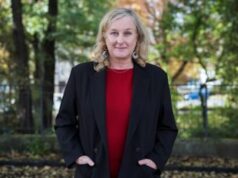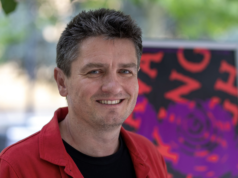
Iranian director Firouzeh Khosrovani discusses the IDFA competition selection Radiograph of a Family, her brilliantly constructed and devastatingly moving story of her parents before and after the Islamic revolution of 1979.
Radiograph of a Family is a film not only of acute mathematical precision, but one in which polar opposites are continually present within the scene or frame.
The revolution happens at the exact midpoint of the documentary. By then we have been presented the evolution, so far, of an ostensibly happy marriage, but one shared by two people whose tastes and interests never seem to converge.
Back in the 1960s the Iranian Hossein is rich, sophisticated and debonair, and lives in decadent Geneva where he drinks alcohol with clever western friends, fellow students and medics. He records his life on a camera which, we are told, would cost the same as a domicile in parts of Tehran.
Tayi is a young and devout Muslim who, after agreeing to marry Hossein in a remote ceremony in Tehran where he is represented by his photograph, is shocked by the westernized lifestyle evident in Switzerland.
His preferred beverage is coffee, while she drinks tea. When he asks to take her to a cafe, she asks for a Mecca indicator so better to direct her prayers. He spends his days at the university studying radiology while she stays in the Geneva apartment, never feeling at home. He hates when she wears a veil, but for her “if I take off my headscarf I lose everything.” He eats pork raclette. She eats potatoes. And so on.
When their child Firouzeh is born, he wants to give her “ballet lessons, music in Vienna, and she would choose where to live,” whereas Tayi wants to return to Tehran, which they do, and where the child, who will one day make a record of their marriage, is born. But even on her return, Tayi is shocked by a Tehran that looks like Geneva.
Nevertheless, the pair love one another dearly, as expressed in director Firouzeh’s imagined dialogues. He is her ‘moussieu’, and he is a devoted and caring father, but one whose western sensibilities nevertheless determine the type of life they will lead back in Iran, one of dancing, partying and lightness.
And then came the revolution, and with it a 180-degree reversal of societal and domestic dynamics in which Tayi’s devotion to Islam verges on the near fanatical and Hossein’s influence both in his house and within the new republic gradually diminishes.
“The idea of the dichotomy of my parents gave me the container for the film, these two poles and me being torn between two realities, between two lifestyles,” explains the director.
“It is very unexpected when you see the mother in the first half and then you see her in the second half,” Firouzeh continues. “I wanted that the mother represented the revolution, a citizen model of the Islamic republic, and that father represents the isolation that comes from not being recognised formally within the regime.”
Firouzeh is very much her father’s daughter and telling the very personal story of him and her mother story required an attitude of distance from the material. She couldn’t shoot in her real home (another house provides the location for beautiful metaphorical tracking shots that chart both the increasingly difficult marriage and life within the new Iran), nor could she use her parents’ real names when writing the dialogue of their early years together.
“Yes, that was very difficult,” she concedes. “Because everything came from childhood memories. I knew the stories from their conversations, but I created something that was very close to reality. Sometimes I thought maybe my fantasy is the reality, because it is my own perspective.”
“But when my mother saw the film [which she loved, to the director’s relief] she was surprised at how I knew many of the details of their relationship before I was bor
n. I wanted to create the love story first, and it is absolutely true that my father really loved my mother. So it is already a structure in the film that the revolution also took place at our home, in our Iranian home, and affected our family like every family.”
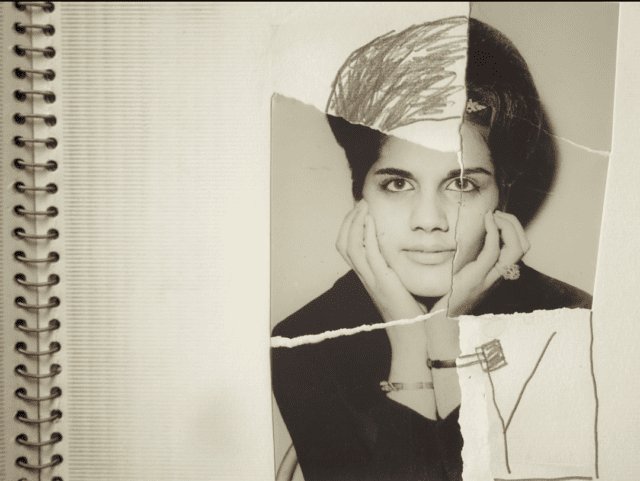
The family house was also where the sensitive young Firouzeh rejoined the pieces of torn-up photographs that depicted her bare-headed pre-revolutionary mother.
The archive in the film is dazzling, not least because Firouzeh put out the call for Super-8 footage from the period. “It was a very cinematic revolution, because everything was documented. So I gathered a lot of footage and then I chose images that aesthetically matched with the visual structure of the film.”
We see, for example, marchers in London at the funeral of the “ideologue and theorist” Ali Shariati, whom Firouzeh stresses was the pioneer of the revolution, less so the Ayatollah. We also see amazing propaganda footage of black clad female desert warriors undertaking military manoeuvres, firing guns and bazookas, throwing grenades and diving for cover.
“This system empowered many religious women, so it is a cliché that the revolution was against the progress of women,” says Firouzeh. “We have to ask for which women.”
“Another cliché that is broken here is that normally people think that it is the man who imposes the hijab on the woman, and in this film you see that my father is against the hijab,” adds the director. “He wanted, he insisted, that my mother took off her headscarf.”
Is Firouzeh happy with the film that she made? “Yes, now I am satisfied. It was a very difficult challenging film that I really put four years of work into. It was like a therapy, and the people [her co-workers] were tired with my obsessive positions, the detail of every single frame, that every single word had weight.”
“It was very difficult to edit, as well as to find the actors who could be my father’s voice, and who could be my mother’s voice. That was something very personal for me, especially because my father was not here. It was important for me to present the man who was marginalised because of his love for his family.”
Director/Writer: Firouzeh Khosrovani
Producers: Fabien Greenberg, Bård Kjøge Rønning
Co-producers: Majid Barzegar, Firouzeh Khosrovani, Joël Jent, Janne Hjeltnes
Production Company: Antipode Films (Norway)
Co-production: Rainy Pictures (Iran/ Dschoint Ventschr Filmproduktion (Switzerland)
Production Countries: Norway/Iran/Switzerland
Financed by Fritt Ord/Arts Council Norway/Viken filmsenter/IDFA Bertha Fund