Is King Kong racist? There is certainly an argument to be made that the great ape’s kidnapping of Fay Wray and wreaking havoc in New York City exemplifies racist tropes of unchained African beasts lusting after white women and threatening Western civilisation. Others, however, would argue a giant ape is just another movie monster, no different from dinosaurs and sharks, and damsels in distress are as old as storytelling itself.
An entire documentary could be made on this subject alone. But in Roger Ross Williams’ Stamped From the Beginning, fragments of King Kong (both the 1933 original and the 1976 remake) flash by without comment, or even a title, as part of a kaleidoscopic montage which, without chronology, include news items, TV programmes, Hollywood films, historical drawings, advertisements, pop culture phenomena and more. It is all clearly intended to illustrate the racist concepts the documentary seeks to expose, yet almost without names, dates or descriptions. Most of them pass by too quickly for careful reflection, and many are only truly comprehensible if you already know what they represent.
Everyone, I assume, will recognise King Kong, Malcolm X and Beyoncé – no description necessary. But Daughters of the Dust? Or those many other film clips I didn’t recognise? Can we appreciate the historical weight and context of these fragments, flashing by in seconds? How about Anita Hill, Eric Garner or Michael Brown? If you don’t already know and recognise these images, it’s hard to grasp, such as the impact of the video of the white woman in the park calling 911 about a Black man allegedly threatening her. Nor does every image seem relevant. For example, a picture of Angelina Jolie, who is a UN Ambassador, with young Black people does not seem a fair illustration of the White Saviour trope. The filmmakers may disagree, but as no arguments are presented, and the image just flashes by, it feels like a cheap shot.
Yet, these montages are not only a weakness, they are a strength.
I am an analytical viewer and I don’t like the feeling of being pushed intellectually – even when I agree with a message. These montages certainly do feel pushy. On the other hand, they also illustrate the main underlying message of the documentary, which is that the racist ideas integral to modern American society have been there from the beginning. It’s not about how they’ve changed, it’s about how they’ve stayed the same. And how they are everywhere. In that sense, throwing all of these images, from all these different sources and eras, together in a blender is exactly the point. In other words, reality is pushy. And doesn’t usually give you time for careful reflection.
But perhaps more importantly, these montages are, for lack of a better word, entertaining. That may be an awkward way to describe a documentary about systemic racism in the United States (which, of course, has echoes elsewhere, especially in the Western world), but that is the dilemma the filmmakers faced: how do you get people excited about watching a Netflix documentary about racism? I believe director Ross Williams, who won an Oscar for Music by Prudence(2009) and was nominated for Life, Animated (2016), deserves a lot of credit for making what is essentially a traditional documentary, alternating talking heads with archival footage, so digestible, engaging and upbeat.
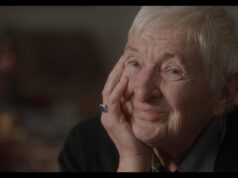
This is thanks to the montages and certainly the driving soundtrack (from Kelsey Lu to Public Enemy), but also to an interesting choice by Ross Williams to interview only Black women – apart from Ibram X. Kendi, author of the original book ‘Stamped from the Beginning: The Definitive History of Racist Ideas in America’ (which had already been adapted into a graphic novel by Joel Christian Gill). His interviews range from the iconic Angela Davis to Dorothy Roberts, Brittney Cooper, Brittany Packnett Cunningham and many others. This way, and with little explicit emphasis, Ross Williams and his documentary take a stance in the debate about racism, highlighting the underrepresented voices of Black women throughout history.
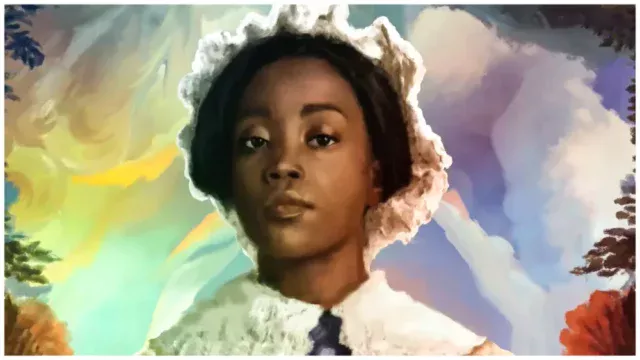
This is also reflected in the documentary’s most striking stylistic choice: animated sequences featuring historic Black American women. Abolitionist Harriet Jacobs, who published a book about her life as an enslaved Black woman in 1861; investigative journalist Ida B. Wells, who courageously recorded the individual stories behind lynchings even as they were taking place all across the United States; and author Phillis Wheatley, the first Black woman to publish a book of poetry in North America. The animated re-enactment of the tribunal of 1773, where white men assessed whether Wheatley indeed wrote those poems herself is one of the documentary’s painful highlights. It shows not only how Black people, and Black women in particular, were deemed incapable of higher intellectual functions and finer sentiments, but also how white people felt entitled to demand proof. It’s a scene about which historian Carol Anderson says: “Every Black woman has a Phillis Wheatley moment.” Cue Anita Hill.
And this is, as the documentary argues, because Black Americans have been ‘stamped from the beginning’ as being lesser people. The documentary, like the book, takes its title from an 1860 speech by American senator and later Confederate president Jefferson Davis, who, citing a fanciful story of Cain discovering the Black people among the animals created before Adam and Eve, proclaimed that “the inequality of the White and Black races” was “stamped from the beginning.” In the same vein, the documentary leads us back to the first slave shipments from Africa to Portugal, when the Portuguese Prince Henry asked Gomes de Zurara to write a report, in which he, according to Kendi, “invented Blackness”. Those who had been Masai, Xhosa, Igbo and others before, were now considered to belong to one single group of Black people, described as ‘beast-like’ and as naturally subordinate to other human beings.
Stamped from the beginning. It is from here that Kendi and Ross Williams spin their most fundamental thread: it was from the beginning that Black people had to be ‘stamped’ as inferior, as little more than beasts, because from the beginning the moral injustice of slavery needed justification – for economic reasons. Racism, according to this argument, is not essentially based on fear or hatred, but on economic power structures. Which continues to this day: Black people are still regularly portrayed by both politicians and popular culture as animalistic, inherently violent and sexually unruly; and after every step forward (from the abolition of slavery to the election of President Obama), there has been a massive, economically driven pushback (from lynchings to President Trump), while the concept of white supremacy is used to prevent solidarity of Black and white marginalised people against the system. “What Whiteness does is it blinds them to who the real robbers are,” says Kendi about white supremacists who have been taught to see Black people, not economic power structures, as their enemy.
Ross Williams does not leave us without hope. Not only does he end with – again – a montage of today’s successful Black Americans, but his whole documentary breathes a sense of optimism. Again, the music helps, but mostly it is the way his interviewees speak, not from despair, but from a position of knowledge and conviction. A position of authority. They demonstrate, not just by what they say but by how they say it: we know. We know where we’re coming from. We know who we are. And we know where we’re going. With the implicit but clear message: come with us.
US, 2023, 91 minutes
Director Roger Ross Williams
Production One Story Up Productions, Netflix
Producers Alisa Payne, Roger Ross Williams and David Teague
International sales Netflix
Script David Teague
Cinematography Wolfgang Held
Editing John S. Fisher and Francesca Sharper
Sound design Mike Frank
Sound Andrew Berger
Music Nate Wonder and Roman GianArthur
With Ibram X. Kendi, Angela Davis, Lynae Vanee, Brittney Cooper, Brittany Packnett Cunningham, Elizabeth Hinton, Carol Anderson, Kellie Carter Jackson, Imani Perry, Jennifer Morgan, Dorothy Roberts, Stephanie E. Jones-Rogers, Honoree Fanonne Jeffers, Autumn Womack, Ruha Benjamin