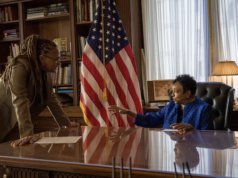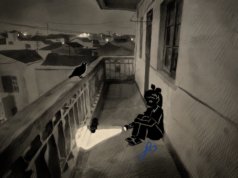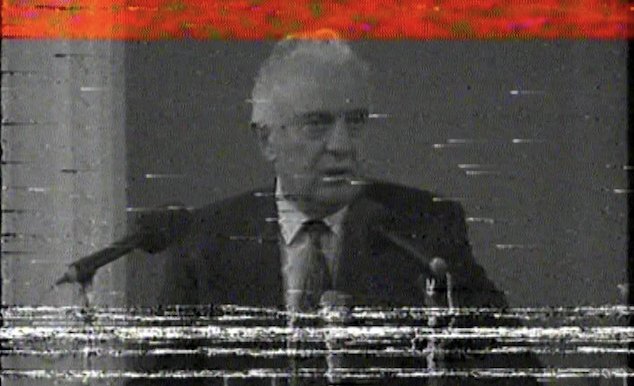
An obscure parliamentary sitting in the South Caucasus some 33 years ago might not seem the most obvious material for a feature documentary. Yet, in An Incomplete Day in the History of Georgia 10.06.93, Georgian filmmaker Salomé Jashi transforms deteriorating VHS recordings of a debate over the country’s new currency into a portrait of a state struggling to define itself. The 100-minute film, set to world premiere in IDFA’s International Competition, also carries uncomfortable echoes of Georgia’s political present.
The project emerged from an entirely different investigation. Several years ago, Jashi was researching businessmen who had embezzled citizens’ savings with promises of high returns, before disappearing during the post-Soviet economic upheaval. A researcher unearthed the parliamentary recordings, but Jashi eventually abandoned her original idea. “It was too much of an investigation. It was not the kind of film that I was interested in,” she tells Business Doc Europe.
But she returned to the parliamentary footage in 2025, amid political changes in Georgia that she says had “paralysed me in a way, also creatively.” This time, her priority was unusually specific. “I really made this film with the Georgian audience in mind,” she says. Jashi wanted to revisit not simply the past, but “the foundations of our state, of our modern state,” and the responsibility borne by those who shaped it.”
The director was 12 when Georgia was grappling with the introduction of the kuponi, intended to replace the Russian rouble. Her recollections are painfully concrete: economic collapse, the aftermath of civil war, fighting in Abkhazia, rampant crime and shortages of basic necessities. “Everybody was super poor. Kuponi was devaluing day by day. It was impossible to buy bread,” she recalls. “There was not enough food to eat. There was not enough gas and electricity.”
Even the film’s title acknowledges that the historical record cannot be complete. The parliamentary session lasted around 12 hours, but only six hours survive in the archive, from which Jashi assembled her feature. More importantly, the chamber was only one location of the national crisis. “There were many things happening at the same time,” she says. “We can only take a glimpse of the glimpses of this time and try to reconstruct not just that period, but also who we are right now.”
The editing process reflected those gaps. Jashi, who began and completed the edit herself while collaborating with editor Eka Tsotsoria along the way, initially had access to a single three-hour tape. Their first instinct was to present the proceedings as an ordinary parliamentary sitting, concealing cuts and allowing the disorder to build organically. Debates about elections and a recent natural disaster would gradually give way to the central question of economic independence. The intention, Jashi explains, was to sustain the original chaos throughout the film.
That first tape ended abruptly, and for a time Jashi considered letting the film end there too. Only after returning to the archive did she discover a second three-hour recording, filed under another date. Her finished film gradually makes the interruptions on the day more apparent, embracing sudden cuts rather than pretending to offer an unbroken account.
The physical state of the recordings was equally important. Preserved by Georgia’s public broadcaster, the digitised VHS material is scarred by glitches and interference. Jashi says many other tapes from the period have vanished, been stolen or were reused when recording stock was scarce. Rather than restoring the images to an artificial clarity, the team made modest adjustments to the flickers and contrasts. “The fact that it is damaged, it is part of the content of the film,” she argues. “We try to see through the glitches.”
Sound was treated with similar restraint. Although the source was mono, the team developed a limited 5.1 mix after cinema tests suggested the material could be more immersive. Very few additional sounds were introduced. The intention, Jashi stresses, was to remain as close to the original recording as possible.
This pared-back approach also shaped the production. Jashi used development funding originally secured for the abandoned investigation and sought no additional financing. Unlike with her earlier Taming the Garden, she deliberately resisted building a larger international co-production. “I didn’t feel like I need to make a big ambitious film right now,” she says. Instead, she wanted to “zoom in” on a subject whose significance might be of particular immediacy for Georgians.
Yet the country’s continuing relationship with Russia makes the film difficult to contain within the terms of 1993. Jashi sees competing notions of sovereignty in the debate as some politicians await Moscow’s position, while others insist that genuine independence requires freedom from Russian influence at every level. She argues that those divisions have, laterally, acquired new urgency as Georgia’s government has moved politically closer to its giant neighbour. “These recent last two years have made it quite vivid that Russia has basically taken over the country without bloodshed,” she says.
That assessment informs her account of the challenges facing filmmakers today. Jashi reminds how Georgian documentarians are boycotting the national film centre, that central backing for documentary has effectively disappeared, and that looking to access overseas support can make independent production increasingly precarious. “There are laws that make fundraising for films almost impossible,” she says, adding that receiving international funding without reporting it to the government can carry criminal consequences.
For Jashi, the modest scale and deliberately local focus of An Incomplete Day are not a retreat from larger questions, but another way to confront them. She sees the making of this low-budget, highly specific film as “a part of the wider struggle or understanding of the world that we live in.”