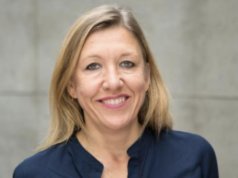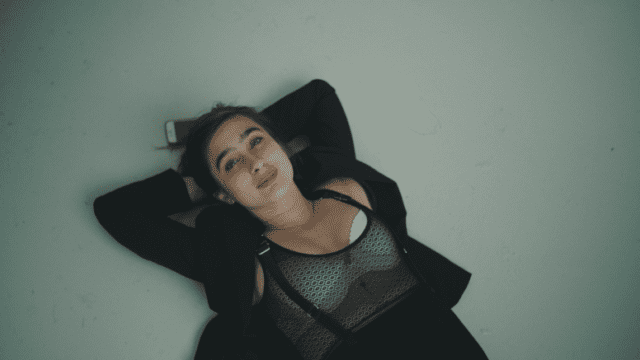
Lea Glob first met Apolonia Sokol in 2009 – when Glob was a film student in Copenhagen and Sokol was a bohemian art student in Paris. Sokol’s life journey has taken tumultuous twists and turns in those intervening 13 years – she is now an internationally award-winning painter – and Glob has been there to document every step of the way.
The resulting feature documentary, Apolonia, Apolonia, has its world premiere in IDFA International Competition, and Glob and Sokol will both be attending.
After the pair were introduced by a mutual friend, Glob Skyped with Sokol in order to meet her the first time. “I saw this woman in the frame in Skype. Instantly it just felt like watching a film because she was entertaining me,” Glob remembers.
Soon, Glob went to Paris to meet Sokol in person for an initial two-week shoot. That’s when she realized “there were more great storylines going on in the background – those were unfolding, and all these other great characters were entering the frame.” That first shoot was something they both thought could be turned into a documentary short, but obviously it grew into much more than that.
Sokol’s life has its highs and lows, and involves tumultuous moves across countries, and Glob wanted to capture “this adventure that is life sometimes – there is a fairy tale-ish touch that I hope to keep in the film.”
Glob eventually realized she needed to be a part of the film herself, as well, providing narration for the story as well as appearing in some scenes, especially later in their friendship when Glob has her first child and becomes seriously ill. “I really love cinema with narration,” the director explains. “But actually, I did a version where I tried to be sort of more objective. And it just wasn’t possible.”
She was wary of inserting herself as “being narcissistic.” But on the other hand, she says, “There are a lot of thematic ideas about narcissism in the film, and in the French school of painting – the myth of Echo and Narcissus is present in filmmaking – you are always looking but you are cursed to only be able to express yourself with the words of the other.”
Glob found the “power balance” between director and subject fascinating. Glob was slightly older and had been to a prestigious film school, while Sokol was still sleeping on a mattress on the floor of her parents’ fringe theatre in Paris. But later, roles were reversed when Glob was working as a modest documentary filmmaker (she has co-directed Olmo & The Seagull with Petra Costa, and Venus with Mette Carla Albrechtsen) and Apolonia’s art career started to become much more lucrative in the US as she became “an object of investment.”
Telling the story of multiple women – Sokol; her Poland-born mother; her close friend Oksana Shachko, a Ukrainian artist and activist from the Femen movement; and Glob herself – was also a way “to make visible the society and the position in society of artists…I was interested to explore the different chances you have when you are born in different circumstances.”
The visual style of the film includes different formats that Glob shot on over the years (as well as amazing archive footage shot by Sokol’s parents). She also decided to include models of the theatre and other significant buildings in the artist’s life. “I had a feeling of the theatre as a place but I wasn’t able to take a photograph of this feeling. The models were also reflecting a major theme in the film, which is a search for home.”
Glob knows Apolonia’s life continues to be fascinating now but she felt the time was right to end the filming – partly due to closing finance for the film, via her producers at Danish Documentary Corporation, co-producers Staron Film of Poland, and backers The Danish Film Institute and HBO Europe. Sales of the film are handled by CAT&Docs.
She knew she couldn’t have ended the film a few years ago when Sokol was at a pivotal time in her career being wooed by wealthy investors in Los Angeles – “for me to release a film in this vulnerable moment of an artist’s life wouldn’t be right. She was finding her ground.” So, 2021 seemed the right time to wrap up this story of Apolonia’s life and career. It was also when Glob felt well enough after her own health issues to finish the film. Apolonia found it the right time to wrap the project, too. “She said to me, ‘Lea, I can’t anymore. I need to live my life without a lens.’ And then I answered her that I also needed to live life not behind the camera. Emotionally it was a good ending.”
What has Sokol’s journey taught her, that an audience can take away? “I think this determination to go your own way. You might struggle with different issues, and sometimes you’re too much, but it was an inspiration to see this woman come about in the world.”
Glob adds, “I think in the next 10 years she will be seen as one of the great female painters, the rare one who is recognized within her own lifetime…When I started filming her sleeping on this mattress in a theatre, I had no idea what was going to happen.”
Glob is now seeing what she will discover with her next project, which is loosely about “the body and the welfare system.”