

In her short animated (and very touching) doc receiving its international premiere at IDFA, director Sara van Oostrum asks pre-teen kids (and a brace of elderly folk) to reflect on a potentially difficult subject, that of death. While one kid proclaims that “being is dead is BOOM,” another stresses how “when you’re dead you don’t fart anymore, and your heart stops beating.”
One girl movingly tells how upset she was on encountering her grandmother laid out in a funeral parlour, while another couldn’t understand how, at the funeral wake, all the adults were so happy while she was so sad.
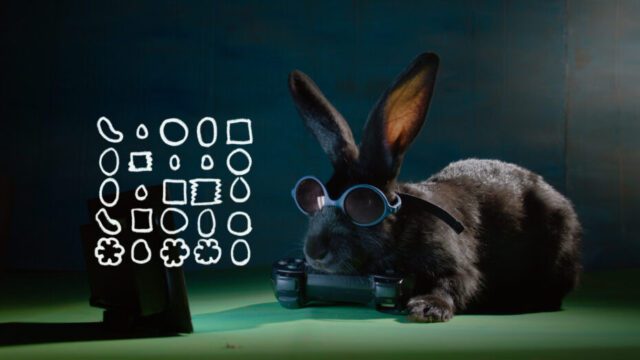
The film is partly animated (the colourful décor was designed by some of the kids) and the “red line,” as director Sara van Oostrum puts it, of the film is a curious rabbit whom we also see motionless before the film’s end. “That was also really interesting, to see that for children, the death of grandparents and the death of pets are the same level of sadness,” the director notes.
“I had a really, really close bond with my grandmother when I was younger,” Van Oostrum, who is an art teacher as well as a filmmaker, underlines on her motivation for making the film. “She died when I was seven years old, and it’s a period in my life that really stayed present in my head. I would think about that time and how my mother was towards me, and how busy I was with what she [her grandmother] looked like when she died. I remember very distinct moments at that age. I was also feeling really lost in a sense, and that things weren’t being explained to me. And I think the reason why I made the film is just really looking back at that time and thinking what would’ve helped me at that age. And this is kind of the answer to that.”
The responses the kids give (in voice-over, which means that the film has very good international dubbing potential) were gleaned from five workshop sessions during which 100 or so address the subject, their responses recorded. “It was this really collective experience… sitting in circles and mind-mapping and, ‘what were the colours that they thought of about around death and what are the experiences that you’ve had?’”
Van Oostrum returned a while later with two grandparents who had recently experienced the death of their partners and who also reflected on their grief, but also expressed their happy memories. “I realized why I chose the two generations,” the director explains. “These were two generations that feel comfortable about talking about death but have no platform to talk about it.” She talks of the “middle grey area” from early teens to early 70s when the contemplation of death seems more taboo and they’re “pushing death away.”
“Once we like, start becoming 75, it’s getting close so we want to talk about it again. So I thought it would be a really nice experience to bring the two generations together.”
Yes, the experience could be a little upsetting for some of the kids, but Van Oostrum was careful to protect them. “They feel better once they’ve told their stories,” she says. “So we sit in a circle and I say, look at your neighbours and check if your neighbours are okay. If they’re crying, or if you don’t feel like you want to share anymore, I want you to put up your hand and say, ‘Teacher Sarah, I don’t like this anymore.’ And we really created this safe space for them,”
“There was a lot of love and tears in my classes, but at the end [as can be heard in the end-credits] the children also said like, ‘whoa, that was really nice to talk about.’ I feel like they feel better even though they’ve been crying their eyes out. I just think it’s important to cry and to let it out. In our society so often that’s seen as a weakness. But it’s our strength and it’s one I want to promote.”
The film was produced by Diplodokus with the support of VAF (Flanders Audiovisual Fund) and Ketnet, the Flemish-language public children’s television channel owned and operated by the Belgian broadcaster VRT. While its Belgian broadcast is secured, it is a hope of Van Oostrum that her film can be shown broadly as part of the curriculum across schools in Belgium. And beyond, given the flexibility of its format.
The director reflects again on the raison d’etre behind her film. “I think we have such a powerful opportunity to give gifts to people from the things that we’ve learned. And this film is in some sense my gift to the childre
n of now to learn to speak about death, and learn to express the fantasies and the thoughts they have about death. That’s such a big part of life.”





