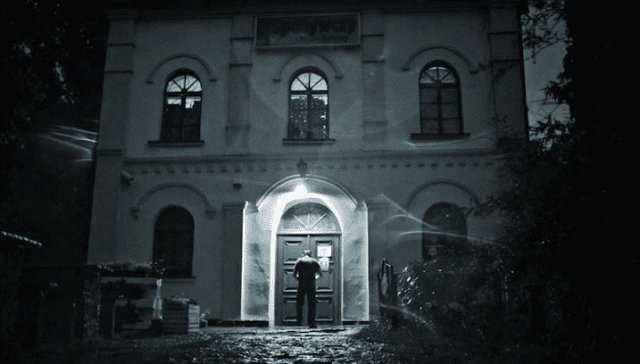
In Jakub Jakubik’s 90-minute project The Curse, set for October 2026 delivery, yet another person has drowned in the river near the synagogue converted into a liquor store. Waldek, a long-time teetotaler, the homeless Marek, and the Polish Jew Dawid must confront what is quickly developing into a curse.
“The Curse explores universal themes—guilt, collective memory, and inherited trauma—through a very specific, local story set in a small Polish town. It’s a tale about a man living in the shadow of the past, unaware that this past is also his own,” producer Michał Sadowski tells BDE ahead of the KFF Industry Docs to Go presentation of the project.
“For Polish audiences, the film offers a moment of reflection on our relationship with Jewish history—often repressed, silenced, or turned into myth,” he continues. “For international viewers, it’s a story about how trauma travels through generations, and how the failure to confront the past shapes the present.”
The project was presented at Marché du Film at Cannes 2025, where it received encouraging interest from industry professionals, Sadowski says, adding that IDFA, CPH:DOX and Visions du Réel are his prime targets for the film’s world premiere.
Sadowski furthermore expresses immense confidence in director Jakub Jakubik, whose “remarkable sensitivity” he underlines. “He listens carefully to his characters and the spaces they inhabit. His style is grounded in close observation, yet highly attuned to the symbolic weight of the story. He creates a world that is both realistic and emotionally charged, exploring difficult themes—memory, guilt, denial—with empathy and courage, never resorting to simple answers.”
“What sets The Curse apart is its unique blend of a concrete, local narrative with a deeply universal theme.” Sadowski adds. “Set in a forgotten town around a space marked by silence and erasure, the film opens up a much broader conversation about unspoken trauma, inherited responsibility, and collective memory.”
There is no denying the ambition of the project, whether assessed in conceptual or cinematic terms. “It is shot in a 4:3 aspect ratio, using a muted, analogue-inspired colour palette. The framing emphasizes both the intimacy of human relationships and the architectural weight of the setting—especially the former synagogue, which stands as a silent witness to history,” the producer notes.
“We use long takes and handheld camerawork to preserve a sense of documentary realism. At the same time, the narrative unfolds with tension and suspense, reminiscent of a psychological thriller. Our visual style draws inspiration from the Polish documentary tradition and contemporary hybrid cinema.”
In Cracow, Sadowski will be looking to secure co-production, finance, festival, sales and broadcast interest. He is a third of the way towards his budget target of €150,000.
“For us, the most valuable outcome would be to find partners—co-producers and distributors—who understand the dual nature of this film: its local context and its universal resonance,” he says.
“We’re looking to establish relationships that go beyond one-off support—connections based on shared values and long-term collaboration. KFF Industry is also an opportunity to present this story in person and see how it resonates with audiences from different backgrounds and cultures.”