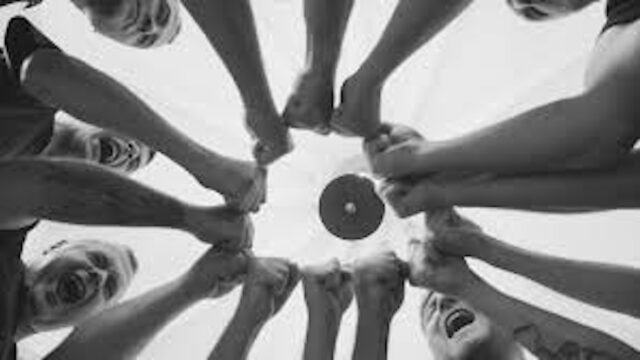
In The Herd, 12 men of different ages, professions and life experiences gather for a four-day intensive workshop aimed at uncovering their feelings and confronting their physical and emotional limitations while grappling with the question: What does it mean to be a man in today’s world?”
“Anger, fear, shame, sadness, the longing for closeness. They will shed their social armour and roles in order to return to themselves through their bodies and emotions as their truest selves,” adds director Mariusz Biernacki.
The film, produced by Iga Malińska of Play Colors Media, is the feature debutant’s attempt to understand the shifting sands of masculinity within the 21st Century. “Over the past few years, I’ve been observing significant social shifts in Poland related to the evolving concept of masculinity,” he says. “Traditionally, the image of a man was simple and rigid: he was expected to earn money, take responsibility, make decisions, and avoid showing emotions. Today, however, contemporary men often find themselves caught between these outdated societal expectations and a new, emerging model of masculinity – one that embraces emotional awareness, the ability to express feelings and psychological flexibility.”
“Unlike women, who have had clear directions for change through feminist movements and numerous support networks, men today frequently lack guidance,” he adds. “Many feel lost, and this has contributed to the rise of phenomena such as incel communities and broader issues of male isolation and frustration.”
Biernacki seems well qualified to investigate the topic, given the diverse aspects within his own personal development.
“I believe my greatest strength as a director lies in the personal journey I’ve gone through which deeply informs my perspective on this subject,” he says. “I was raised in a traditional Catholic family, where masculinity was defined in a conservative, rigid way. Later, through my studies in the arts, I entered environments where sensitivity and emotional expression were not only accepted but valued, especially when conveyed through creative work. Eventually, through close friendships, I encountered LGBT+ communities, where gender is seen more as a spectrum. Each of these worlds offered me different models of masculinity but none felt entirely convincing or complete for me.”
“This search led me to a somatic men’s workshop—the same kind of setting my protagonists go through in the film. I experienced what they experienced, physically and emotionally. But I began documenting this process only after I had developed a critical and reflective distance. The topic continues to engage me, perhaps because I remain frustrated by the state of male identity today. That’s why this film is not just an observation for me, it’s also a dialogue,” he adds.
Visually, The Herd will feature a distinct visual contrast between its two narrative layers, Biernacki tells BDE. “Black-and-white footage capturing the inner process experienced by the protagonists during the workshops, and colour footage portraying their personal surroundings – especially emotional testimonies from close family members – with a focus on fathers and intergenerational views on masculinity.”
“We chose to shoot the workshop scenes in black and white to emphasize the stripped-down, almost ritualistic nature of the setting. The participants, dressed in dark athletic clothing, remain anonymous in a visual sense. By removing colour, we allow the viewer to fully focus on what truly matters: the emotional depth and psychological intensity of the process.”
The project is a third of the way towards the overall budget of €150,000. Biernacki is looking for sales, festival, co-pro and impact interest at KFF – but something more. “We’re here not only to present our project, but also to gain insight, exchange ideas, and better understand how to navigate the international documentary landscape,” he says.
“Being part of KFF Industry is genuinely exciting as it makes the next steps feel both more tangible and more inspiring. We hope to leave with valuable feedback, new perspectives, and connections that will help us bring this important story to a wider audience.”