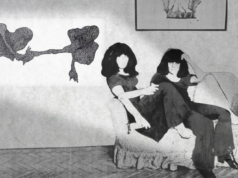
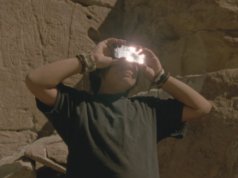
When producer Iwona Harris was asked to come on board Magda Nabiałczyk’s documentary about legendary Polish pianist Lidia Grychtołówna, she feared that the project may be a touch derivative. Her fears proved unfounded, however. The director had already been shooting for over a year, and the footage was excellent.
“I realised that this is not a factual biopic, but one that tells the story of the power of passion, which is the driving force behind our heroine’s actions,” Harris tells BDE. “This passion is, of course, music, which will be present in the film in its full, authentic dimension played by Grychtołówna herself.”
“What captured me about Magda was her sensitivity to others and her friendship with Grychtołówna,” Harris adds of her director. “I think it would have been difficult for us to carry out the film’s premise had it not been for Magda’s close relationship with her character. Neither when I was on set nor when I watched the raw footage did I notice any sign of awkwardness in Lidia in the presence of Magda or the camera.”
“The heroine’s trust in the director is the key. Magda has a great ability to establish rapport and trust quickly and to pick up nuances accurately. This makes her a good journalist, which is her usual job. Maestra is her directorial debut, and I like it when people keep evolving. Entering a new professional space, swapping short journalistic forms for a full-length documentary – that makes Magda brave because, as I see it, any step out of your comfort zone takes courage.”
The producer is approximately €30,000 short of her €120,000 target. The film is set for a May 2026 delivery after shooting draws to a close in December 2025.
Harris further describes the visual aesthetics of the documentary. “In the private scenes, the film is intended to have an intimate feel mainly through the close placement of the camera and the relationship between the protagonist and the director, who quite often appears in frame and interacts with the protagonist. In the concert scenes, the shots are wider and from a distance, but with the camera often hovering over details.”
“The cinematography is often contemplative: the camera pausing on Professor Grychtołówna’s face, her hands playing the piano, details of the interiors in which she lives and creates,” the producer continues. “We want the editing to be rhythmic like a dance: slow, slow, fast, fast. We mostly aim for calm, allowing the viewer to absorb the emotions and reflections coming from each scene, but our heroine’s temperament will not allow us to maintain this calm for too long.”
“We want to keep the colour scheme warm, often in subtle, powdered pastel hues in order to emphasise the atmosphere of closeness, but also drawing from our heroine’s favourite colours that are found in her space,” Harris adds. “Ambient light, usually soft. We want to combine a documentary style with aesthetic care for the image, which will give the film not only an informative but also an artistic dimension.”
It is a film not only about music and an outstanding performer, but about something that will affect us all, the business of getting older, the producer underlines.
“The Maestra will appear before our eyes as a woman who, on her way to realising her goal, her last concert, struggles with the limitations brought by age,” says Harris. “The subject of old age is not very readily shown on film, in my opinion because of the strong negative connotations of ageing. The attitude of Grychtołówna, who lives her life with passion, humour and the determination to overcome new challenges, will be an inspiration for many viewers young and old.”
“I feel that it was this universal, positive narrative and the musical quality of the film that convinced our partners, including the Polish Film Institute, the Fryderyk Chopin Institute and the Adam Mickiewicz Institute, to support the project,” Harris signs off.