

Poland’s vibrant documentary sector, and that of Ukraine, will once more be in the frame at KFF Industry, the professional arm of Krakow FF, with attention again focussed on the Docs to Start and Docs to Go presentations of 21 new and ambitious projects.
Docs to Start is aimed at filmmakers developing documentary projects at an early stage. Programme participants will present ideas still in development phase, consult with experts, and seek production and financial partners. For many years, the pitching session has served as an important starting point for new Polish documentary projects. This year, 13 projects will be presented.
Docs to Go, on the other hand, is dedicated to projects at a more advanced stage of production – in editing or post-production. It is a platform for films preparing for international distribution and the festival circuit. Projects presented during the pitch sessions have the opportunity to meet representatives of the world’s leading festivals and sales agents. Eight projects have been selected for the Docs to Go presentations.
As in previous years, projects from Ukraine also join in the pitch sessions and as part of the overall DOC LAB Poland & Ukraine programme of preparatory workshops, organised by the Władysław Ślesicki Film Foundation. These will be given by leading experts within the international documentary field: French producer Christian Popp; Sarajevo FF producer Rada Šešić; IDFA Industry’s Marina Burić; Ove Rishøj Jensen from FIPADOC Industry and Paradiddle Pictures, and Nadja Tennstedt – head of DOK Leipzig Industry.
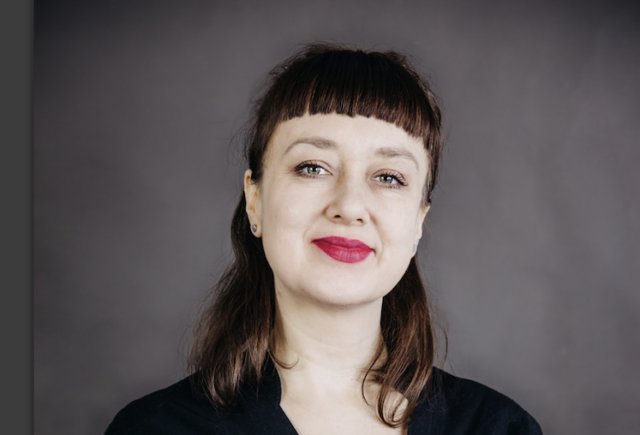
Wilk expands on the Polish doc industry’s commitment to their Ukrainian counterparts and output. “This artistic friendship has been going on for much longer, but of course the full-scale invasion in 2022 naturally broadened and strengthened it,” she says. “We are neighbours and share similar experiences from our shared history. It seems only natural that, since Ukrainian filmmakers have been cut off from opportunities for artistic and professional development, we should help if we are in a position to do so.”
The 21 projects selected for Docs to Start and Docs to Go will be diverse both in subject and style, Wilk points out. “These will include stories centred on complex family relationships, such as Marriage Diaries. The Making of the Familyby Agata Wojcierowska Gillerman and Dorel Gillerman, Trans Mom by Maria Wider, and Sisters by Weronika Chwałek,” she says.
“But there will also be no shortage of political topics – focusing on the war in Ukraine, as in Siarhei Marchyk’s Cameo, or the geopolitical situation on the Polish-Lithuanian-Russian border, as in Paweł Ferdek’s The Gap. Tadeusz Chudy’s new film Something is born, someone dies looks very promising; in the form of a visual essay, it explores our relationship with animals in the context of birth and death.”
The subsequent selection of Polish documentaries at international festivals has been strong for many years, Wilk stresses, with the past 12 months proving no different, with numerous selections at the likes of IDFA, CPH:DOX, DOK Leipzig, Visions du Réel and Thessaloniki. “Michał Marczak’s Closure premiered at Sundance, and the Polish co-production Traces by Alisa Kovalenko and Marysia Nikitiuk was at the Berlinale,:” she adds. “Many films developed in previous years during Doc Lab Poland and KFF Industry also had their premieres this year, such as Tadeusz Chudy’s On My Own Terms at Hot Docs, and The Queen and the Smokehouse by Iga Lis, which recently screened at 69th San Francisco IFF as the first Polish documentary for decades.”
“Natalia Koniarz’s Silver is doing exceptionally well,” Wilk continues. “Maciej Kubicki’s (Telemark) production had already won awards at the project stage, including at KFF Industry. And since its world premiere at the Krakow FF a year ago, the film has already won 15 awards, including the Grand Prix at Slamdance, Zagreb Dox and Ji.hlava. This is hugely encouraging, because we are very keen for the projects that start out at the Docs to Go pitch during KFF Industry to get off to a good start and enjoy a long and interesting festival life.”
KFF Industry’s CEDOC Market – Central European Documentary Co-Production Market remains an established industry event connecting international documentary filmmakers, dedicated to building creative partnerships between East and West, North and South, and with a special focus on Central European projects and talents. Over two days in Krakow, the event enables opportunities professionals to develop their projects and build new professional alliances, via pre-arranged meetings with international documentary producers and decision makers.
A new feature of this year’s KFF Industry is the Doc Talent Market, organised in collaboration with KIPA – the National Chamber of Audiovisual Producers – and Polish Docs PRO. The initiative was created with young documentary producers in mind who are starting out on the international market and looking to make their first industry contacts. As part of the event, experienced producers will present their studios’ work, share their expertise and hold one-on-one meetings with participants to discuss potential avenues for development and future collaboration.
“I am immensely pleased by the interest shown in our events by emerging filmmakers and representatives of the film industry. We have received a huge number of entries for both Talent Markets – the animation market and the documentary market, which is being held for the first time this year. I am proud that we are open to young people and can help them take their first steps in their professional careers,” says Wilk.
Another new addition to the programme is Industry Hyde Park, which offers an overview of new initiatives, programmes, and tools designed to shake up the doc world. It will feature representatives from the Krakow Film Music Festival, the Wajda Film Centre FINA – National Film Archive – Audiovisual Institute, TVP, the Documentary and Feature Film Studio, and No Problemo Music, sharing opportunities for collaboration, funding, and project development within in a networking context.
The KFF Industry programme will also feature numerous case studies, workshops and masterclasses led by renowned filmmakers, such as that this year’s winner of the Dragon of Dragons Award, Kim Longinotto – a key figure in contemporary documentary cinema. The director will discuss her approach to documentary filmmaking, which for almost five decades has been built on “empathy, trust and careful observation,” the festival writes. During the session, she will explain how to work with subjects from different cultures and backgrounds, who often experience exclusion or systemic oppression.
US docmaker Jay Rosenblatt will talk about working with film archives, the personal nature of his work, and the possibilities of using found footage in contemporary cinema, while
UK filmmaker Marc Isaacs will talk about his film ‘Synthetic Sincerity,’ which opens KFF 2026. The film blends documentary and fictional elements – and it is not always easy to tell where one ends and the other begins, and the case study will show how the documentary presents a humorous yet moving narrative structure that breaks free from stereotypes and conventions.
KFF Industry Director Wilk returns to the appeal of Polish doc, agreeing with the assertion that the country has become an epicentre of excellence. She offers a reason why this may be. “It seems to me that Polish directors have a very strong tradition of documentary filmmaking dating back to the 1960s and 70s, such as Krzysztof Kieślowski or the late Marcel Łoziński, who taught documentary filmmaking right up until the end and left behind dozens of exceptionally talented students, many of whom went on to pursue their own artistic paths,” she says.
“Education is of key importance here, but not just the education of documentary directors, but also of cinematographers, editors and sound engineers. The also have an empathetic approach to their subjects, and a huge curiosity about the world,” Wilk ends.





