The 66th edition of Krakow FF opens May 31 with Marc Isaacs’ Synthetic Sincerity, ahead of seven days of frenetic doc activity, both for public and Industry. During the festival, one of the oldest events within the international calendar dedicated to doc (as well as animation), audiences have the opportunity to watch around 200 films from around the world.
Documentaries are presented in International and National Competitions, with a series of sidebar events such as a focus on the Balkans, and sections dedicated to sports films and youth docs. Special guests this year are Brit doccer Kim Longinotto (who will be accorded Dragon of Dragons status by the fest), US filmmaker Jay Rosenblatt, and Marc Isaacs, director of the opening film.
This year sees the presentation of the inaugural Marcel Łoziński International Documentary Award, established jointly by the Kraków Film Festival and the Polish Documentary Film Directors Guild. The first winner is Cuban filmmaker David Bim for his To the West, in Zapata, announced in Cannes and to be handed over officially on June 3 in Krakow.
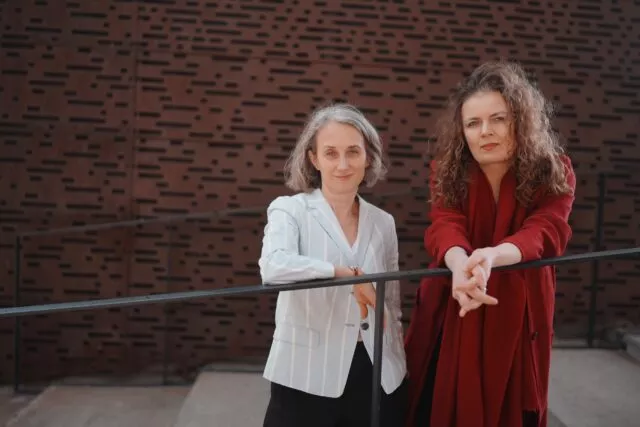
Before doors open on the 2026 festival, Festival director Barbara Orlicz-Szczypuła and Artistic Director Anita Piotrowska sat down with BDE to explain their rationale over this year’s offer, kicking off with the business of selection.
“Our main goal is to promote high-quality arthouse cinema, including documentaries, short fiction films and animation – that’s all,” says Orlicz-Szczypuła, nevertheless offering a rejoinder. “It’s simple, yet difficult at the same time.”
“This shapes every stage of our work, from sourcing films to promoting them later on. For me, the festival is not primarily a business, even though festivals have become an important part of the film distribution chain during last decade,” she adds. “I see our role more as educators who give audiences the opportunity to discover stories from around the world, explore important issues and encounter bold cinema. This also means building appreciation for documentary and short film as art forms.”
“We look for films that combine engaging subjects with strong cinematic form, especially in our diverse short film sections. We aim to present films that can reach wide audiences, while also supporting ambitious and challenging cinema that may not appeal to everyone. Diversity of stories, styles and geographical perspectives remains central to our programme.”
Long before the full-scale invasion of 2022, Krakow FF has always offered unwavering support to the documentary industry of Ukraine, with whom Poland shares a border, both in terms of supporting its filmmakers and screening their films.
The festival “has politics in its DNA,” Artistic Director Anita Piotrowska tells Business Doc Europe. “It was born 66 years ago, and at that time…it was a strong voice of opposition to the authoritarian system,” she stresses, citing the works of Polish masters Krzysztof Kieślowski and Marcel Łoziński, who were young, active documentarians back in the early 1960s.
“We cannot remain open to those who violate this freedom,” Piotrowska warns. “Which is why in 2022 we have placed a ban on films from Russia and we are sticking to this. This is also one of the ways we can express solidarity with our Ukrainian neighbour.”
“At the same time, perhaps due to historical experience, we are sensitive to the language of film propaganda, any kind, even when it’s for a just cause,” she continues. “And you certainly won’t see these kinds of films in Krakow.”
Is the proximity of Cannes (which had just ended) and Sheffield (about to begin) a boon or a burden for Krakow FF? For director Orlicz-Szczypuła, the timing is not an issue.
“Krakow Film Festival is always organised at the end of May and beginning of June. These dates are well known in the international festival circuit,” she underlines. “This has never been a big problem, in fact, it has sometimes been useful, as we are able to invite filmmakers and industry professionals from other continents who are travelling to Cannes before Krakow or to Sheffield after, and who can therefore combine visiting our festival with their European trip.”
“We also try to cooperate with international festivals that overlap with ours or are held very close to it. This year, for the second time, we have prepared an offer for filmmakers and industry guests who will visit three overlapping festivals: Krakow, Vienna and Hamburg. Our dates are also determined by Krakow’s yearly cultural calendar. It’s a city with a huge cultural offer, and our festival is firmly established in the city’s calendar, which is our main supporter.”
Poland and its production output is, quite naturally high, on the agenda at KFF 2026. Aside from the 8 feature documentaries playing in National Competition, all of the films in the Short Docs, Short Fiction and Animation competitions are Polish, as is one of the films in International Feature Doc Competition, Tickling the Devil by Piotr Małecki and Maciej Nabrdalik.
The strength of Polish doc is something which thrills Artistic Director Piotrowska. “I’m delighted that Polish documentary film has finally freed itself from the obligations imposed on it over the years, [namely] that it should either be local and bear witness to the changing Polish reality, or be universal at all costs,” she stresses.
“Today, it attracts attention primarily as a cinema of auteur individualities. These are filmmakers who approach observational family cinema in an original and insightful way, or who can be incredibly creative in their work with archival materials. They are also increasingly bold in their pursuit of topics beyond Poland’s borders. We also have excellent debuts in the program, some filmed by the people in the middle age, which proves that there is room for a wide variety of voices in Polish documentary. Because this multi-voicedness is, for me, a marker of the vitality of cinema, and this year certainly confirms it.”
On June 3, the festival will hand out the inaugural Marcel Łoziński International Documentary Award to Cuban filmmaker David Bim for his audacious feature debut To the West, in Zapata. Talking to BDE in March 2026, Orlicz-Szczypuła commented: “Marcel Łoziński was truly special to us – a director, a mentor, a friend. Almost every year he would come to Kraków to present his films, but also to engage in conversation about what documentary cinema is and what it can become. Those conversations were invaluable and live in us forever. Establishing this award is a tribute to him, to his body of work, and serves as an encouragement to other filmmakers to push beyond the boundaries of documentary storytelling.”
Piotrowska further supports Orlicz-Szczypuła’s insistence on films with a determinedly large-screen aesthetic. “We strive to show documentaries that have cinematic potential, both visually and narratively. That’s why we avoid television or streaming formats. It’s clear that most of our titles won’t see regular theatrical release; they’re primarily destined for festivals and won’t necessarily make it to platforms. This is why we want to give these films our festival space and showcase the most diverse facets of contemporary documentary.”
Orlicz-Szczypuła adds: “After the pandemic, we managed to rebuild our audience and it is now even better than before. It oscillates between 25,000 and 27,000 cinema viewers (around 90% of total capacity) and around 6,000 online viewers, giving us a total of around 30,000 per edition. A lot of work was done to get the audience back, but, as you can see, film festivals are still attractive to viewers, mostly because they offer a selection of films chosen by the organisers, but also because they provide an atmosphere that enables discussion and the exchange of opinions.”
Both women agreed to isolate examples from the programme (as difficult as this ask can be, given the care with which the programme was compiled).
“I recommend our Balkan Focus, a review of documentaries from this region, as well as the Docs+Science section, whose theme this year is ‘Between Universes,’” suggests Piotrowska, before flagging up some of the Polish documentaries. “Marcin Borchardt’s Magic Hour is definitely worth checking out – a story about a brilliant clan of Polish cinematographers, fantastically assembled from home archives. Also worth seeing is Piotr Małecki and Maciek Nabrdalik’s Playing with the Devil, a documentary about an outstanding war photojournalist whose next front is the present-day United States.”
Orlicz-Szczypuła cites another film by Marcin Borchardt, My Themersons, about the Polish artists Franciszka and Stefan Themerson, pioneers of experimental Polish film, and told by Franciszka’s niece. “With beautiful original music, this film is a very powerful experience.”
She also recommends the selections within the DocFilmMusic competition, among them the Estonian film Puuluup – Cables in the Car by Taavi Arus (international premiere). “It tells the story of two middle-aged men who form a crazy musical duo to pursue their own neo-zombie post-folk style. I also always recommend the short film programme, which combines genres and offers a great platform for debutants.”
Piotrowska returns with another suggestion, Katarzyna Kultys’s The Ant House. “It is a story filmed over several years by a mother dealing with her son`s extraordinary passion. By the way, this seems to be one of the leading themes in Polish documentary films – passion as a force that may be both creative and destructive. Whatever it is, it certainly positively drives Polish documentarians,” she signs off.