

At Millennium Docs Against Gravity (MDAG, May 8-17), pitching does not only mean introducing projects in development. With Pole Position, the Warsaw-based festival has created a format designed for completed Polish documentaries already selected for its programme, giving producers the opportunity to present the completed works to international festival programmers, sales agents, distributors and broadcasters.
The 2026 edition of Pole Position takes place on Sunday 10 May at the State Ethnographic Museum, followed by one-to-one meetings in the afternoon. Described by MDAG as an “experimental pitching of Polish films that are already completed”, the event presents titles included in the programme of the 23rd Millennium Docs Against Gravity, with short presentations aimed at encouraging international guests to watch the films, programme them or consider them for distribution.
For Anna Szczypińska, Head of MDAG Industry, the format was born from a very practical problem. Industry guests often come to Warsaw for only two, three or four days, with schedules already packed with meetings, panels and other professional events. “We expect guests to attend the industry events,” she says, “but they don’t have time to attend all the screenings.”
The festival’s priority, she explains, is to promote Polish filmmakers and the Polish Competition. “The idea was to gather all of the industry guests and showcase the films in the Polish Competition, just to get their attention,” she says. The target audience includes festival programmers, sales agents, distributors and TV buyers, particularly as not all of the Polish Competition titles already have international representation.
“We can’t make them attend all of the Polish premieres,” Szczypińska continues. “If they go to see one or two films in the cinema, it’s perfect — it’s better than nothing. But this way, they can see a glimpse of all of the Polish films in the Polish Competition, and ask for a screener or schedule a meeting.” After the presentations, the festival organises one-to-one meetings between filmmakers and invited professionals. “I don’t think there’s a market doing that,” she adds. “We are the pioneers.”
Wojciech Diduszko, Director of the Polish Competition, points to past results as proof that the concept can work. One of the key examples is Maciek Hamela’s In the Rearview, which won the Polish Competition at MDAG and was later shortlisted for the Academy Award for Best Documentary Feature. Diduszko recalls that Toronto programmer Thom Powers first encountered the film through Pole Position before attending a cinema screening. “Without that presentation, Pole Position, it wouldn’t have happened,” he says. “It attracted the attention of one of the key decision makers.”
Szczypińska also cites Hanka Nobis’ Polish Prayers, which had its Polish premiere at MDAG after premiering internationally at IDFA. Following its Pole Position presentation, the film went on to enjoy a strong festival life. For Diduszko, the format matters because the documentary market is now saturated. “We are living in a world with so many films, so many newsletters, so many propositions,” he says. “The chance for filmmakers to be seen live on stage, with their producer and director presenting the film, is how we are able to catch the attention of festival programmers.”
This year, Szczypińska expects around 60 decision-makers to attend Pole Position. The broader MDAG Industry guest list includes representatives from festivals and organisations such as Sundance, Sheffield DocFest, DOK Leipzig, Hot Docs Toronto, IDFA and CPH:DOX, alongside sales and distribution companies including CAT&Docs, Magnetfilm, Autlook, Dogwoof, Film Harbour, Together Films, Windrose and Filmoption. The festival is also hosting a strong short-film delegation, with guests from Prague Shorts, Dresden, Locarno, Uppsala Short Film Festival, Go Short, BEAST, IDFA, Interfilm and Kurzfilm Agentur.
The selection of films begins with the Polish Competition itself, curated by Diduszko, while Szczypińska handles the industry-facing production of the event. Most films selected for the competition are invited to take part in Pole Position, although a small number may opt out if they already have sales, buyers or festival plans in place. Polish short films from the festival’s dedicated competition are also included in the pitching framework.
Diduszko says the strength of the 2026 Polish Competition lies not in one dominant theme, but in its range. “I’m really happy to say that there is no one common theme,” he says. The eclectic line-up includes international co-productions, stories about the war in Ukraine, intimate first-person confessions, engaging family portraits and a film about a freak show, among others.
“The competition is very strong,” Diduszko adds. “It is only ten titles — it’s my choice to limit it to ten. The meaning of the competition lies in diversity. We are not following one idea. We are open to everything that is good, that has potential for partners and has distinct value.”
Pole Position sits within a wider MDAG Industry programme that Szczypińska describes as deliberately expansive. In 2026, the festival is hosting five pitching sessions, including a new Polish-Swedish co-production pitching event organised with the Swedish Film Institute (Sweden is this year’s country of focus), a Central and Eastern European short-film pitch, a forum for films aimed at younger audiences, and the main work-in-progress pitching session.
Szczypińska says the industry team has tried not to reproduce existing models. “The most important thing for us, when we created the industry part of MDAG, was that we didn’t want to copy everything that already existed,” she says. “We always try to invent something new and attractive for the people who come to us. Our main point is that it can’t be a waste of time. It has to be strong.”
That approach also extends beyond standard industry meetings. MDAG runs workshops for arthouse cinema owners interested in programming documentaries but unsure how to promote them. “It’s another thing that we invented for people who know there is potential in documentaries, but don’t know how to exploit it,” Szczypińska says. “We try to think outside the box and each year propose something new.”
Unlike the festival’s other pitching sessions, Pole Position does not involve extensive training. Szczypińska calls this “a strategic risk”, but says the timing makes it necessary. In the months before MDAG, filmmakers are focused on finishing their films and delivering materials for the festival. “We don’t want to make it more difficult than it is,” she says.
Instead, the festival relies on the fact that the teams are presenting completed works. Each project has a seven-minute slot, during which filmmakers may combine a spoken presentation with either scenes from the film or a trailer.
The real value, Szczypińska stresses, comes afterwards. “We have a matchmaking team connecting the projects with decision makers,” she says. “That’s the main benefit of the pitching.”
The list of Pole Position projects is as follows:
- Arek.Mama.Panorama (Bigger Picture) by Mikołaj Janik
- Ciało wojny” (Bodies of War) by Małgorzata Szumowska, Michał Englert
- Ewa – Ostatnia lekcja (Ewa – The Last Lesson) by Andrea Mura, Federico Savonitto
- Freak Show by Łukasz Ronduda, Filip Pawlak
- Kandydaci Śmierci” (Candidates of Death) by Maciej Cuske
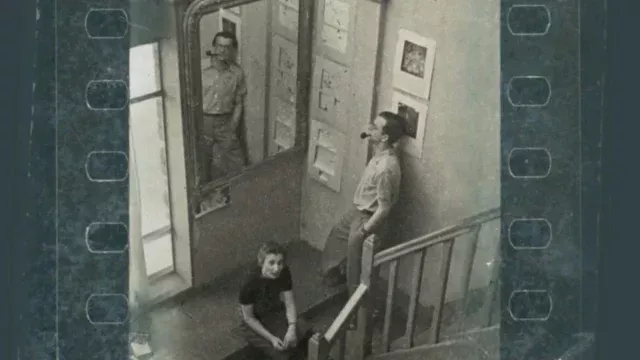
- Moi Themersonowie (My Themersons) by Marcin Borchardt
- Nurt (The Current) by Rafał Skalski
- Ślady” (Traces) by Alisa Kovalenko, Marysia Nikitiuk
- Wyznania pieprzyka (Confessions of a Mole) by Mo Tan
- Bujając w obłokach” (Heads in the Clouds) by Mieszko Chomk
- Maluję swój autoportret, a wychodzi mi moja siostra (I’m Painting a Self-portrait, but All I See is My Sister’s Face) by Helena Stańczyk
- Mentor by Krzysztof Tomaszewski
- Twin Days by Nadia Szymańska, Sara Szymańska





