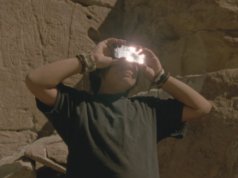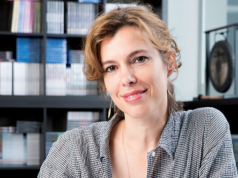
In her emotional pitch, delivered via video due to illness back home in Romania, Ana Vîjdea explained her new and very personal project Nava Mama, for which returns to the village where she grew up in order to break the cycle of violence that she experienced throughout her childhood.
“I had left the village because of the violence in my family and in the homes of mostly everyone I knew. It was a violence that seemed so pervasive that my grandmother used to cry herself to sleep. She woke up crying and I was crying alongside her without really understanding why,” told Vîjdea. “The violence is so present that I felt it’s looming in the air.”
“When I turned 30, I returned to the village and [to] my surprise, after meeting with the people I grew up with and with new people, everyone was willing to talk about the pain and the views they have and they are still experiencing. So it felt natural, maybe even healing, to make a film about this, about these shared experiences.”
That said, she couldn’t find a way into her story – until she came across the teenager Ivana who was living the pained life that director Vîjdea had experienced 15 years previously.
“She was coming from a very violent family with a violent father. And in order to escape this, she spent her days outside from dawn to dusk. And while outside, she connected deeply with everything around her, with the nature, with non-human beings, with some people that she deemed unthreatening,” says Vîjdea.
“I admired her from the moment we met, and I saw her as this tiny hero of the ostracized. So we met every month, every other month sometimes, and we talked. We explored. Eventually we decided to work on Nava Mama together and to make a film that yes, does have as a backdrop, violence and pain, but in the end a film which has at its core coexistence and empathy.”
But one day Ivana disappeared, and so Vîjdea undertook a desperate search to find her, finally discovering that she had been committed to a mental health institution, based on accusations that she threatened to kill her father. “I knew deep down that it’s impossible – that she cannot have done that. So I went to search for her and I found her. And after speaking with everyone involved, it became clear that the accusations were false, that she had no mental health issues, and that she had simply been cast out from the village for being a problem child, a misfit.”
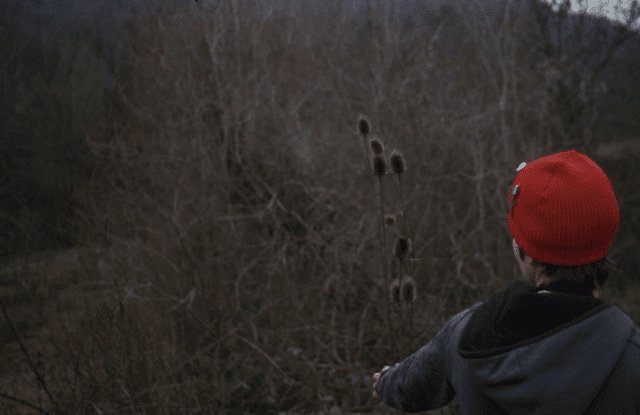
In the meantime, Ivana had come out as trans and now identifies as Denis, a boy. The pair are determined more than ever to continue with the film. “We feel that it’s imperative to do it. It’s a necessary film.”
Nava Mama is currently in development with confirmed financial support from Remora Films and Saga Film (BE), with approximately €290,000 still to be raised. Shooting is continuing both in the village and the city where Denis now lives, ahead of a mooted delivery in 2027.
“For the time being, I envision the film in two parts,” continues Vîjdea. “The first part would take place in the village and it’ll be shot in a fragmented, dreamlike way. I like to think of this part as a portrait of Denis’s memories from the village. This part will show his interactions with the place and its beings, his dreams, his wondrous nature along with the stories of other villages rooted in pain and trauma.”
“I imagine the second part would unfold in the city, mostly at the institution where Denis now resides. I think this structure will evolve, but at its heart, the film will follow Denis’s journey and the marks left on him by his village, the village he left.”
“But just like me, he feels it pulling him back. A village I love [and] I still feel that this village is living inside of me. I like to think of this place as a mothership, a place where tiny vessels return to get fuel. Nava Mama is the literal translation of the word mothership,” Vîjdea signs off.