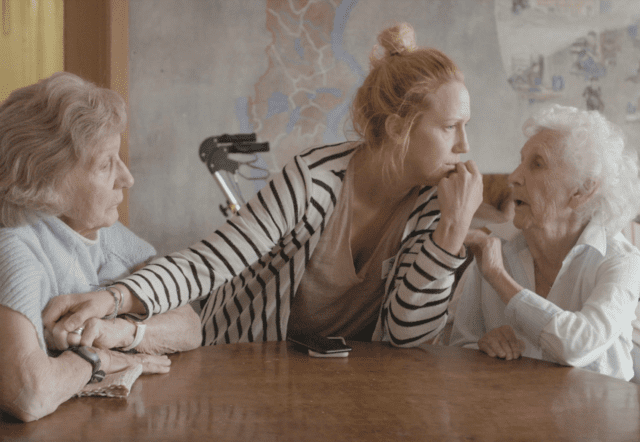
Co-director Åsa Ekman talks to Business Doc Europe about Live Till I Die, set in a Swedish elderly home and telling of the deep and emotional relationship that develops between Monica, an activity coach still grieving for her grandmother, and Ella, a 99-year-old resident who is facing her final days.
“Me and my co-directors, we were just fascinated about the people who are working with these old people who are going to die,” Åsa Ekman says of the reason why she and colleagues Gustav Ågerstrand, Anders Teigen and Oscar Hedin embarked on their vital documentary project set in an elderly care home. “How is it to really connect and take care of people that you know are going to leave you? Also because we’ve had relatives living in care homes, and have had some really depressing experiences with personnel…within this kind of the physical area that was really boring and without life. And we were sort of thinking, I don’t want to die like that. Does it have to be like this?”
The experience at the Kyrkbyn elderly home suggests no, absolutely, not, especially after the arrival of carer/activity coach Monica, who has rejuvenated the residents, turning them into a playful and vigorous gang ready to enjoy spa sessions, boxing lessons and themed dinners, all the time enjoying their new-found passion for life.
But at the heart of the ‘direct cinema’ film is the relationship between Monica and the cheerful but very poorly Ella, whose health deteriorates even more rapidly as she approaches her 100th birthday. Monica is determined that Ella makes the most of her last days, which becomes an emotional marathon for the carer, albeit a rewarding and fulfilling one, and imbued both with humour and love. In the film Ella also begins to say her final farewells to her friends in the home.
“To watch a film that handles death and pain and agony, you really have to also fill it with heaps of love and laughter and joy,” says Ekman of the documentary project which was shot before the pandemic, budgeted at €343,474 and is at final cut stage.
“So it’s a really like an emotional roller coaster with a lot of humor in it. And Monica is really a larger than life character. She would do crazy things with the old people, go to spas or go snow sledging…childish but funny things that make them laugh, but they also cried together. I mean, when they all get to know that Ella has passed away, she’s the one bringing the bad news to all the other old people living there, and they sit there and they cry together. So it’s really about how it is to be able to be a full person in this kind of institution.”
Ekman also explains the effect of such close observation of life and its passing on the filmmakers themselves. “It was painful, but it was also very, very beautiful. When Gustav [Ågerstrand ] was shooting the last moments, you know, he was really addressing her saying, ‘Ella are you sure that we can film now?’ and she’s like, ‘yes, I really want you to film now.’ And then Gustav and the guy with the sound, they sat the whole night holding her hand, taking turns with Monica, sitting by her bed because they didn’t know when Ella was going to pass away. So it was also a very beautiful experience to connect and to be so close.”
The filmmakers underline the necessity for such loving care within a western world undergoing profound demographic change. “Today, the world’s average life expectancy has increased to 72 years. In the industrialized world – such as the Scandinavian countries – studies show an even higher average of 81 years,” they note. “We live longer. But how will old age feel and look like in this new context? In the next ten years there will be a severe shortage of caregivers in Sweden, with a deficit of up to 200,000 qualified personnel. Europe and the western world are in the same situation and many people will be asking the same question we do: who will take care of our parents, and ourselves, when we grow old?”
The film, of course, has even greater resonance post-Covid, a time when care for the elderly within homes was stretched almost to breaking point, and during test screenings Ekman has seen the emotional response that Live Tell I Diegenerates in audiences. “I noticed that people are carrying a big collective grief from the pandemic, how we’ve treated the old people and how they were isolated in that system. When people see this film, it’s kind of therapeutic or kind of trauma-healing for them to see those old people that are touching each other, being very close.”