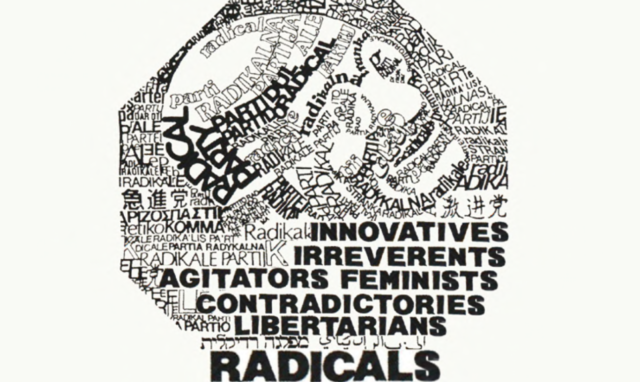
Why do Italians love the causes that the country’s Radical Party espouses, but pointedly refuse to vote for the same party during general elections. Matteo Ferrarini’s new doc ponders this question as he assesses the history of political protest, centring on party leader Marco Pannella, considered by some a genius and a prophet, by others an impostor and a buffoon.
“Their battles were the right battles,” explains project producer Matteo Pecorara as he addresses the dilemma at the heart of his film. He points out while most other European countries rarely hold referenda, Italian politics is rife with them, at which point the Radicals assume a temporary potency before inevitably playing the wallflower at the next election.
“Everybody loves their battles for divorce, abortion, euthanasia, legalization of drugs, legalization of prostitution, you know, there are always some battles that you fall in love with, or that you can understand and can support,” the producer agrees. “But on the other hand, they never receive any support in the general election. You know, they never pass two or three per cent. So the question is why.”
“The Radicals were complex and compromising, a hope and a disappointment,” director Matteo Ferrarini further underlines in his notes for the film. “Telling the story of the Radical Party is therefore a fascinating and complex challenge, knowing that [leader] Marco Pannella and the Radicals, at least once, have wrung a gesture of approval from everyone.”
The project is at very early development stage with €15,000 of its €830,000 budget in place. The core idea is to produce a 4 x 50-minute series but the producer stresses he is flexible, and can even produce a 100-minute if that’s what the marketplace demands.
Meanwhile, Pecorara offers his own explanation as to why the Radical Party have thus far failed to gain any political traction and why the voting public have consistently placed their collective X elsewhere. “For right wing or centre voters they always seem like freaks, you know, hippy-like with drugs and so on, while for the left wingers they are just not left wing enough. They seem to be too connected with the bourgeoisie. So in the polarized war of Italian politics they are stuck in the middle.”
At MIA, the producer wants to attract international interest in the form of co-producers and distributors, but his main goal is to secure home support via an Italian broadcast deal. That said, he has an initial, more pressing and not so radical objective. “The first target is to have a good pitch,” he says.