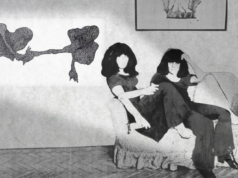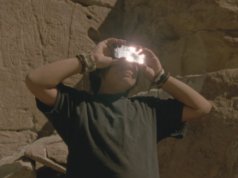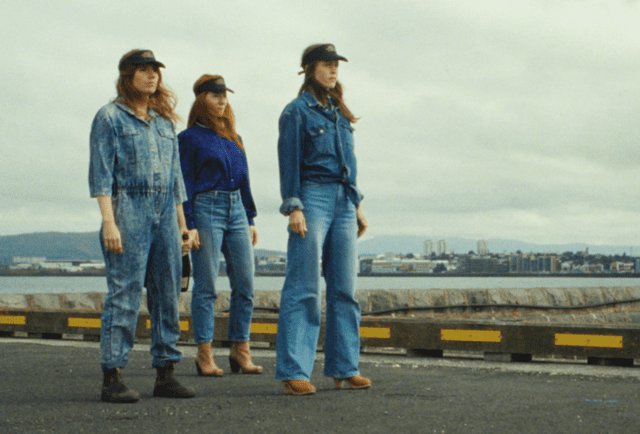
(Pic: Band by Álfrún Örnólfsdóttir)
There were doubts that the 33rd Nordisk Panorama Film Festival would happen at all. Last year, when the Nordic Council of Ministers decided to cut all its funding, the event was left suddenly in very real jeopardy. However, speaking to BDE on the opening day of this year’s festival (22-27 September), Exec Director Anita Reher hailed the efforts of film institutes across the region to keep the Panorama going.
“We are thankfully OK,” Reher said. “We have been lobbying substantially for a year and a half. You could say the nice thing about this is that we really felt the support from the documentary community.”
Film institutes from all five countries involved in the event – Sweden, Norway, Iceland, Denmark and Finland – were determined to preserve the Panorama. They have therefore “upped their support substantially.”
Reher’s disappointment about the Nordic Council’s decision to turn its back after supporting the event for 30 years is obvious. “They had a new four-year vision which they were working toward which had its main focus on sustainability.”
In pursuit of this new “green agenda,” the Council moved funds away from culture and education, instead re-investing the money in environmental projects. That left the Panorama in the lurch – but all’s well that ends well. In this case, the Nordic countries themselves have saved the day. “They see all the business that comes out of the industry events,” Reher states. “We are small countries but together we are stronger.”
The budget is the roughly the same as for last year. Reher and her team have also been given a guarantee that it will remain at the same level until 2024.
Nordisk Panorama’s Forum continues to attract both newcomers and some of the most established players in the field. “Those who are super-established and have their own international networks, they still come here,” Reher notes. “It’s also something to do with being family and the way the industry works.”
For example, veteran Oscar-nominated Icelandic producer-director Fridrik Thor Fridriksson is the producer on Bergur Bernburg’s new docudrama Storm Alerts while director Andrei Nekrasov’s new film Piraya 2020-1 is produced by Torstein Grude of Piraya Films.
It helps, too, that the Nordic Panorama is “a more manageable size” than some of other vast co-production bazaars and festivals. Alongside its industry activities, the Festival also hosts Best Nordic Documentary, programmed by Hawa Sanneh and Gitte Hansen, and Best Nordic Short Film, programmed by Sam Groves and Lucile Bourliaud. There are also New Nordic and Young Nordic competitions.
Post-pandemic, the festival is retaining some of the initiatives it tried out during the Covid years. For example, on the industry front, the pitching and works-in-progress events will be available for decision makers to watch remotely. On September 30, two days after the end of the physical event, there will be a new Forum Online Meetings day which will allow a full extra day “mostly for North American and Asian decision makers who are not here (in Malmö.]”
On the festival side, the Cinema Walk (the initiative for screening films in unusual places around town) also remains. Film lovers will even be able to catch up with one movie in a public toilet. The film in question isn’t a documentary. It’s a short, Prague-set drama directed by Grímur Hákonarson and called Slavek The Shit. The story follows male and female toilet attendants who fall in love. When electronic lavatories are introduced which threaten their jobs, they try to put gum into the mechanisms to stop the new machines working.
“We are in restaurants; we’re in art galleries, we are in the opera house: 20 different places in town,” Reher says of the dramas and docs showing across the city. This was in an initiative hatched during one of the Covid lockdowns when the programming team had to come up with solutions as to what might be possible to screen in public. “It was so popular last year that we decided to do it again.”
Asked to comment on the health of Nordic documentary in the wake of the pandemic, Reher suggests that the sector remains robust. Theatrical admissions may not have recovered fully but she and her team have been receiving just as many submissions as usual. “The finished films were on a par with previous years…for the pitching Forum, we also received the same level as previous years.”
The festival head is proud to be welcoming a Ukrainian delegation of producers to Malmö who will have their own special industry programme. Seven projects are being presented and 13 delegates are due in town.
Every year, a guest territory from outside the Nordic region is invited to take part in the Forum. This year, DOK.fest München will be leading a delegation of German producers.
The festival opens tonight (September 22) with Golden Land by Inka Achté and animated short film Night of the Living Dread by Ida Melum.