The 21st Verzió program, running November 6-13 in Hungary, will dedicate special sections to the themes of decolonization and disinformation, and will also showcase Armenian, Ukrainian, and British selections.
“Verzió helps us uncover the problems that are often hidden behind false surfaces, bringing us closer to reality,” the festival writes. “All the films are concerned with breaking down the mainstream narratives and unpacking critical issues, which is why this year’s key visual is built around the slogan ‘Reality Uncovered.’”
This year’s program was curated by a renewed programming team (see below). The 21st Verzió Film Festival will feature 60 films across four competition categories and eight thematic sections. The curation team aimed to include films that have toured major festivals and won numerous awards, as well as lesser-known works—”films that audiences are unlikely to encounter elsewhere.”
“In selecting the films, the goal was to showcase diverse perspectives on current social, political, human rights, and environmental issues, while also ensuring that we find outstanding films that offer a true cinematic experience,” says Program Director Fanni Somlyai.
Additionally, the festival aims to represent a wide variety of themes, ranging from Japanese #MeToo stories to the war in Ukraine. “The films range from global issues to the most personal stories, with a variety of tones and styles,” adds Festival Director Enikő Gyureskó. The curatorial team selected the program from over 750 submissions.
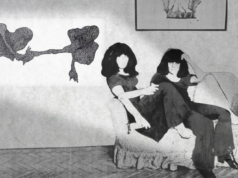
The festival’s opening film is Kix, directed by Bálint Révész and Dávid Mikulán. It follows 12 years in the life of a young boy from Budapest, Sanyi, as he grows from a rambunctious child into an adult labelled a public enemy. The documentary offers a snapshot of urban poverty and social marginalisation. Its world premiere took place at CPH:DOX and it has since been featured at international festivals from the U.S. to Taiwan.
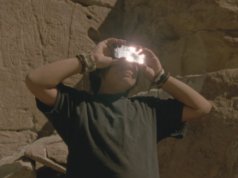
“Restoring identity and cultural heritage and addressing historical injustices are pressing issues worldwide,” the festival writes. “Discussions surrounding these topics shed new light on the past and help shape a more just future.” This year, therefore, Verzió dedicates a special section to the complex issue of decolonization. This thematic block includes the Golden Bear-winning Dahomey by Mati Diop, which follows the heated debates surrounding the return of artefacts from Paris to present-day Benin. The film will be shown in Hungary for the first time at Verzió, with a wider cinema release planned for 2025.
Verzió also highlights Ukrainian films this year. The decade-long war and Russian aggression in Ukraine have caused unimaginable destruction, yet the Ukrainian documentary community has shown remarkable resilience and creativity. One standout film in the focus is Intercepted, a film that juxtaposes intercepted phone calls between Russian soldiers and their families with the grim realities of war.
A “prominent” selection in the Hungarian competition is Your Life Without Me by Anna Rubi, which premiered at the Sarajevo Film Festival and won the Human Rights Award for documentaries. The film touches on the necessity of care, the situation of people with disabilities, and the omnipotence of maternal love. Rubi’s first feature-length documentary follows mothers involved in the home-care case led by the Hungarian Civil Liberties Union (TASZ) and their severely disabled children. The film’s Hungarian streaming debut will be on RTL Plus.
A compelling entry in International Competition is Favoriten, a film by Austrian director Ruth Beckermann. A frequent participant at Verzió, Beckermann’s latest film follows a primary school class in Vienna over three years where more than 60% of the students are non-native German speakers. The result is an unexpectedly cheerful portrait of an unusual community.
This year’s Verzió also features a British documentary focus, with films like Black Box Diaries by Shiori Ito, which covers the famous Japanese #MeToo case, and Celluloid Underground by Iranian-born director Ehsan Khoshbakht.
For the first time, Verzió will dedicate a section to Armenian films, offering perspectives on the tragedy of the Nagorno-Karabakh war. 1489, one of the highlights, documents a young boy’s search for his missing brother through his phone. The film won Best Film and the FIPRESCI Prize at IDFA 2023.
“Disinformation in the digital age is a particularly important issue, as false news can spread quickly through social media, eroding public trust and causing deep societal divides,” the festival writes. “Verzió dedicates a special block to this theme, including the film Black Snow, in which a civil investigation into a Soviet-era mine fire becomes the target of a massive government disinformation campaign.”
The full program of the documentary film festival will be available in early October. Curators for the competition and thematic sections are Zsuzsa Debre, Asia Dér, Péter Horányi, Szabolcs Szirony, Enikő Gyureskó, and Fanni Somlyai. The Viewfinder section was curated by Oksana Sarkisova, while the queer competition was curated by Czech expert Kristýna Genttnerová.
After the cinema screenings, films will also be available online from November 14-24 on Verzió’s streaming platform Verziótéka: https://festival.verzio.org/.