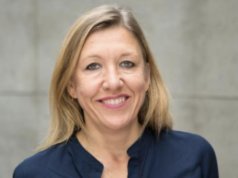
In Southern Brides, six mature women talk about intimacy. The half dozen women we see on camera, interviewed by director Elena López Riera, who was born in Spain herself but is now a resident of Switzerland, speak with frankness and humour, and at times a fair dose of melancholy, about marriage, their wedding day and about sex with their husbands (or otherwise).
The director will never be the subject of such questioning. She has decided never to marry, which she describes as the only ritual she knows that combines “religion with deep intimacy.”
“I mean, we are celebrating the virginity of a woman on the day that her body won’t belong to her anymore,” she tells BDE.
The women in Southern Brides tell how times were different back then. Sex before marriage was far from commonplace and proud brides would show the evidence of their intact honour next morning to mothers whom they very much feared.
For one woman, getting into bed with her husband was a nightmare and she cannot imagine how she eventually had two children with him. She eventually paid 50,000 pesos to make sure she never had a third.
Another woman tells of her wedding night when there was a violent electrical storm. “I was making love and people were running scared,” she lovingly remembers. She and her new husband finally emerged after three days, at which point he had to eat a pile of liver in order to get his strength back.
An extraordinary centenarian talks of 30 years of a bad marriage to a man she hated making love with, but an affair was out of the question until he died, at which point she discovered love and wonderful sex at the age of 73 with a man 12 years her junior. The first time was in a field in Barcelona. “It was apotheosis,” she says.
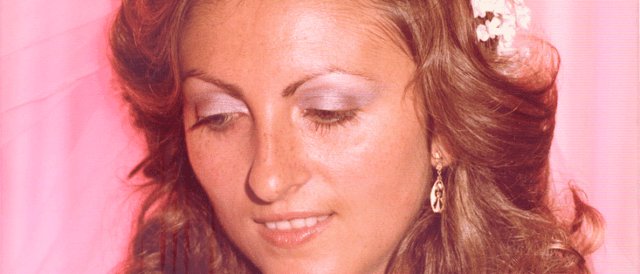
In between interviews López Riera shows decades-old still and moving images of weddings, in which the bride and groom are often stern-faced, surrounded by wedding guests whom the director will always identify with more.
“I was always like those women who are watching from the edge of the photo. A non-bride, a non-mother…the question in the distance,” she narrates. A caption asks, “what are the brides without a groom like? What are the mothers without a child like?”
And all time López Riera beseeches her mother whose image we see, but who gives no testimony in the film.
“I search for my mother among all the bodies, all the brides, all the mothers,” she narrates. “I’d love to say many things to her, but I can’t. Like a curse has built a huge unscalable wall between us. I imagine whispering to her that I have what I want. That I’ve managed to not be like her. But that I’m actually terrified. Because I know there’ll be no-one after me.”
In interview, director López Riera is a lot more chatty and giggly than one may assume from the film.
“Actually this film has been in my head since, I don’t know, since I was 20 years old,” she says. Ever since she was a child she found the “ritual” of marriage both fascinating upsetting, not least because of the enforced sense of “heritage” and “inheritance” that the institution embodies.
But making the film nevertheless made her wonder, she says. “On the one hand I’m happy with my life and I think it was my decision not to have kids and have a professional life. But on the other hand of the day, I’m not that sure. And I don’t know where this melancholy came from. And this is why I wrote this narration.”
At the heart of the film is López Riera’s admission that, as much as she loves her mother, she has never been able to communicate with her on an intimate level. With her friends, yes, and with the women in the film, of course. But with her mother, no.
“There’s a kind of wall between us,” the director says, citing her Catholic upbringing. “I don’t think I’m the only one who feels really strange talking about intimacy with their parents, with their mother. I think it’s something cultural…I mean, how did we build our culture, our sexual culture by not talking with our parents?”
“‘I love you.’ This sentence I cannot pronounce. And it’s weird because I really love them.”
Interestingly, this was never supposed to be a film in the first place. The director simply responded to an urge to record interviews with the women, and hence didn’t ask for any initial funding. It was only after López Riera assessed the first two interviews that she saw it might have legs as a short/medium length film, at which point she applied for a small amount regional funding out of Valencia. After its selection for Semaine de la Critique (the film was finished just a few days ago) Swiss Films committed to supporting its promotion at Cannes.
“Also, the form is very strange,” López Riera adds. “Some people that watched it during the editing process, some friends told me, ‘You cannot do that. You cannot put your voice. And also this woman’s voice. We don’t know if it’s a documentary.’ But I’m used to this because for all my films, they told me the same.”
One thing to note, and which possibly explains a further seam of melancholy in the film, is that all of these women were in some way victims of physical or psychological abuse. These stories aren’t told overtly in the film. “I decided not to put [them in] because some of them were really, really, really, really hard and some of them [the women] didn’t want [these stories] to be in the film. For me, it’s super important also to be respectful of the people who share these intimacies with me.” She underlines, however, that her own mum was never such a victim, and that she has remained in loved with her husband since they first met aged 14.
Was making the film in any way therapeutic for López Riera? “We all need therapists,” she jokes. “I think at the end it was really helpful and I was really happy. Happy in the sense that it was such a little film. We didn’t have any money. I filmed it myself. I took this on myself. I did absolutely everything myself, with the help obviously of my friends. But at the end, not so proud of me, but of these women who told [their stories].
“The Cannes selection was a big moment, but not for me, not for my ego. For these women, it’s important…it’s a present for them. I just want to tell them you are important and your world is important. So I think at the end it was kind of therapy in a good sense…I think I’m better now than before.”
And what about her mum when she sees the film for the first time in Cannes? “I think on Sunday [May 19] our relationship will change forever. For good or bad? I think for good.”